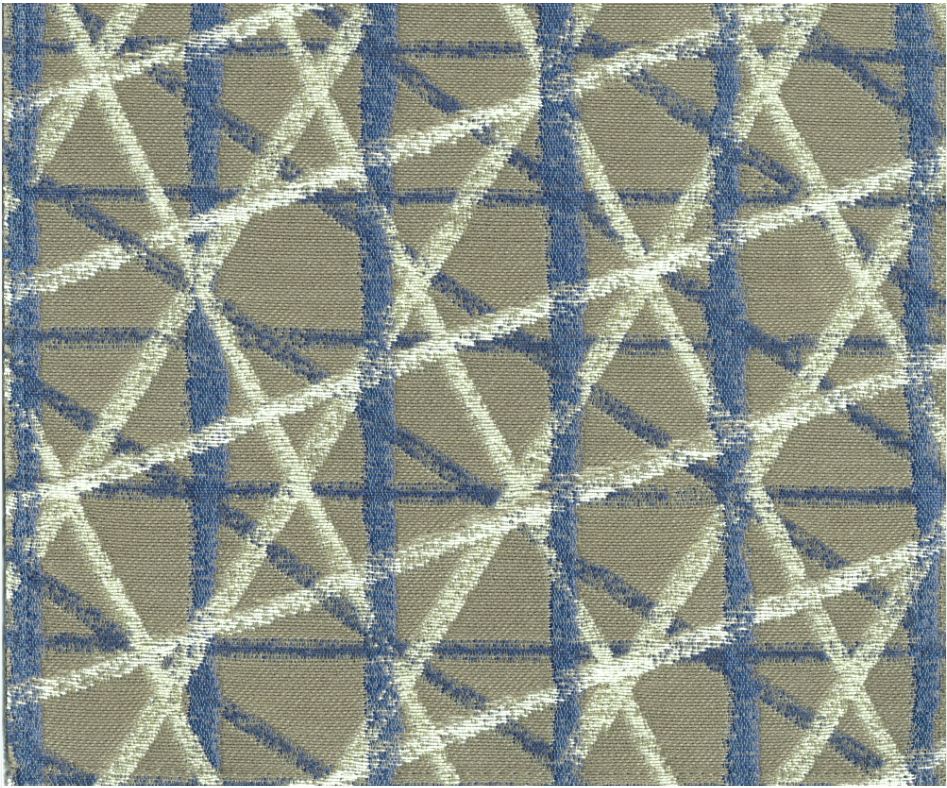
In tandem with her artistic practice, Sheila Hicks has been engaged with the fields of architecture, design, and textile industry for over 50 years. Sketching Air is Hick’s latest commercial collaboration. Working with Momentum Textiles, she has created a collection of five patterned weaves (Sketching Air, Mapping Ideas, Painting Strokes, Drawing Lines, and Crossing Colors)...
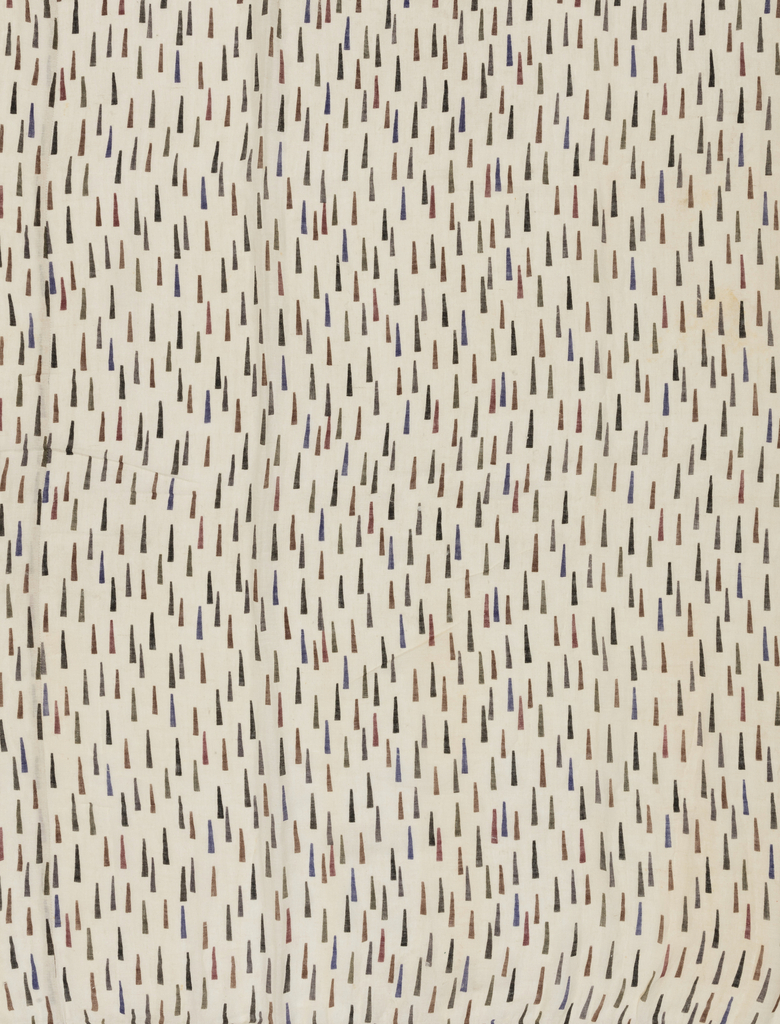
Little is known about this dress-weight cotton fabric, which arrived at the museum in a padded envelope with no return address. It was probably an inexpensive “novelty print” intended for the home-sewing market. This piece had been previously made up as a dirndl skirt, which requires very little shaping, so there is an uncut rectangular...
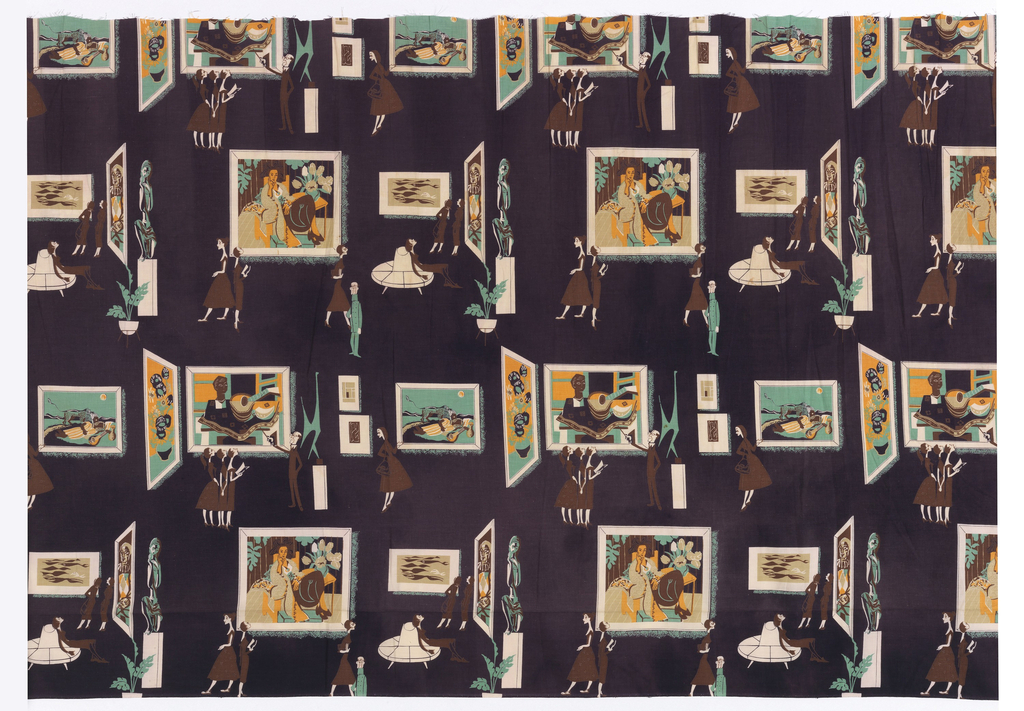
Alexander Girard was one of the most influential textile designers of the mid-century period. Along with colleagues Charles and Ray Eames, George Nelson, and Eero Saarinen, he was a strong proponent of bringing an affordable modernism to the middle class. From 1952 to 1973, Girard served as head of the Textile Division of Herman Miller...
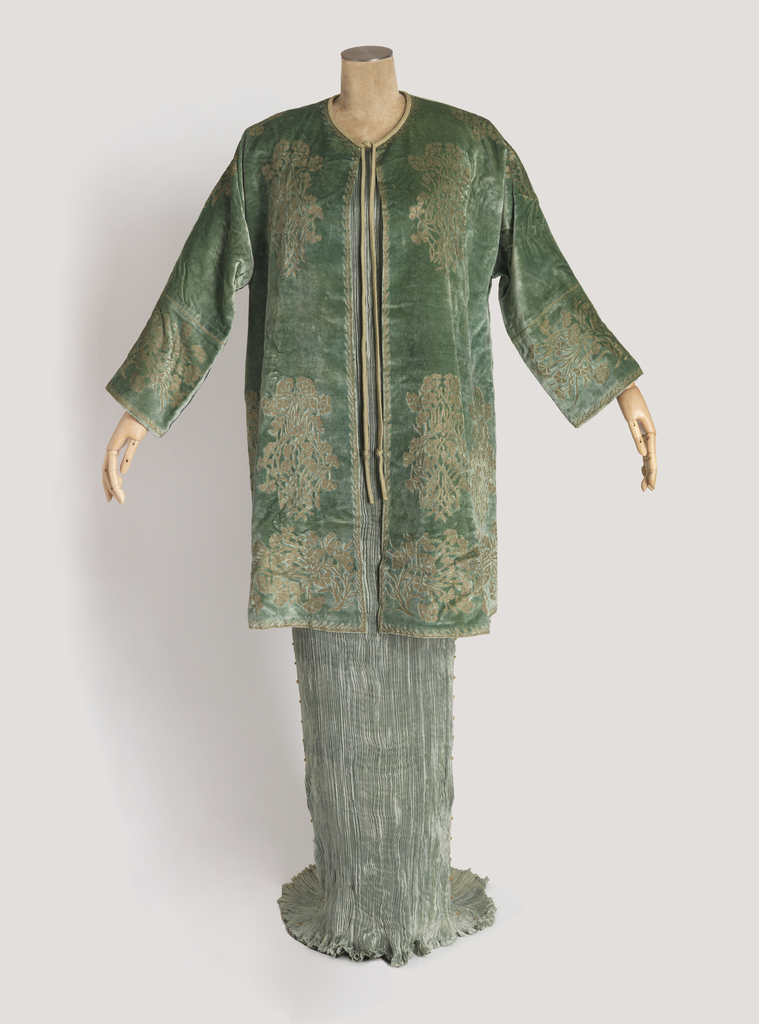
Now on view in The Jazz Age: American Style in the 1920s, Mariano Fortuny's iconic Delphos dress utilizes a patented pleating process that has never been fully understood.
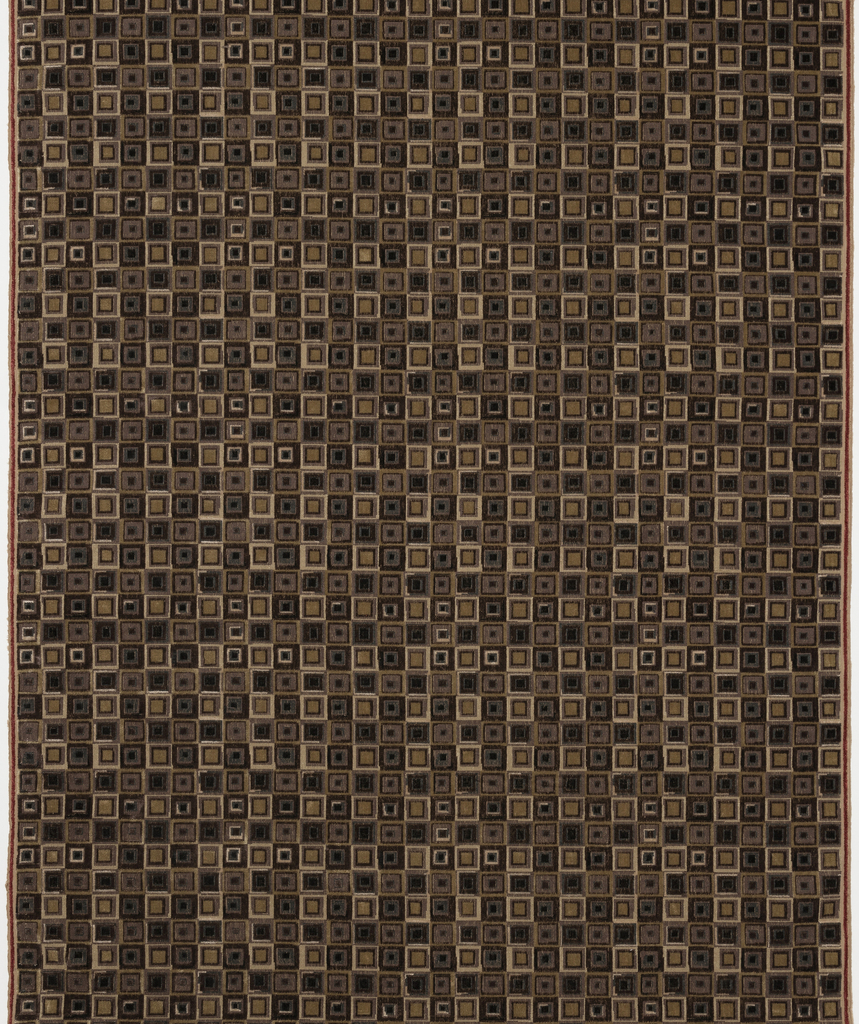
In composition, Kaleidoscope closely resembles Larsen’s famous design of concentric squares, Magnum. But whereas that design was machine-embroidered around mirror-like squares of Mylar, Kaleidoscope is a durable, hard-wearing upholstery in a technique called epinglé velvet – so named for the wires which are inserted into the shed during the weaving and over which the pile...
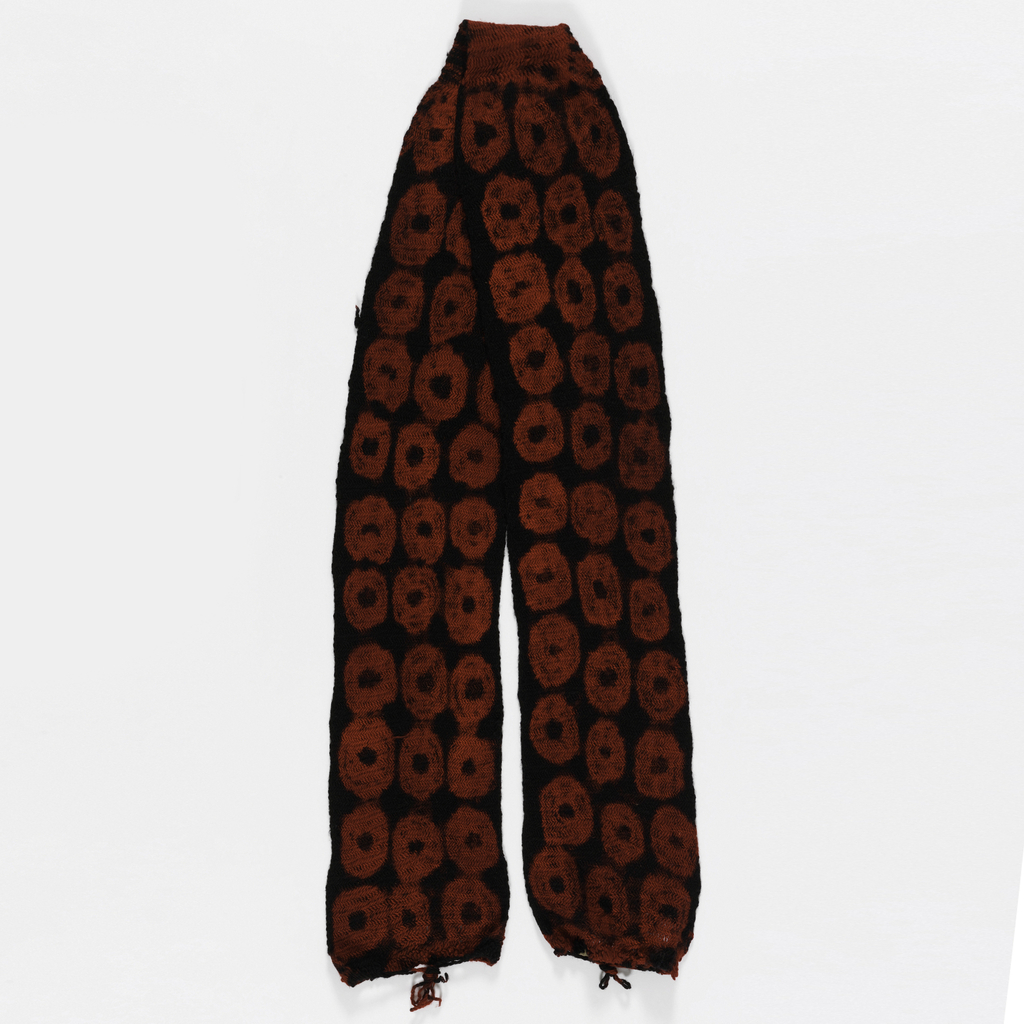
This tie-dyed wool head wrap from Tunisia was woven in the sprang technique, an ancient method of loom plaiting that, in its finished form, resembles knitting. In fact, before the development of knitting, sprang was often used to create bags, gloves, and head coverings due to its stretch characteristics. Vertical yarns are fixed at both...
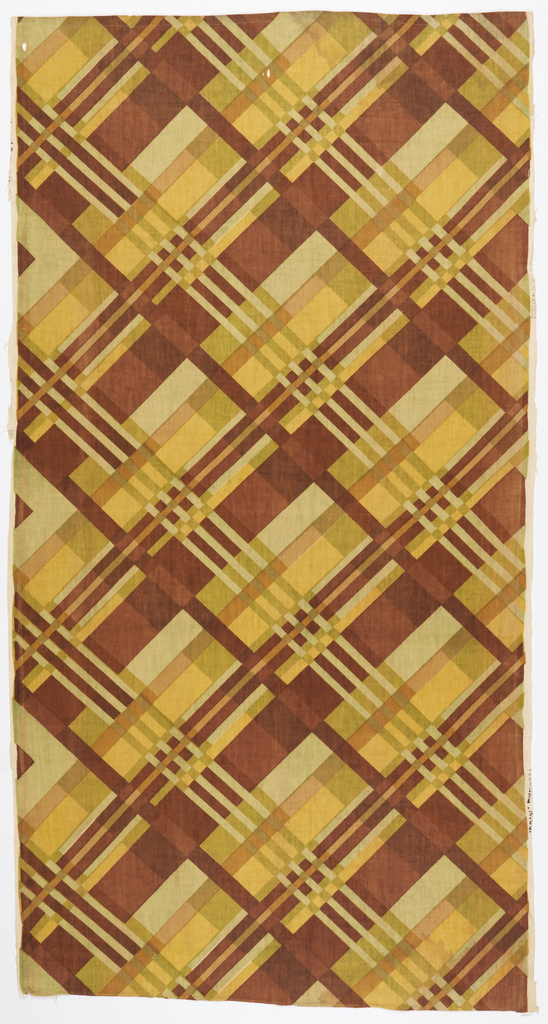
Industrial designer Donald Deskey, along with his contemporaries, Norman Bel Geddes and Gilbert Rohde, adapted austere European Modernism to be palatable for the American taste. Deskey introduced novel ideas with the use of new materials such as Bakelite, aluminum, Permatex, and rayon. He was sensitive to budget constraints of the 1930s consumer, an offered a...
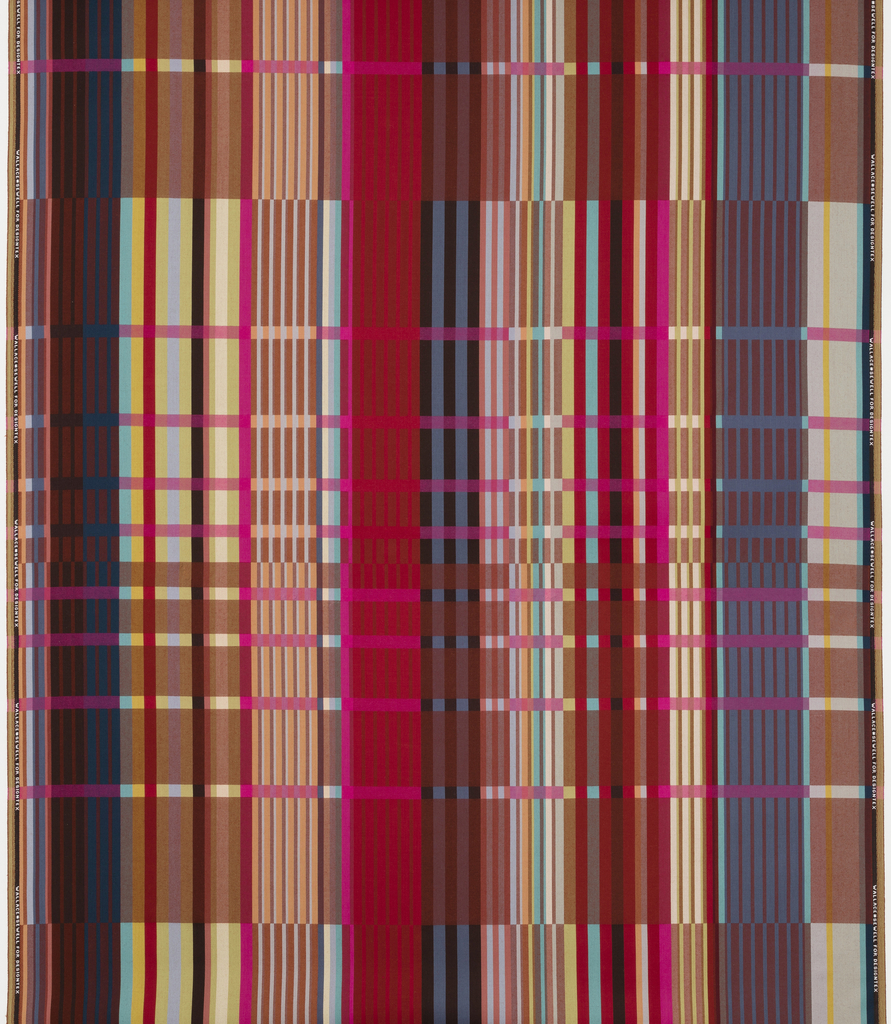
New York-based textile design firm Designtex collaborated with Harriet Wallace-Jones and Emma Sewell of the British textile studio Wallace Sewell to create series of wool upholstery fabrics showcasing the duo’s signature sophisticated color work. Wallace Sewell is well-known for their colorful woven home and fashion accessories, but had not previously designed for the built environment....

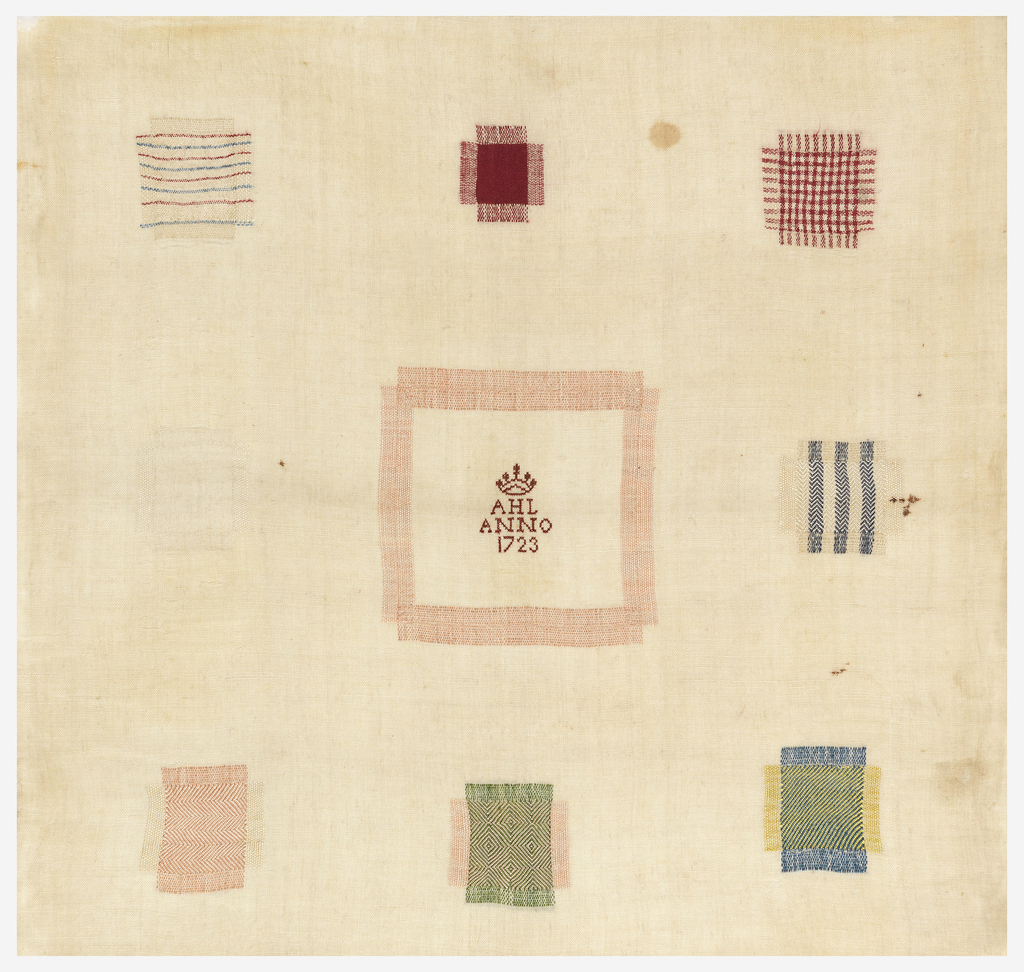
Samplers originally served as sketchbooks where women could record stitches and design ideas for future use. With the advent of printed books of patterns for lace and embroidery in the 16th century, this practice became less common, and samplers evolved into exercises for girls learning the techniques of needlework. Several samplers of nearly identical format...
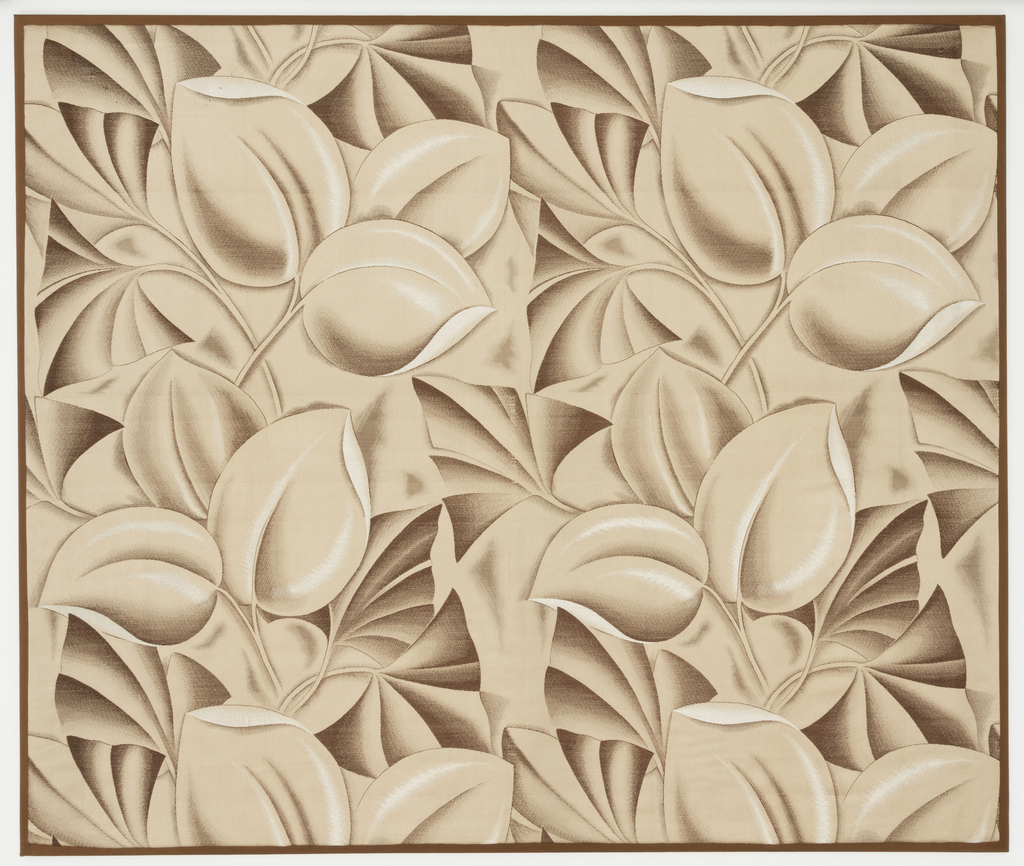
Robert Bonfils (French, 1886–1972) was a prolific illustrator and designer who is perhaps best known for his fashion illustrations for the Gazette du Bon Ton and Modes et Manières d’Aujourd’hui. He also contributed to Arts et Métiers Graphiques, and was commissioned to create the cover for the catalogue of the enormously influential 1925 Exposition Internationale...
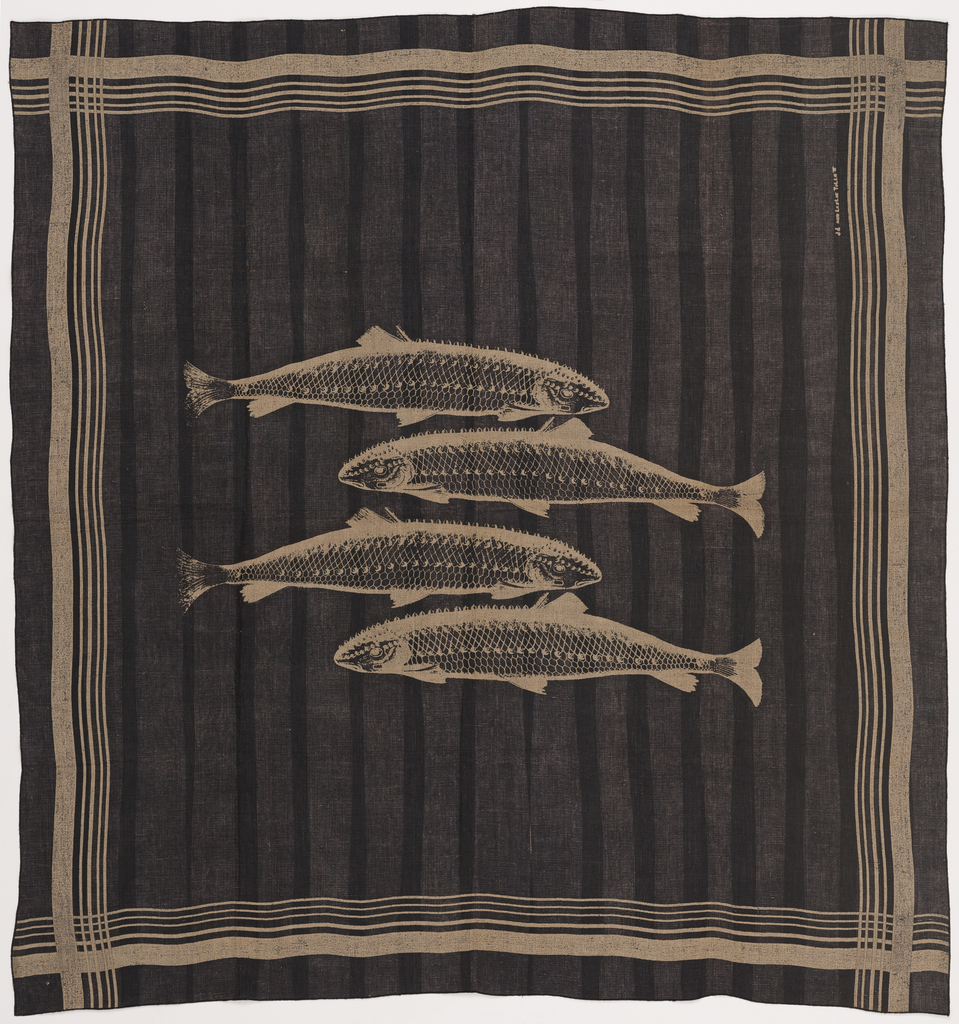
The Tillett Cold Wax System was one of the techniques Jack Lenor Larsen covered in detail in his 1969 book, The Dyer’s Art. Leslie Tillett explained, “I began serious research on a screen-printable resist material about three years after arriving in this country in 1947… I was after a formula or substance that would easily...
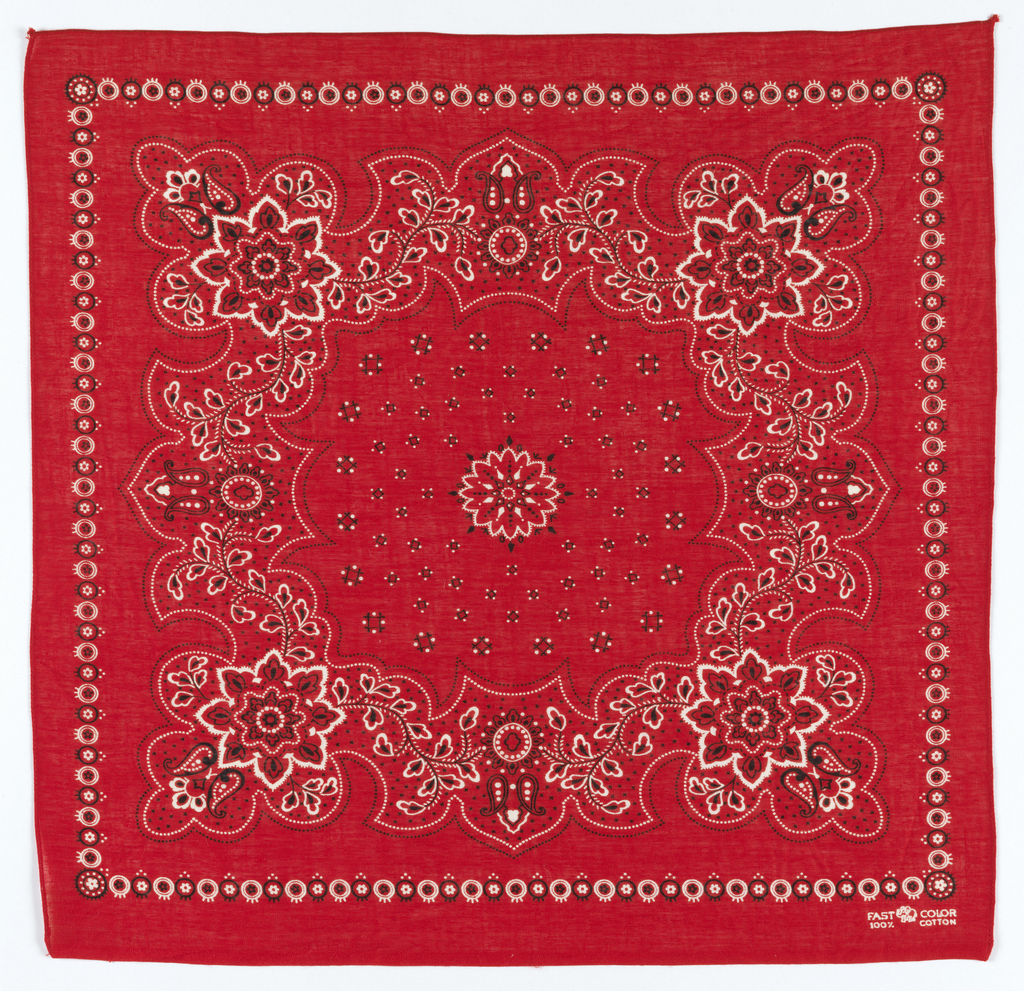
The red cotton bandanna so closely linked to the American west was originally a tie-dyed silk scarf from India, and later the product of a number of European innovations. The Turkey-red process for dyeing cotton a brilliant, wash-fast scarlet red was mastered in Europe in the 18th century, but it was incompatible with printing processes....
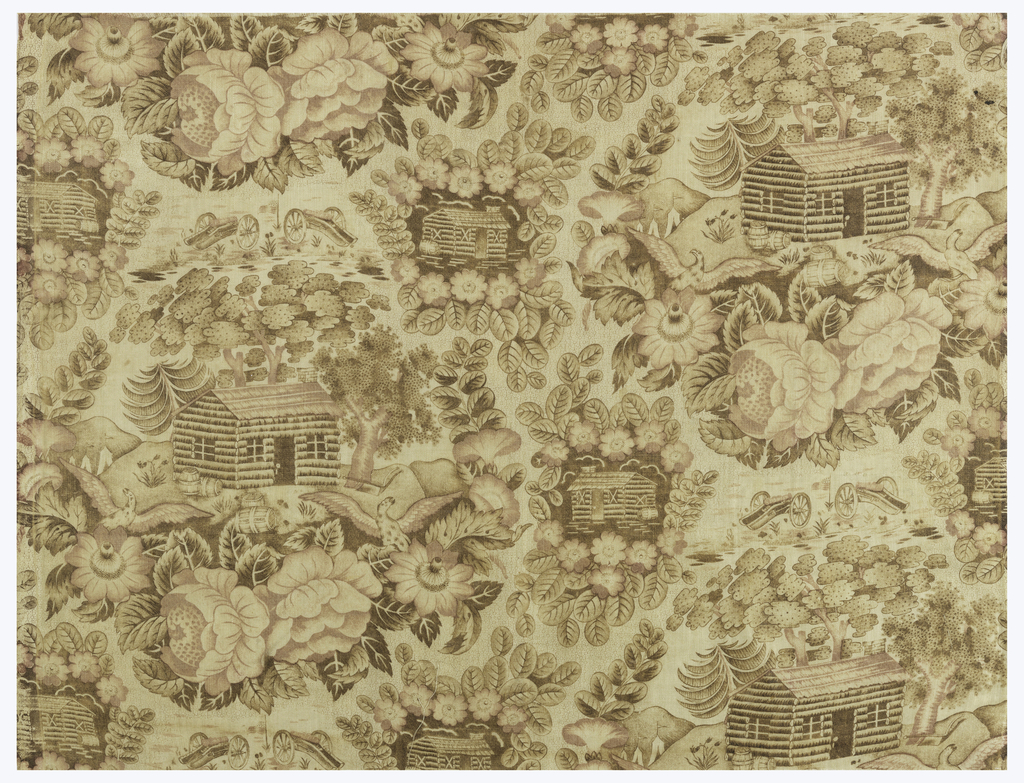
The election of 1840 is considered to be the first modern political campaign – the catchy slogan “Tippecanoe and Tyler, Too” lingers in the public consciousness 175 years later. It refers to Whig party candidate William Henry Harrison’s early military victory over the Shawneee Indians at the battle of Tippecanoe, which the party used to...
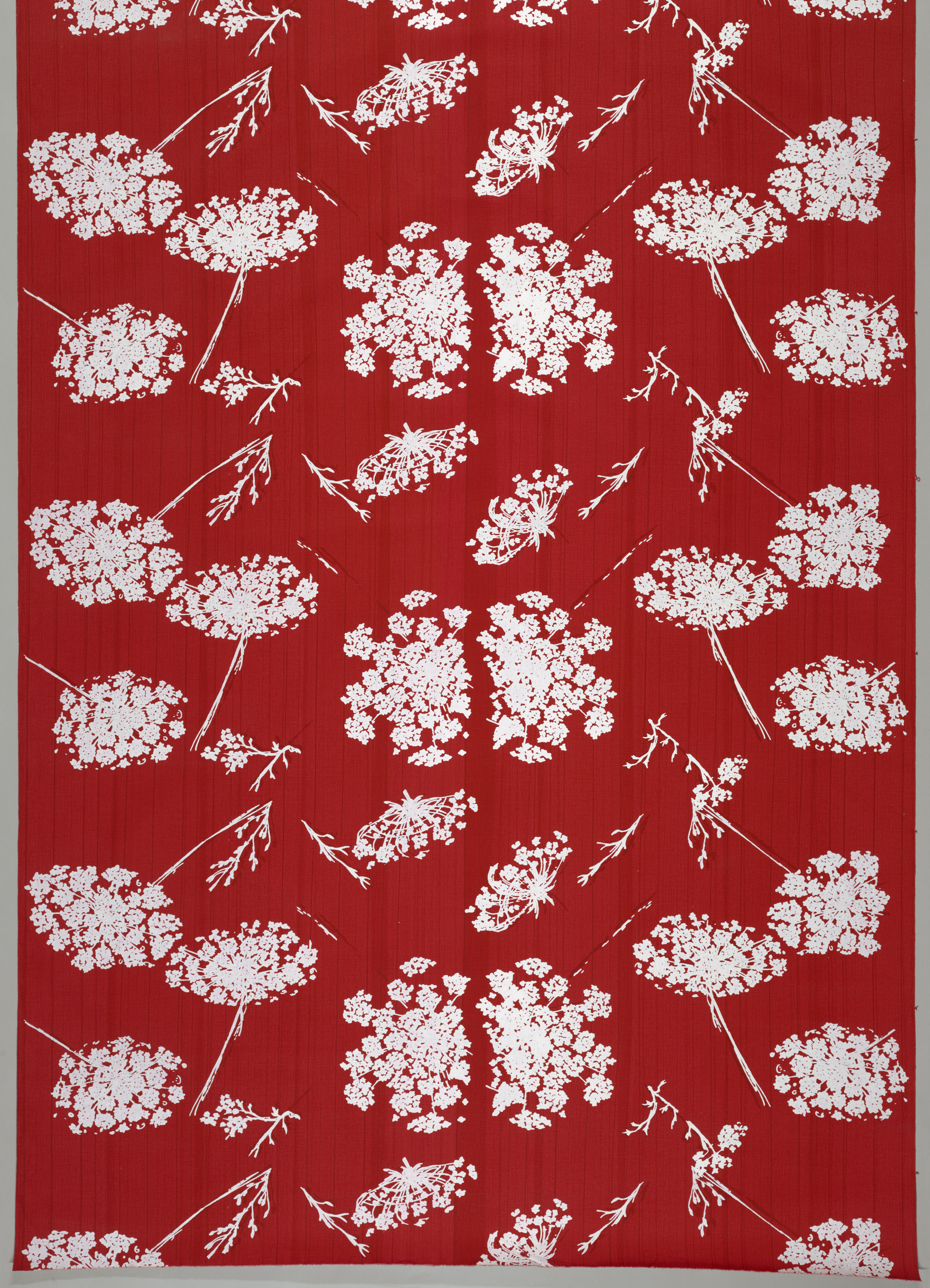
Queen Anne’s Lace recalls the simple charm of a photogram, but it is technically multi-layered and complex. The brilliant red background is entirely hand-pulled with the drag-box. Slight overlapping of the bands of color creates pinstripes of darker red. The flowers are screen printed in opaque white ink, while a second screen of just the...