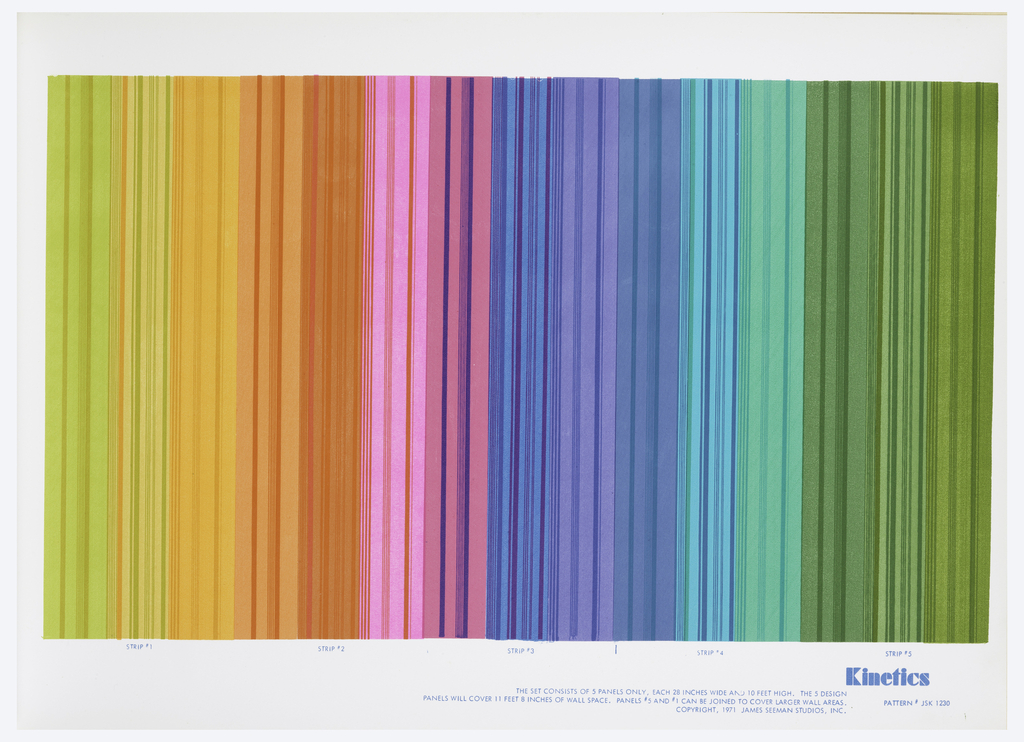
A colorful design to brighten your day! Kinetics is a mural design from the Kaleidoscope collection of murals and supergraphics by James Seeman. Resembling a colorized barcode, the design may have been inspired by this emerging technology. Patented in the United States in 1951, it took about twenty years for the barcode to become commercially...
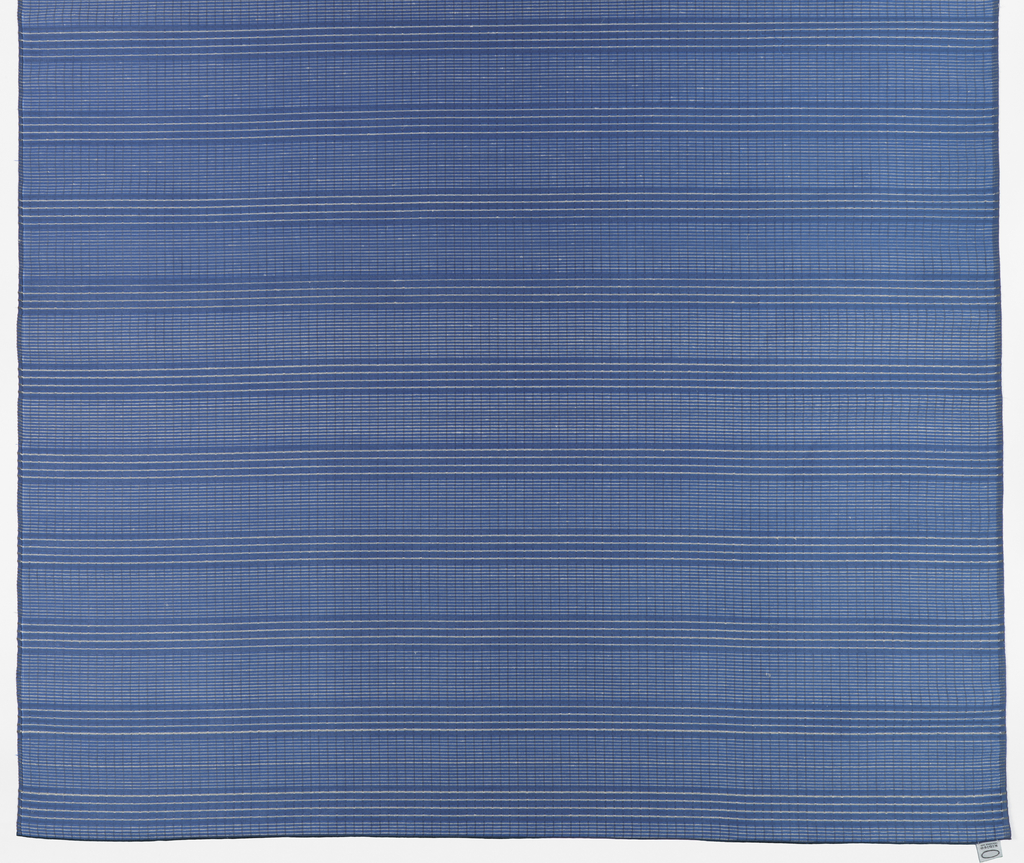
Suzushi Stripe is part of a series Nuno made from kibiso and raw silk. (The kibiso is the white coarse stripe in the textile.) The combination of these two materials reveals a very rich texture, structure, and surface design. Kibiso, an industrial waste product, is the protective outer layer of the silk cocoon that is “wiped off”...
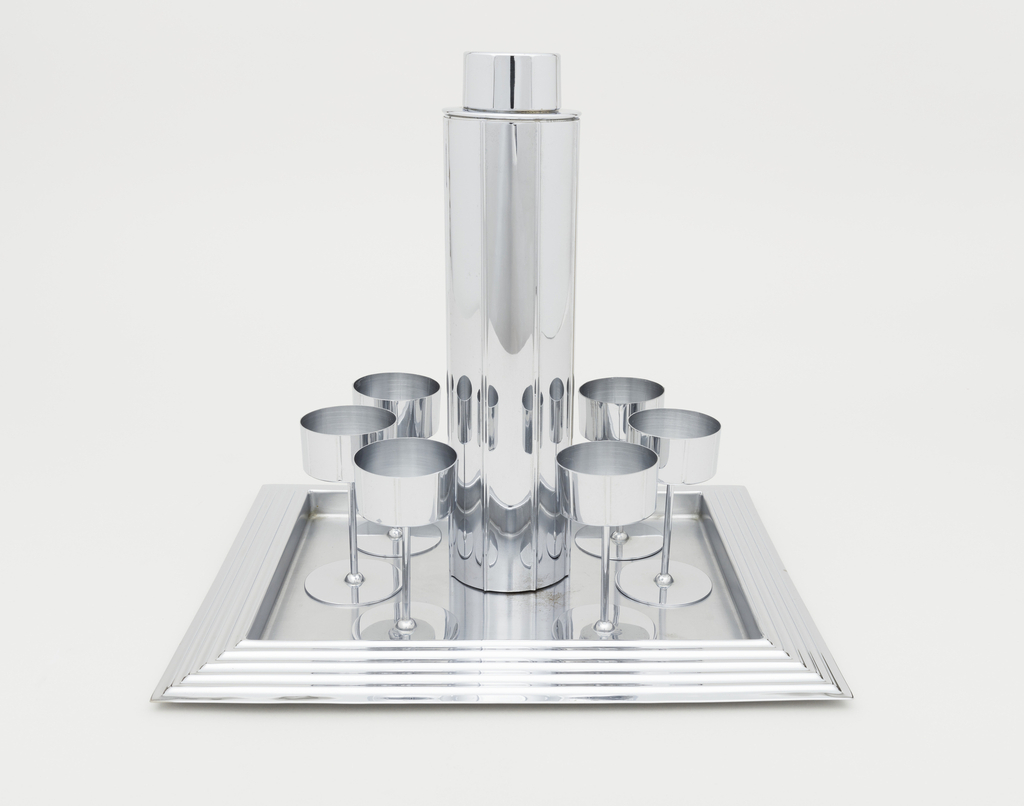
Millions of Americans wanted a drink when Prohibition was repealed at the end of 1933. Perhaps it might be better to say a legal drink? Alcohol consumption for the thirteen years after the passage of the Eighteenth Amendment had by no means stopped. In basements of brownstones and behind backroom doors, a generation of Americans...
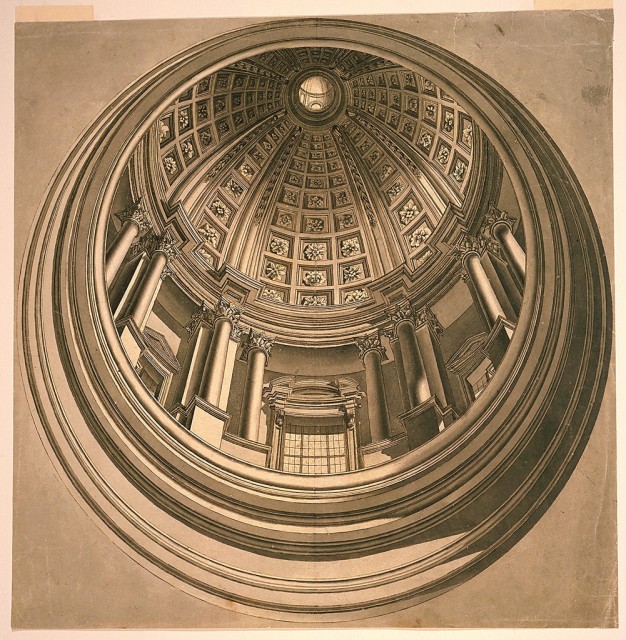
This blog post was originally published on November 30, 2012. This perspective tour de force dazzles the eye with the complexities of its illusionistic architecture. The story behind the work is equally compelling. When the magnificent Church of Saint Ignatius Loyola was constructed in Rome during the late 16th-century Counter Reformation, the newly founded Jesuit order...
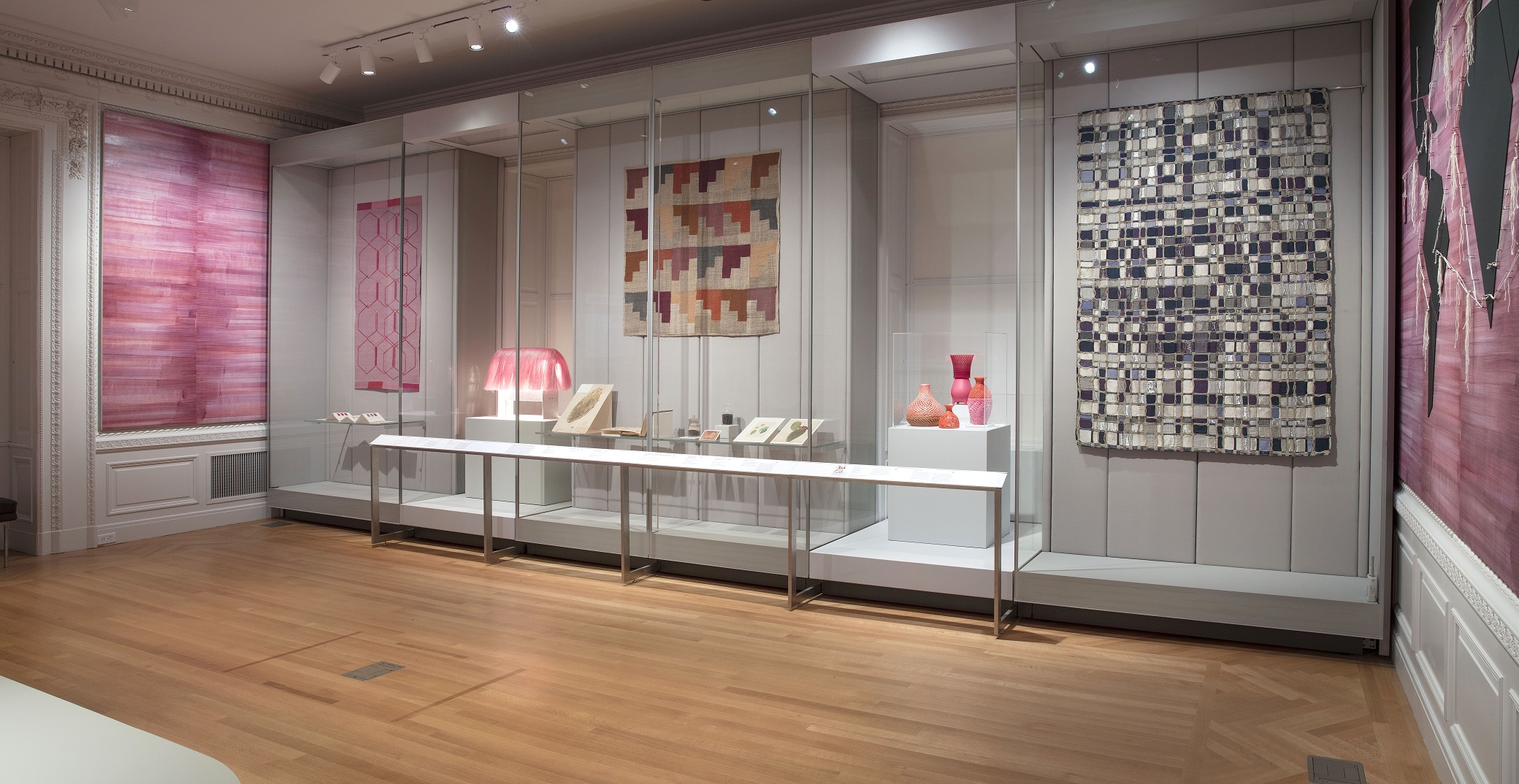
This project summary was compiled by José de la O (Studio José de la O) and Christina De León, Associate Curator of Latino Design at Cooper Hewitt. Grana vs. La Máquina, or “Cochineal vs. The Machine,” was an academic project initiated by the School of Architecture, Art, and Design at Tecnológico de Monterrey, Mexico City,...
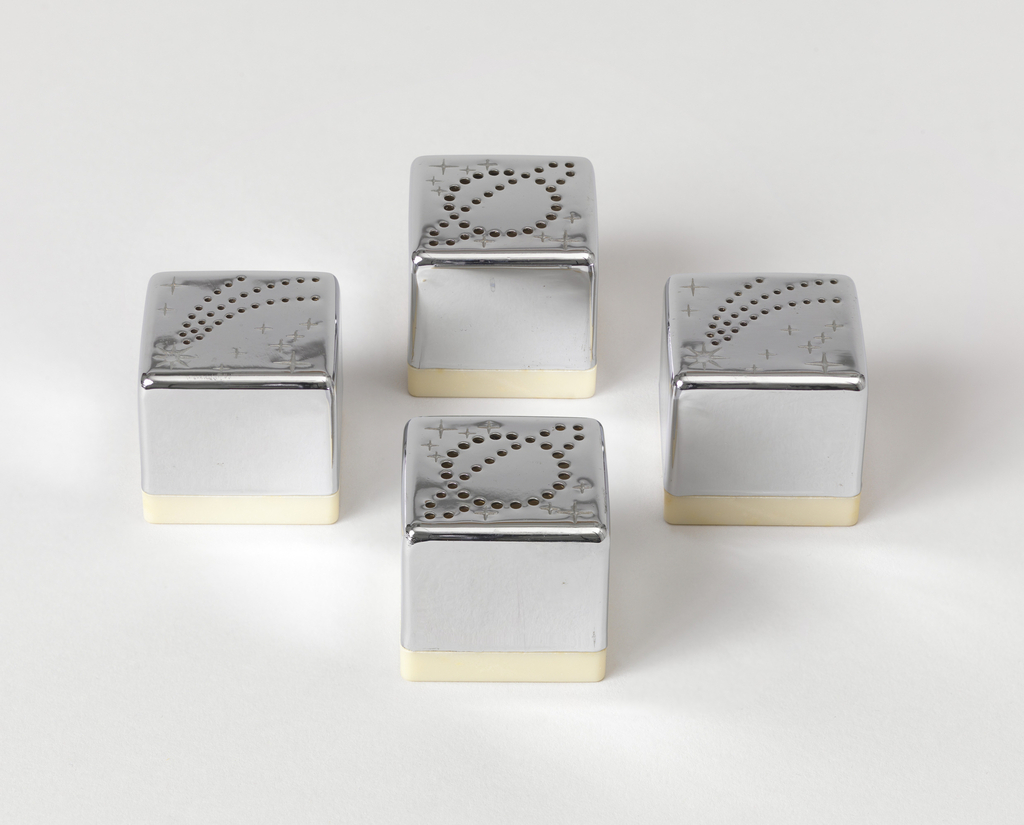
The clean-lined geometric forms of these salt and pepper shakers show American modernism’s affinity for simplicity. During the 1930s the emergence of chromed metal, steel, and aluminum tableware coincided with the rise of modernist designs for everyday objects. These simple metal cubes were created with cost-effective manufacturing techniques, stamping and piercing, to create utilitarian and...
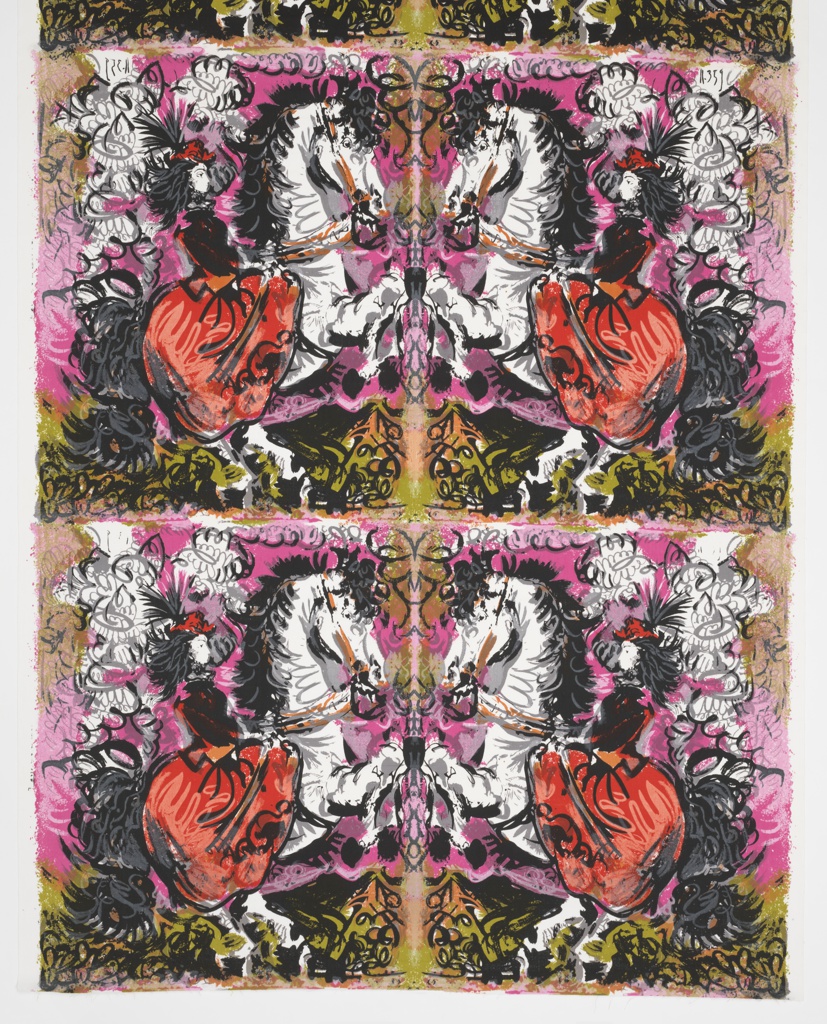
Bloomcraft Fabrics, a New York-based producer of woven textiles that collaborated with artists ranging from Rockwell Kent to Gloria Vanderbilt, released the Picasso Collection in 1963. As announced by an advertisement in American Fabrics: “This unusual collection links the work of the world’s greatest living painter and the world of interior design through a series...
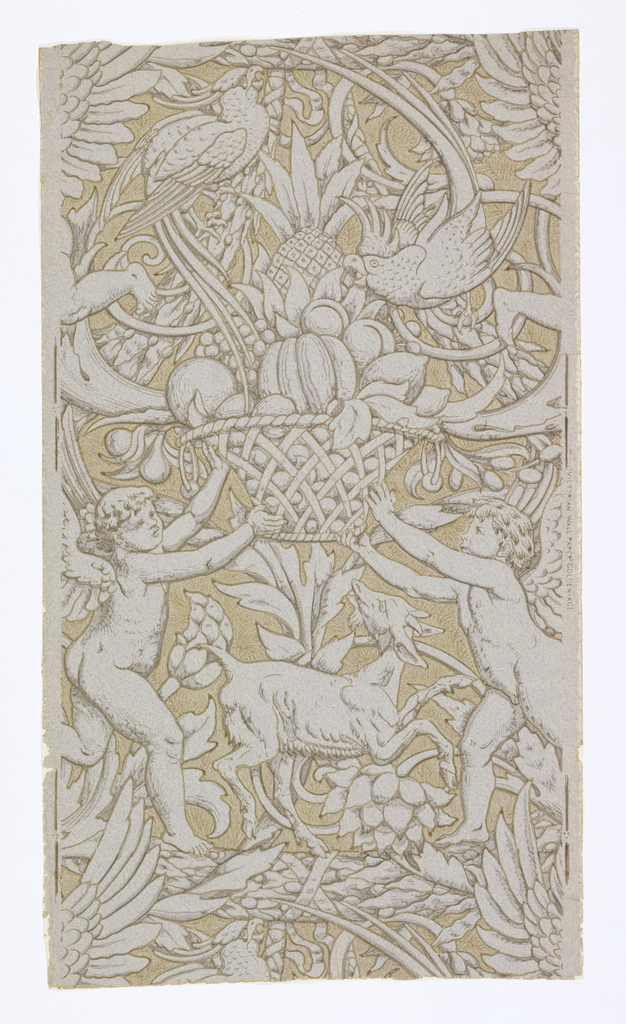
The Golden Age is a delightful wallpaper designed by Walter Crane in 1887 and printed by Jeffrey & Co. in London as part of their Victorian Wall-Paper collection. The design contains two winged putti, standing on a large foliate swag, supporting or carrying a large basket of fruit. There are two large birds, maybe cockatoos,...
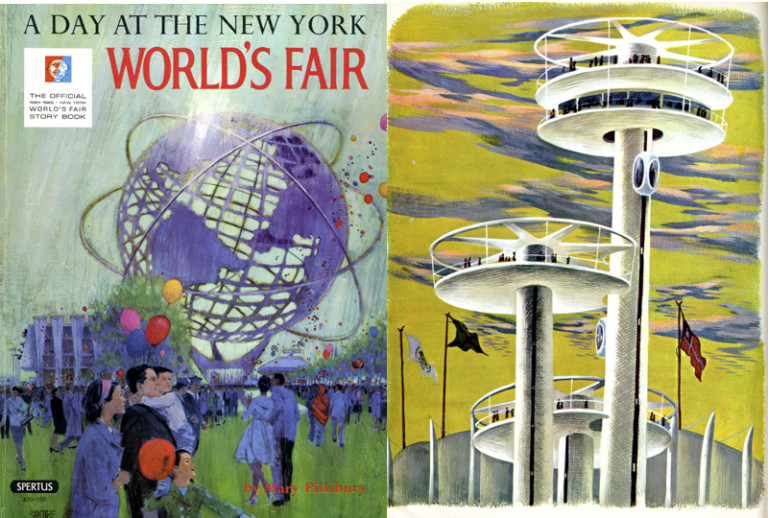
This post was originally published on April 22, 2014. The Cooper-Hewitt Library has a large collection of over 2,000 World’s fair catalogues and books. Some are children’s souvenirs and stories. A day at the New York World’s Fair with Peter and Wendy brings back memories of certain things I remember from visiting the world’s fair.....
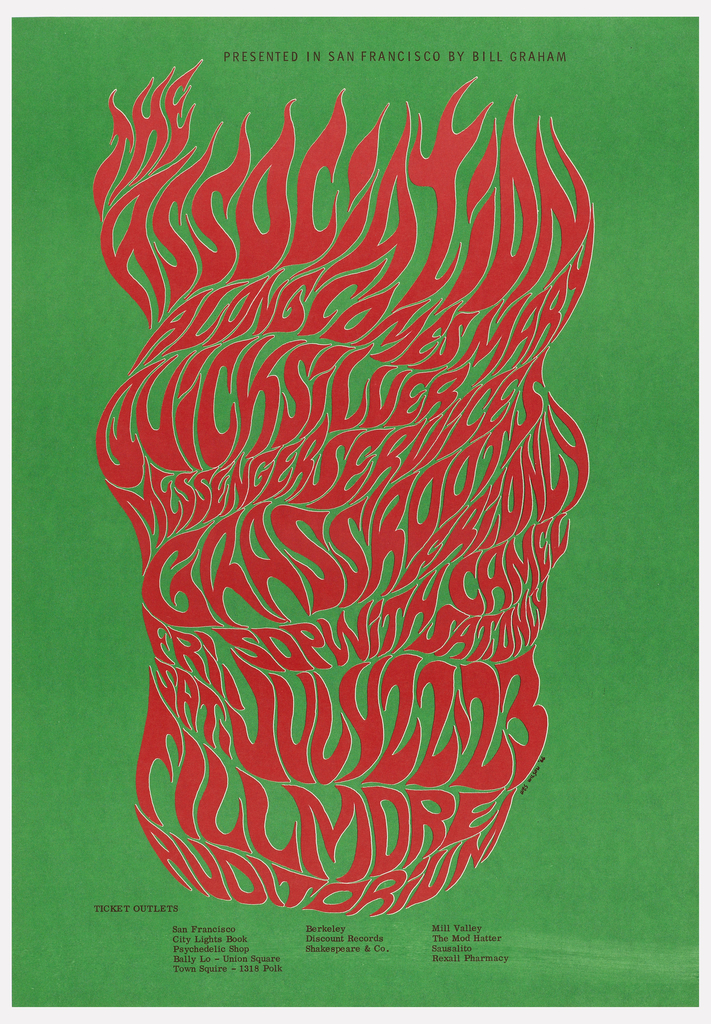
Designer Wes Wilson, who died on January 24, 2020, at age 82, created some of the most memorable posters of the psychedelic era. These wavy-gravy, acid-colored, hand-lettered provocations for the eye accompanied rock shows at San Francisco’s Fillmore Auditorium and Avalon Ballroom. Wilson’s posters for the Grateful Dead, Jefferson Airplane, The Association, and other bands...
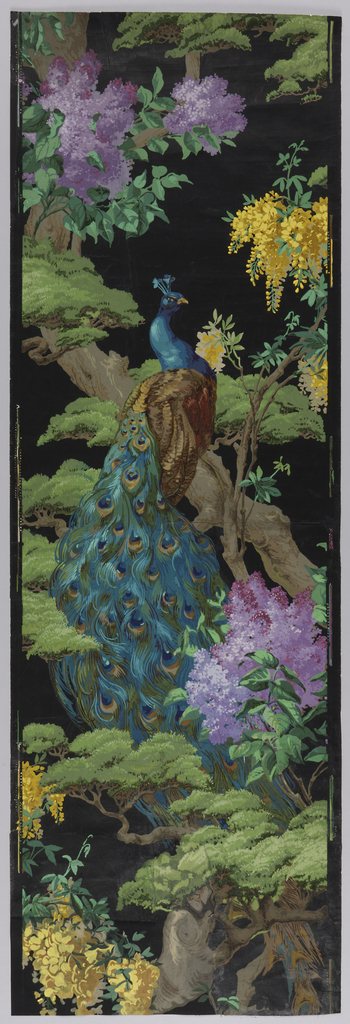
This is one of the most gorgeous and dramatic wallpapers produced during the early twentieth century. The design shows a brilliantly colored peacock perched in a cedar tree, with copious blossoms of lilac and wisteria in yellow and lavender. All of the printed colors pop against the black ground. And note the size of the...
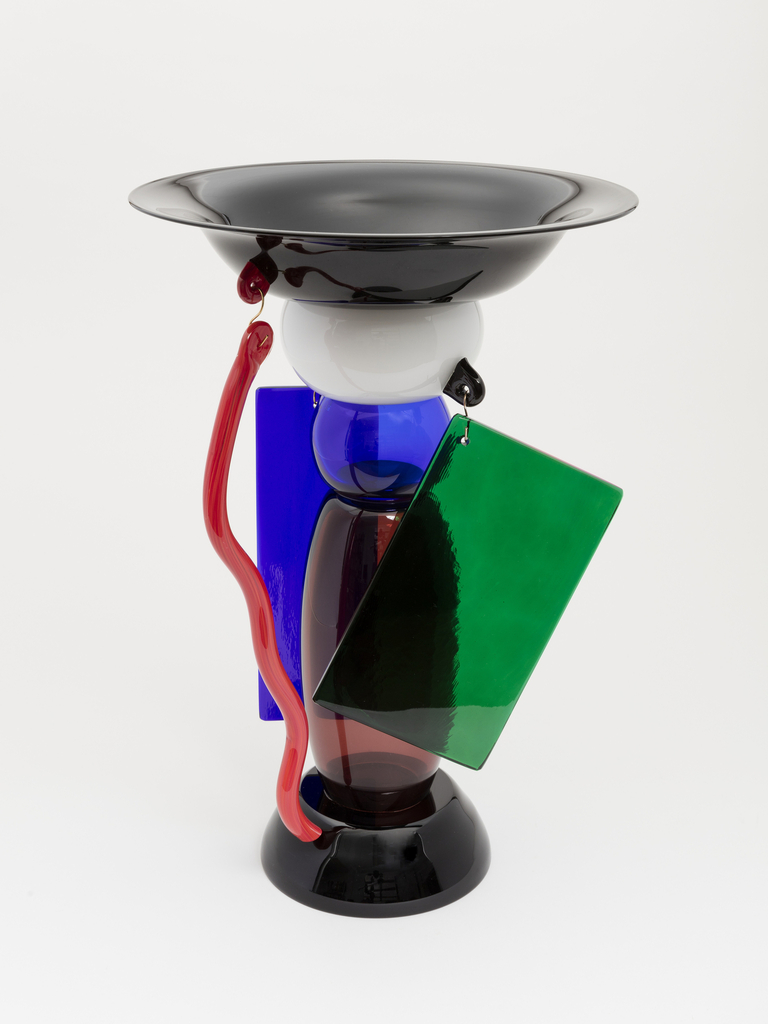
The bubble-like contours and dangling pieces of glass of this bowl are cartoonish and playful. The Efira Bowl was designed by Ettore Sottsass in 1986 for the important collective, Memphis, which he had founded five years earlier.[1] The bowl is a wonderful example of the objects produced by Memphis, which have been held up as...
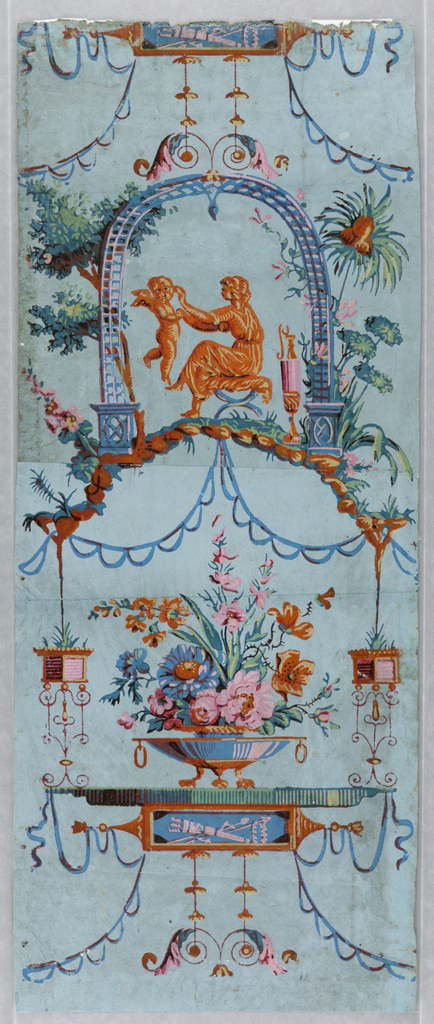
This is an arabesque wallpaper design from the late eighteenth century, containing two alternating views. The top view shows a woman, possibly Venus, within an arbor seated on a cross frame stool, playfully bouncing a putto, perhaps Cupid, on her foot. A tall urn sits behind her. A tree grows off to the left, towering...
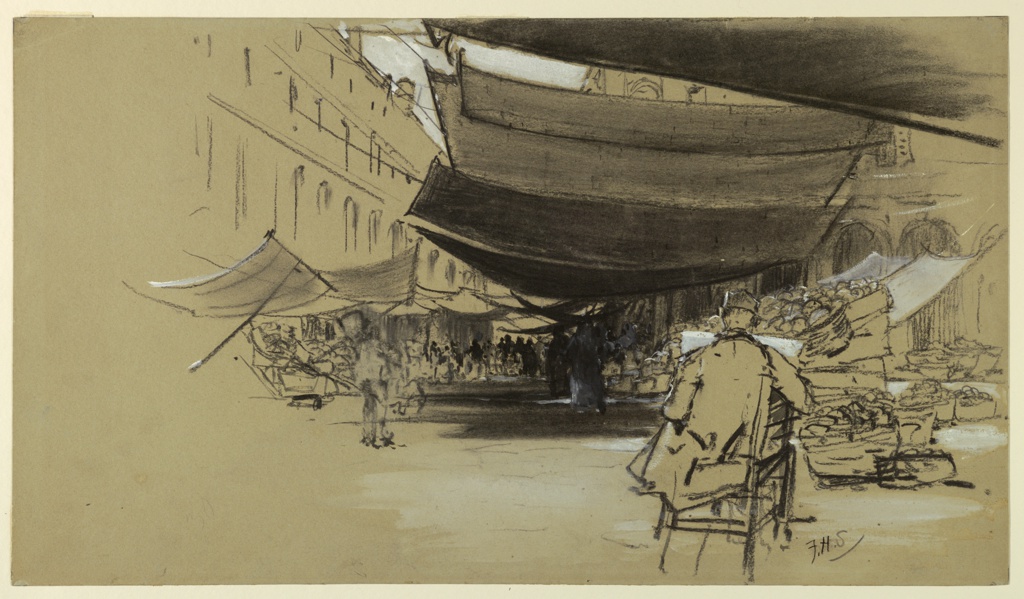
Writer and illustrator Francis Hopkinson Smith did not publish his first work until he was almost 50 years old. Trained as an engineer, he spent the first part of his career in construction and is credited with designing the foundation for the Statue of Liberty. He made charcoal drawings and watercolors throughout his life and...
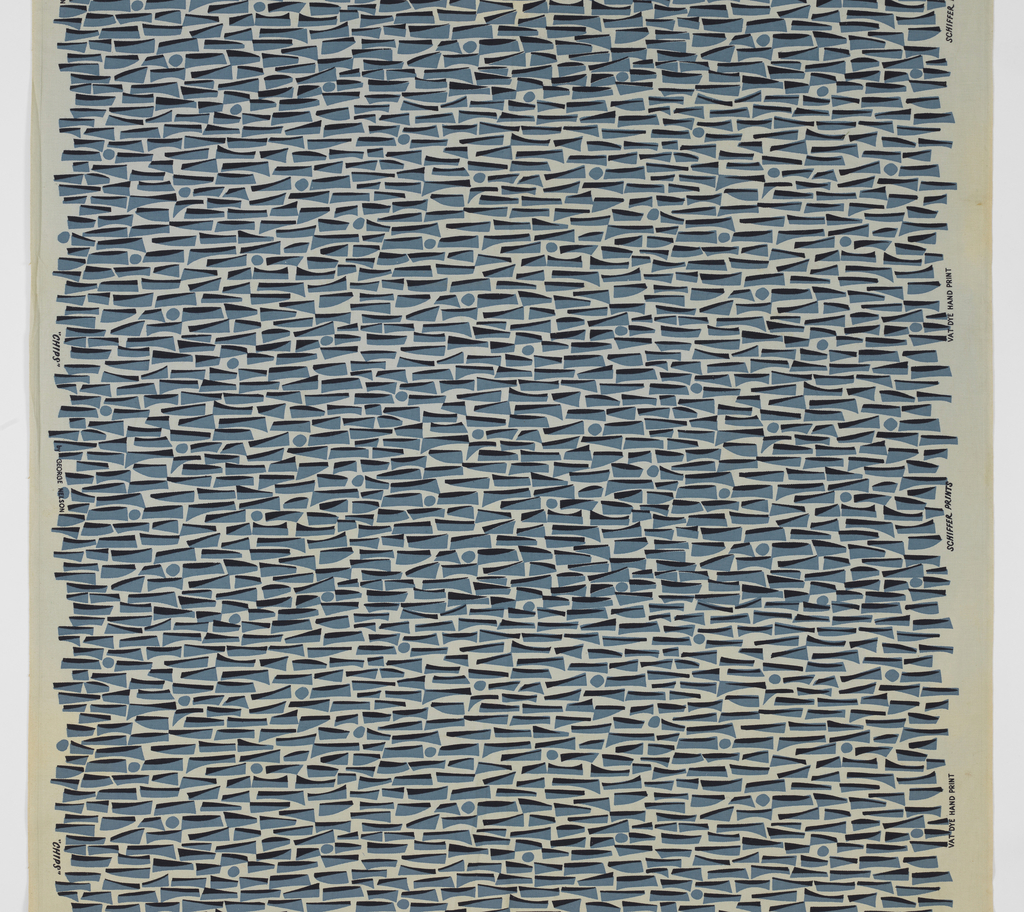
In the aftermath of World War II, a number of textile producers attempted to revitalize the industry by enlisting recognized personalities in art and architecture to design screen prints. “Perhaps the most outstanding name collection is Stimulus Fabrics produced by Schiffer Prints,” Alvin Lustig wrote in American Fabrics Magazine in 1951. “There was not a...
