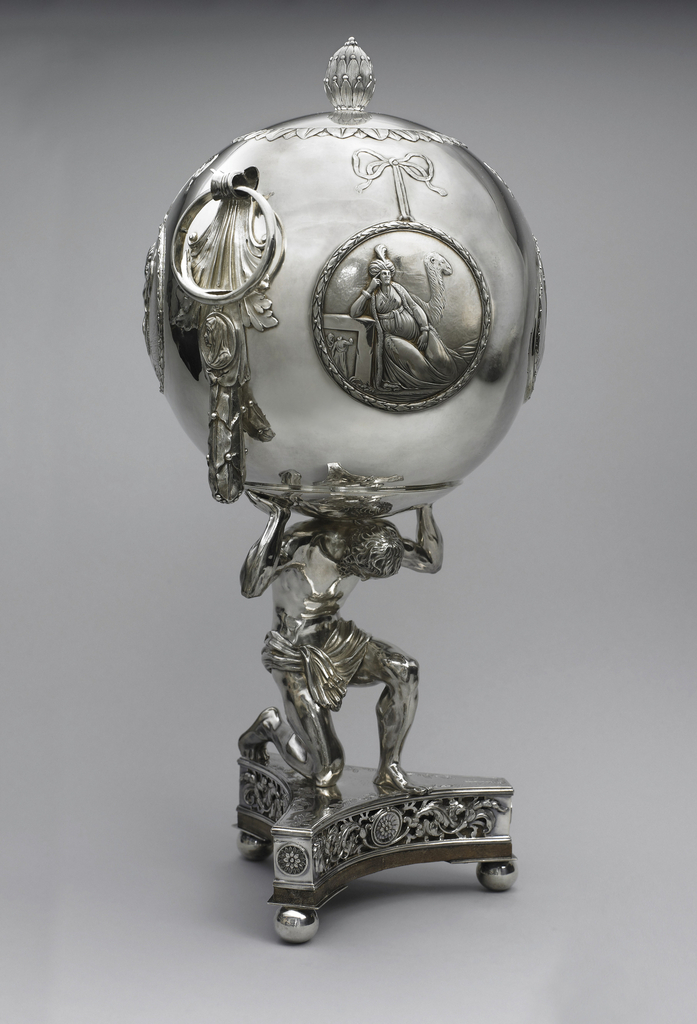
This distinctive tea urn takes the form of Atlas supporting the world. Its triangular base has openwork decoration and rests on three ball feet. The spherical urn is held aloft by the kneeling figure of Atlas, straining as he supports the globe on his shoulders. The surface is decorated with reliefs featuring four wreathed circular...
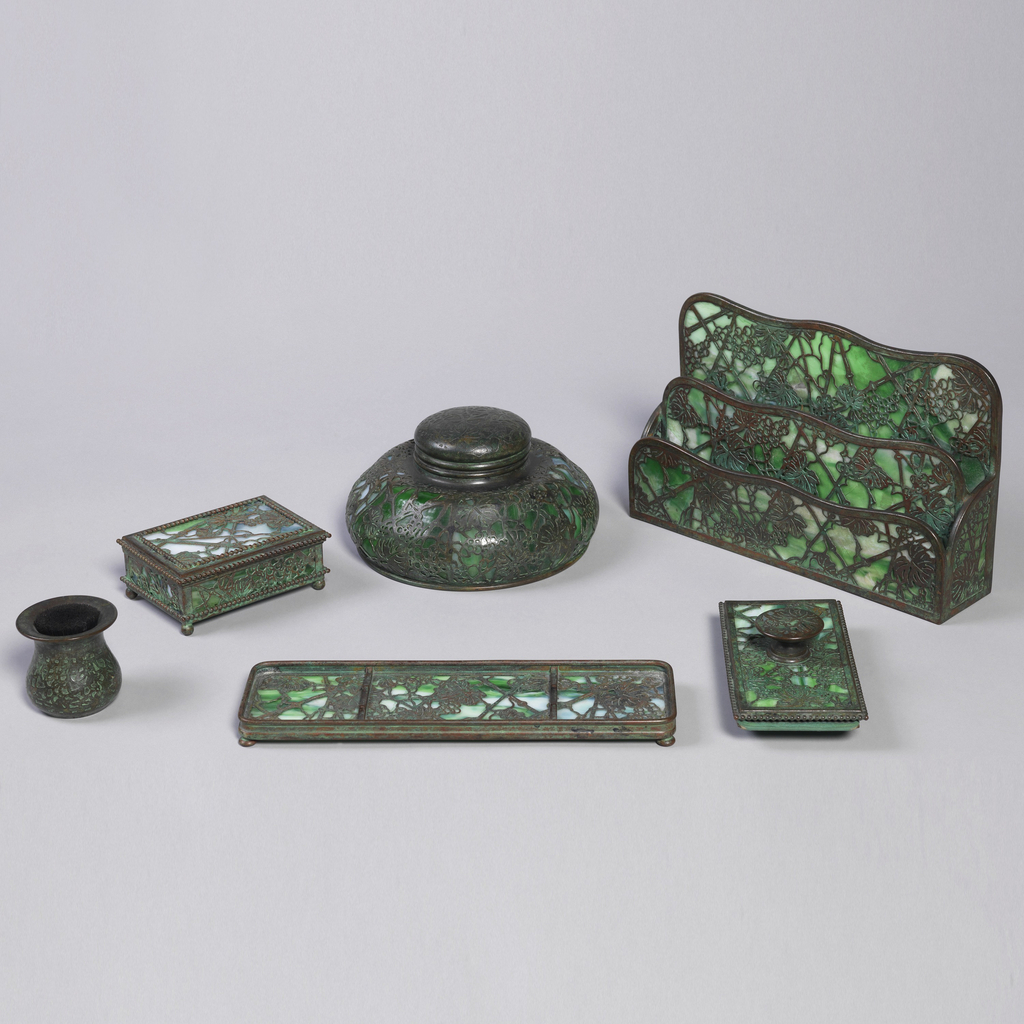
In this age of electronic assistants, it is hard for many to fathom a time when telephone service was limited and mail, or what today is referred to as “snail mail”, was the order of the day. During the early decades of the twentieth century written letters were the most common form of communication, and...
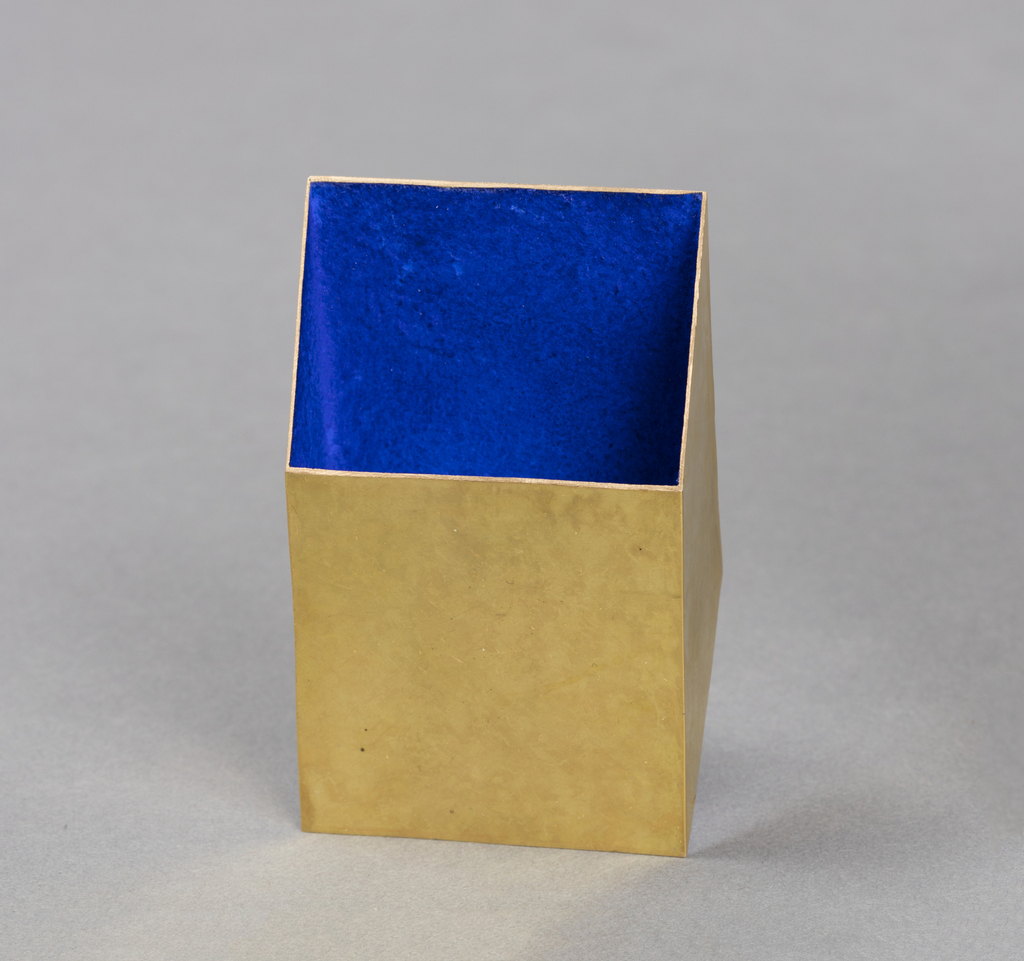
Folded into an open rhombus, and richly adorned with pigment, this brooch boldly uses color (achieved with the application of cobalt blue pigment) and texture (achieved by stippling the gold) to enhance its form. One look at this brooch by Giampaolo Babetto provides evidence of the mastery of gold present in his work. Babetto’s pieces cleverly...
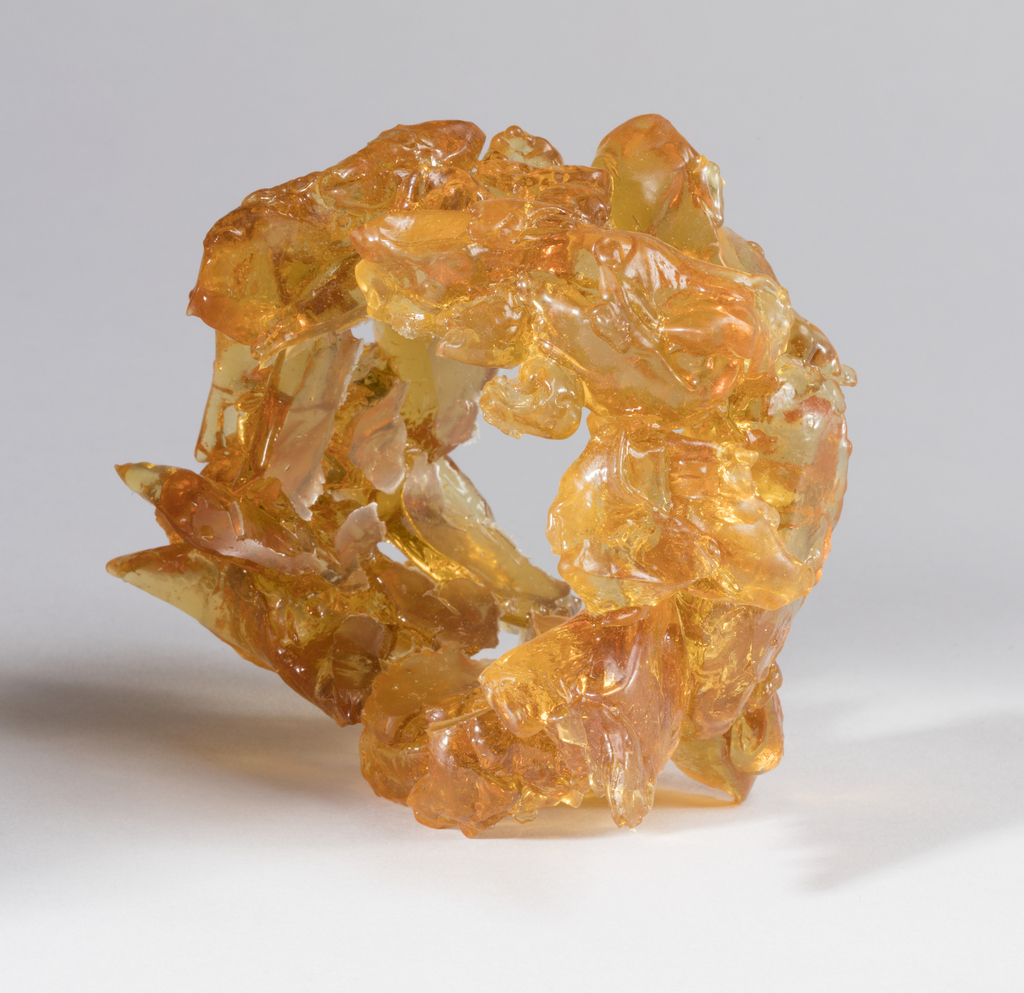
During the last decade, Gaetano Pesce, long known for his varied designs and sense of experimentation, turned his attention to the creation of jewelry. Throughout his career Pesce has used resin to create such diverse objects as furniture, vases and shoes. Experimenting further, Pesce sought to create jewelry with this highly adaptable medium. To date,...
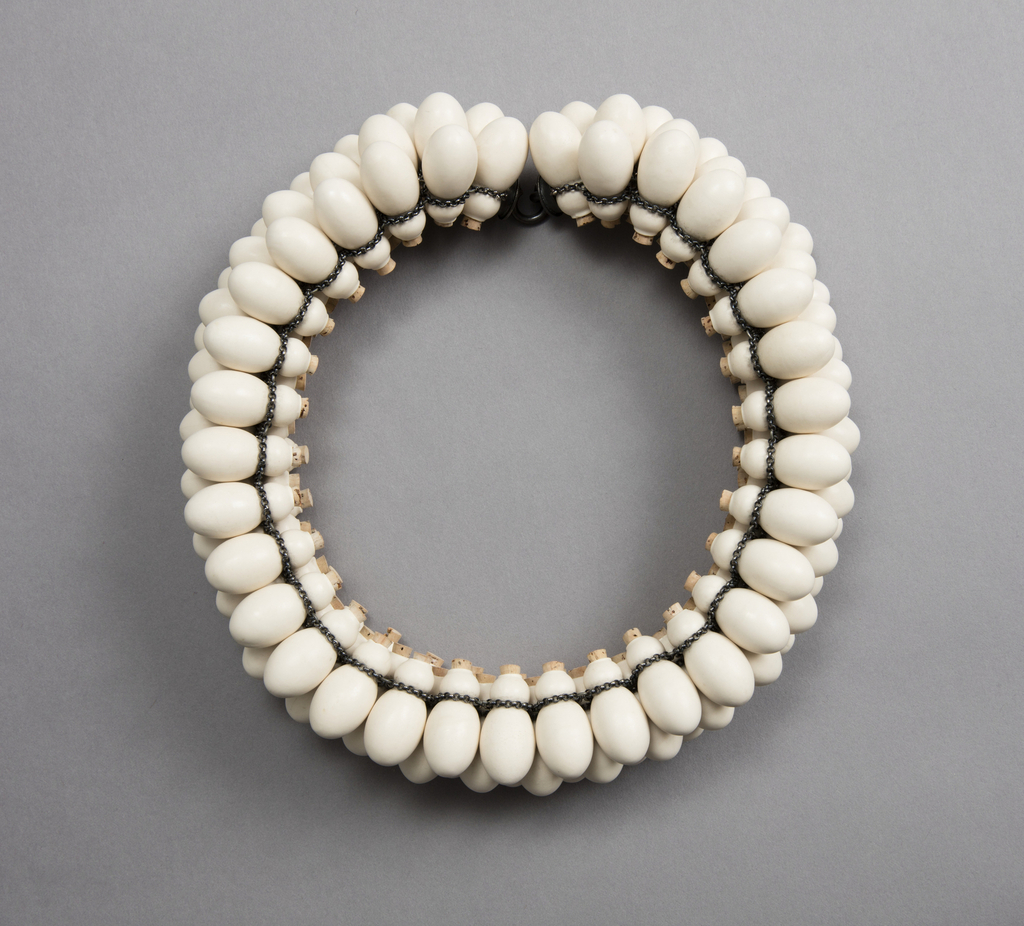
Ceramic beads have been used in jewelry for millennia. Recognizing the utilitarian quality of this material, Peter Hoogeboom chooses it as the primary material for his neckpieces. Hoogeboom had noted historical ceramic jewelry in museums yet did not often see clay used in contemporary jewelry. Through experimentation he found that the slip casting technique allowed him...

Felieke van der Leest’s Grey Heron Airplane ring is full of the whimsy which is an integral component of the artist’s imaginative and sophisticated design process, which incorporates techniques such as bead weaving and crocheting. This ring, like much of Van der Leest’s work, focuses on the use of mass produced toy animals, highlighted by...
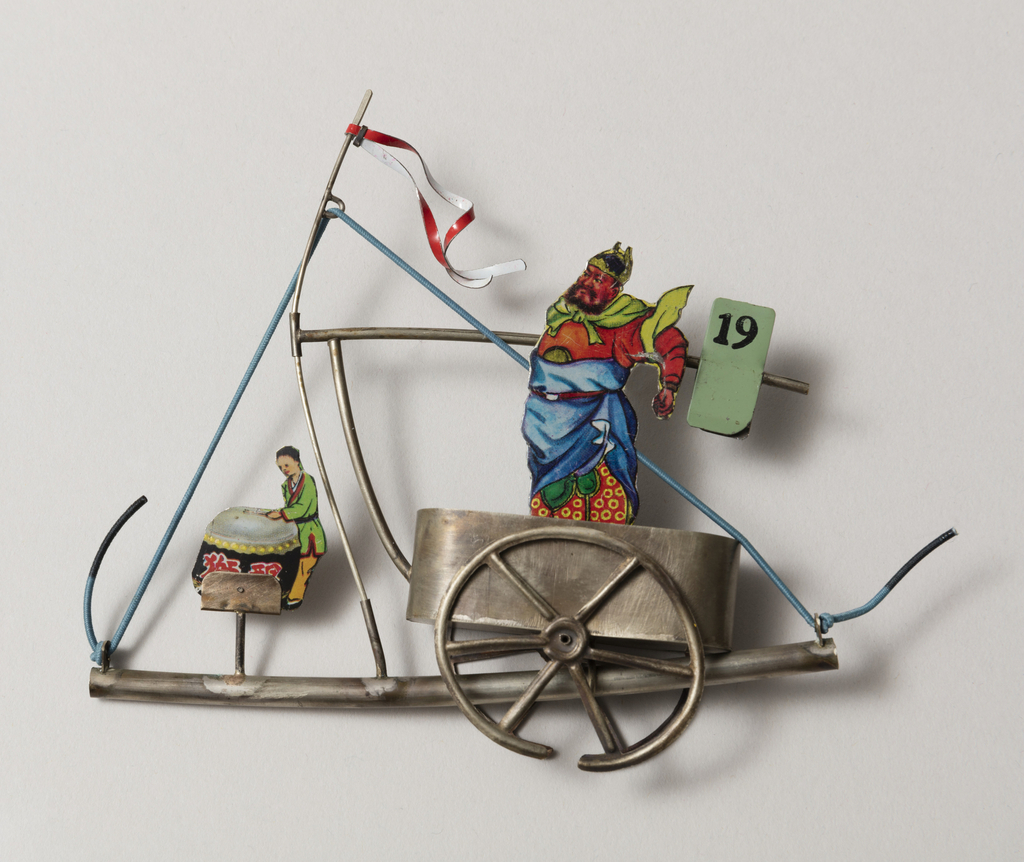
This brooch from Esther Knobel’s Immigrant series expresses the artist’s playful side. The brooch features colorful figures, a circus performer and an ancient emperor, both cut from tin boxes of Chinese tea that Knobel found in an old shop on Jaffe Street in Jerusalem. The figures themselves serve as a metaphor for an immigrant, arriving...
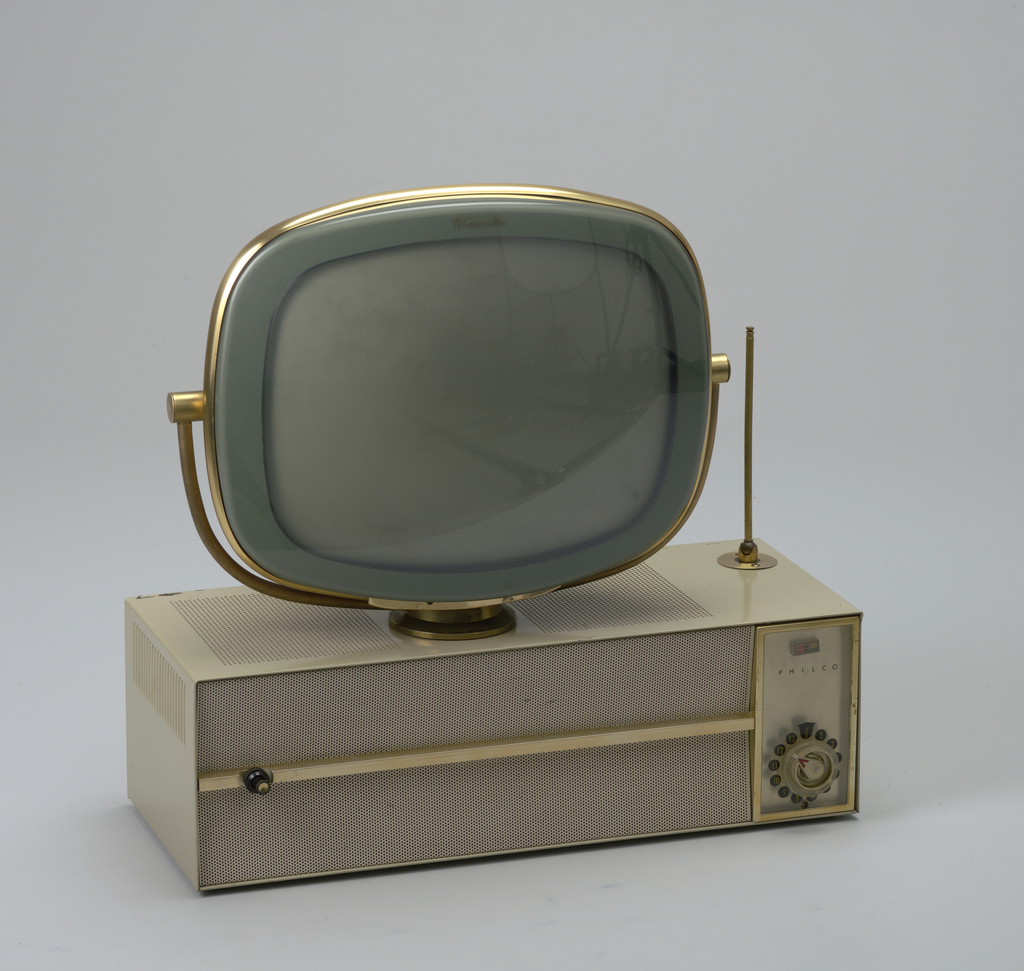
This Predicta Princess television, produced by Philco in 1959, is a tabletop model designed for portability. The Princess, featuring the Predicta’s trademark ‘low neck’ swiveling screen, was a departure from the classic home television which was housed in a large wooden cabinet designed as a piece of furniture. This compact case allowed the television to be...
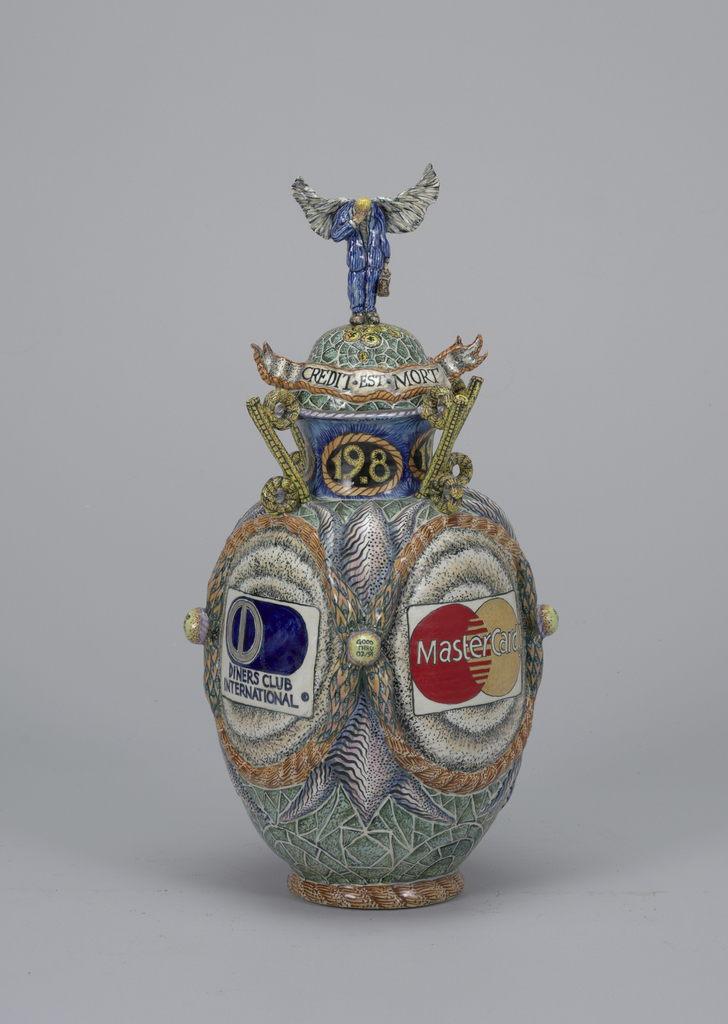
This reliquary vase, created by Matt Nolen, is featured in the exhibition, The Virtue in Vice, currently on view at Cooper Hewitt. The vase was selected as a visual interpretation of greed, here defined as the acquisition of large sums of money, universally recognized as the hallmark of avarice. Though tongue-in-cheek, Nolen’s reliquary pointedly illustrates...
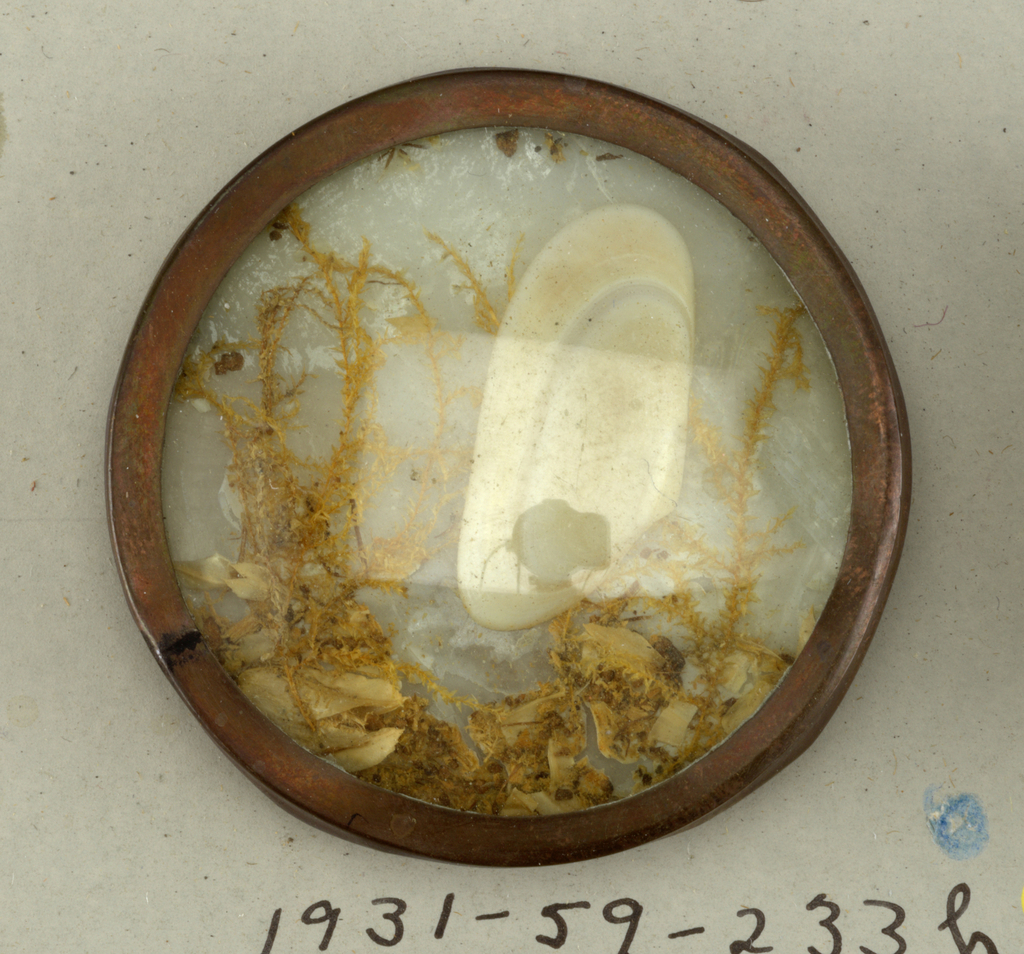
This button, from a set of nine, offers the viewer a chance to peek into the age of Enlightenment, a period of time when the human mind was breaking free from the constraints of the Church and the limitations of the Middle Ages. The Renaissance, primarily spanning the fifteenth through sixteenth centuries, is often thought...
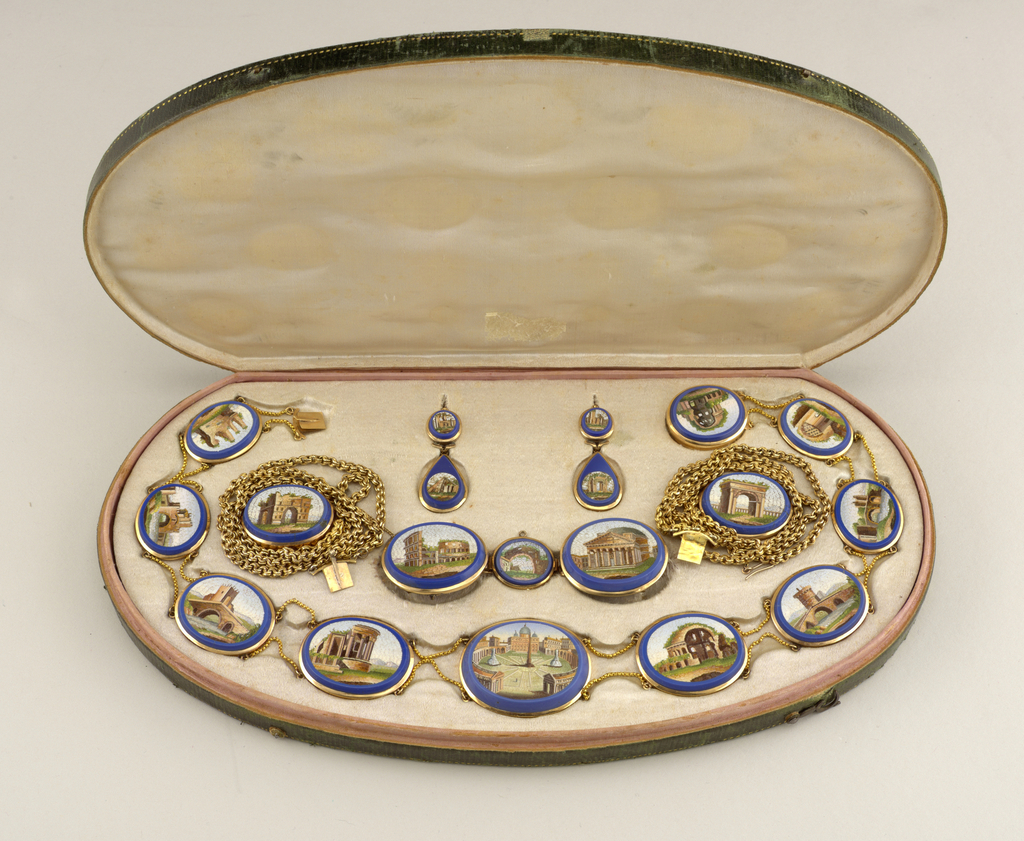
This jewelry parure, or suite, is indicative of a custom that was unique to its time and class. The Grand Tour was a traditional trip taken by upper class young men and women, with the goal of exposing them to the artistic riches of France and Italy, thereby completing their education. These long sojourns became...
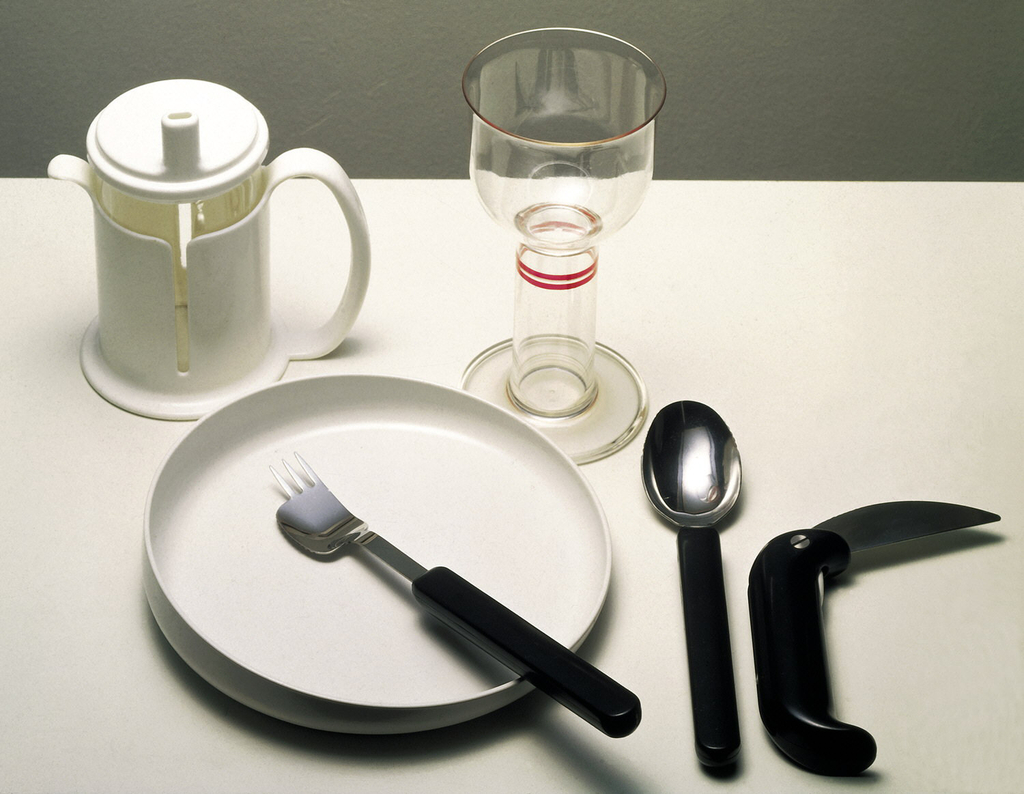
The cutlery in this tableware set, designed by RFSU Rehab for Ergonomi Design Gruppen, is comprised of black plastic handles and stainless steel implements. The significance of design for the human condition cannot be understated and this tableware demonstrates the value of looking beyond aesthetics, to consider tools as objects that can enable greater independence...
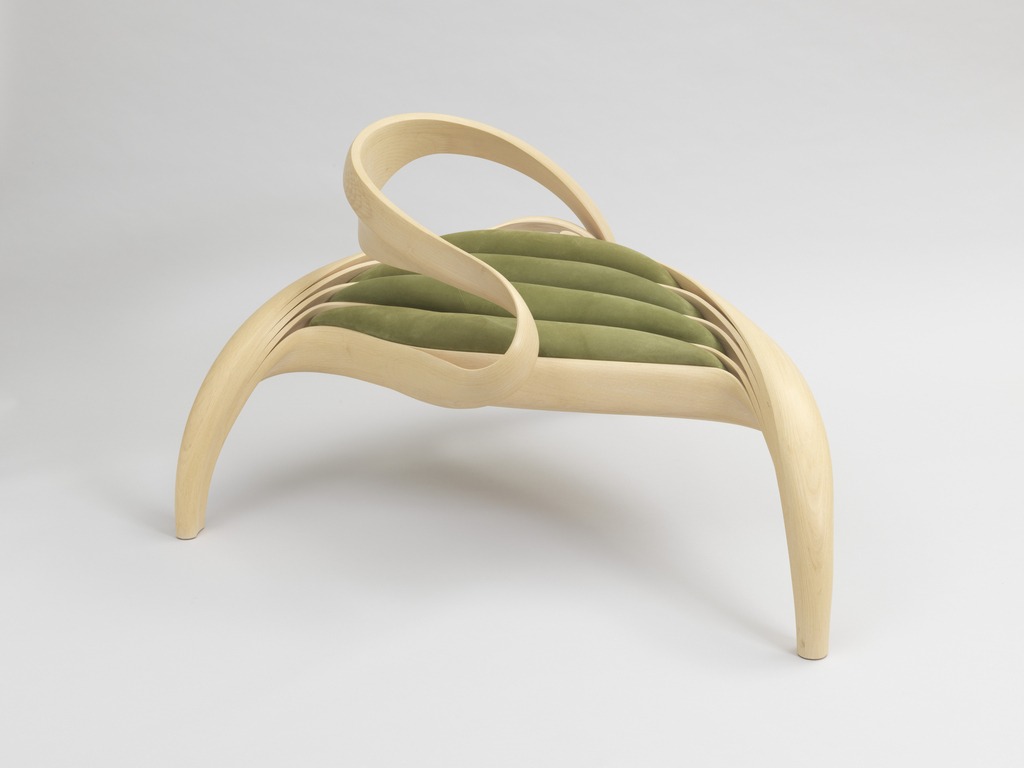
The Enignum Free Form Chair by Joseph Walsh curves, swirls and ripples in a manner that is reminiscent of furniture from the Art Nouveau period, yet it is contemporary in its overall aesthetic. Joseph Walsh, a self-taught designer and builder, started working with wood at the age of eight, and honed both his woodworking skill...
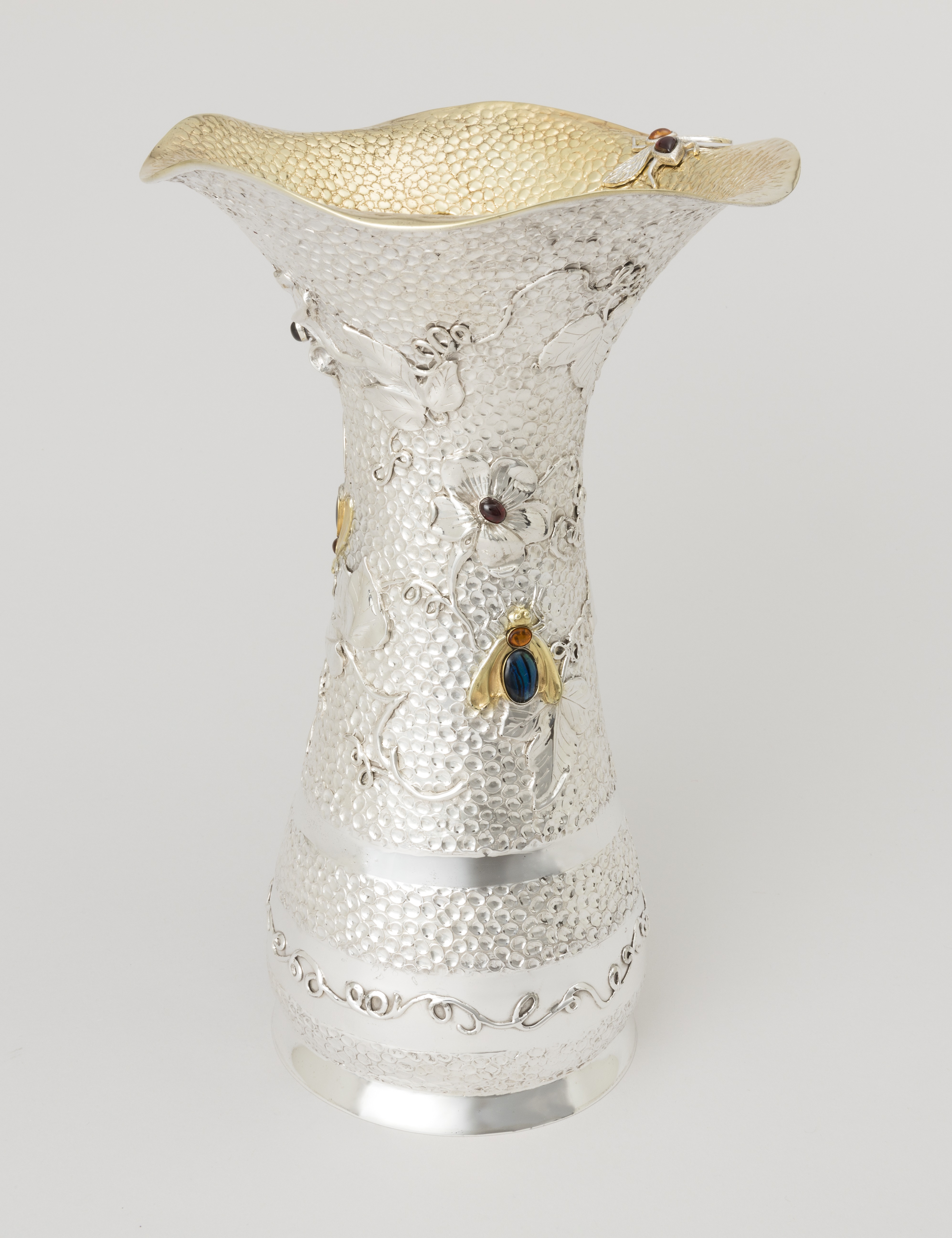
Michael Izrael Galmer was born in 1947 in the former Soviet Union, living there through much of the Cold War. Despite the difficulty of these years, Galmer attended Moscow University, earning a Ph.D. in physics while pursuing his interests in drawing, painting and sculpture, looking to nature for inspiration. As a student, he did not...
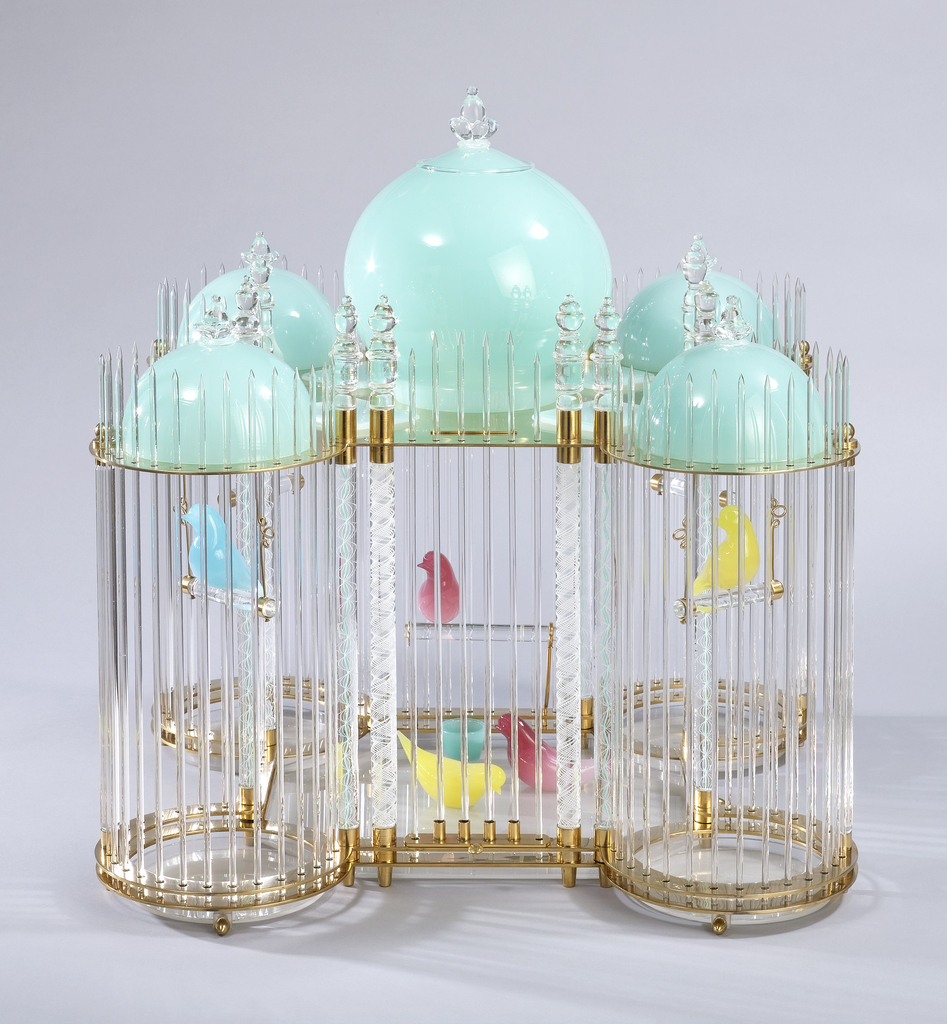
This beautiful birdcage comprised of glass, brass and plexiglass was designed by Charles Lin Tissot. Although best known for his domestic glassware designed for Steuben, this birdcage from the Glass Gardens collection is an escape to a realm of fantasy. This birdcage was produced during the years that Tissot collaborated with the Venini glassworks in...
