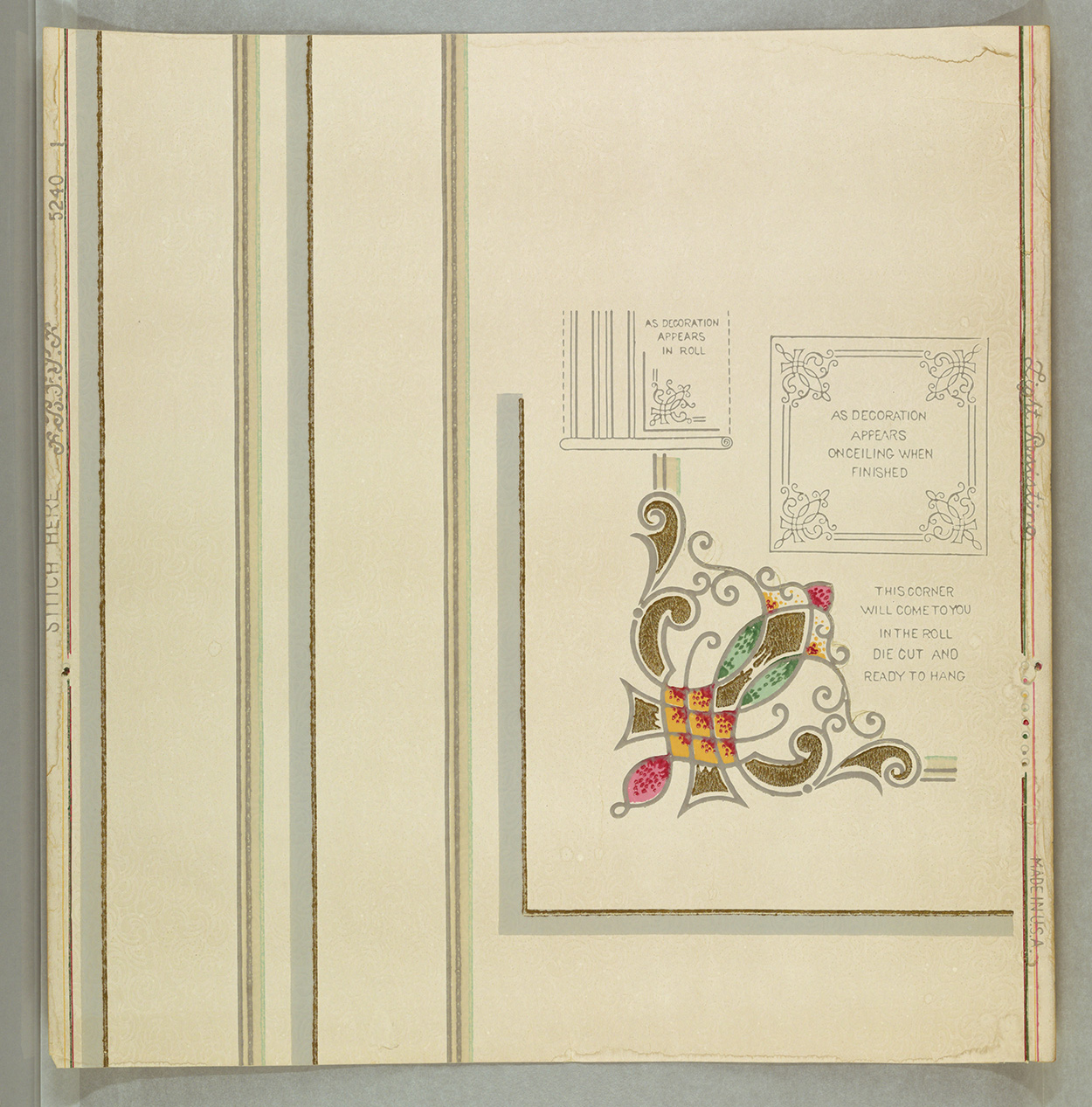
This corner border doesn’t appear like much at first appearance but it speaks a lot about technology. This is a ceiling corner border: the design is simple, printed in only a few colors, very affordable. Maybe not so easy to hang but it would have been cheap enough that you could afford to make mistakes....
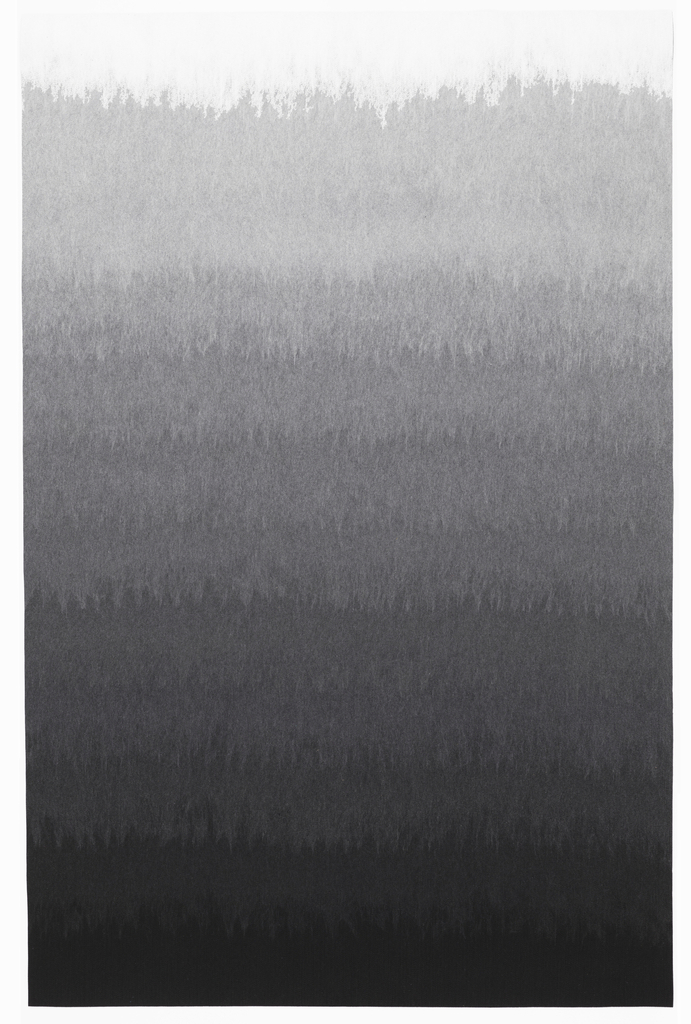
This is a textile designed and constructed for direct application to the wall. Made in the lamontage process, the design is an ombre pattern that shades from deep black through shades of gray, to white. While this style has certainly made a comeback today it has old roots in the wallpaper field, and I was...
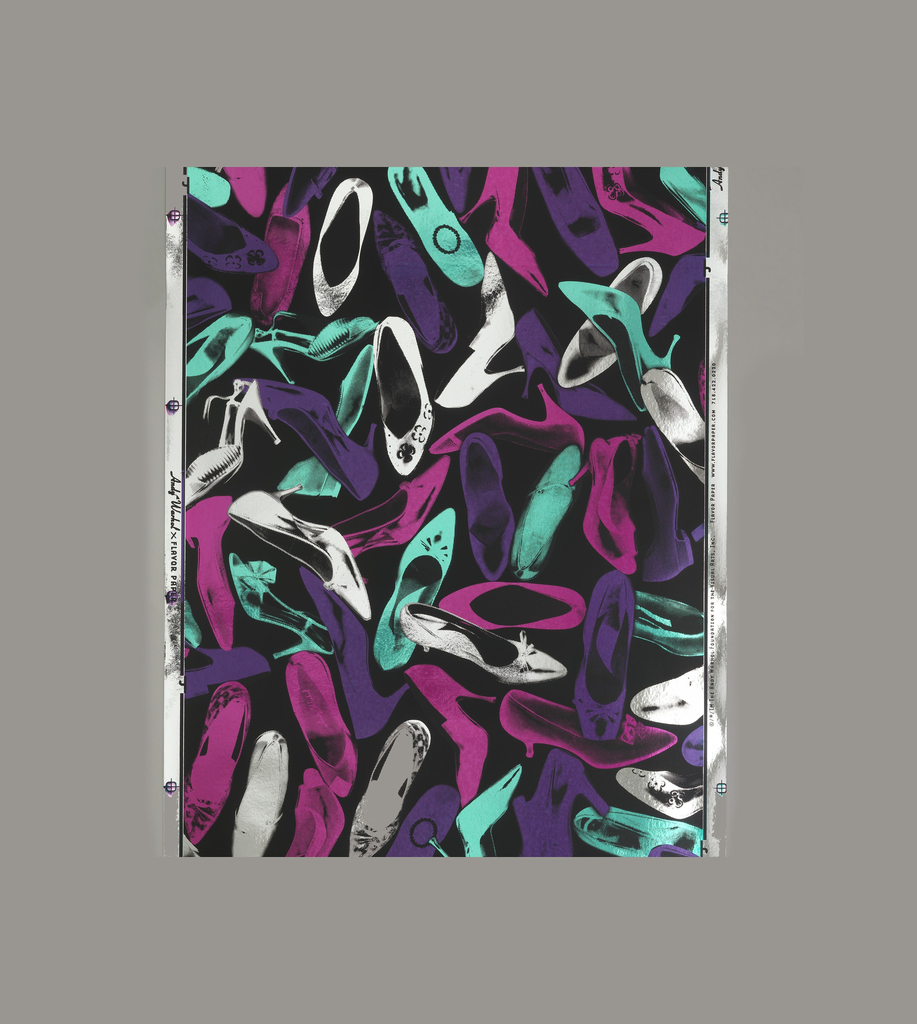
Shoes is part of the wallpaper collection Flavor Paper produced in collaboration with the Warhol Foundation, with each design offering a new interpretation of the artist’s work. Warhol was passionate about the repetition of pattern and throughout the 1960s he frequently installed his series of screen prints edge to edge to create the look of...
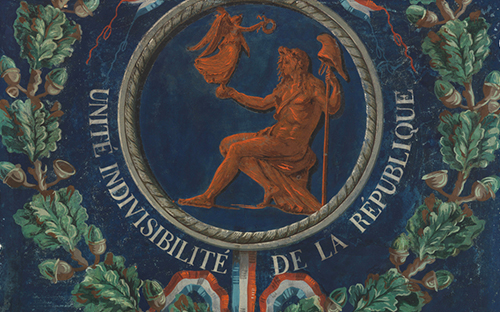
In last month’s Cooper Hewitt Short Story, we buttoned up with a rousing exploration of the history of the button as illustrated by Cooper Hewitt’s expansive collection. This month, we delve into the uniquely Cooper Hewitt collection of historical and contemporary wallcoverings. Greg Herringshaw, the museum’s curator of wallcoverings, outlines three key areas collected by...
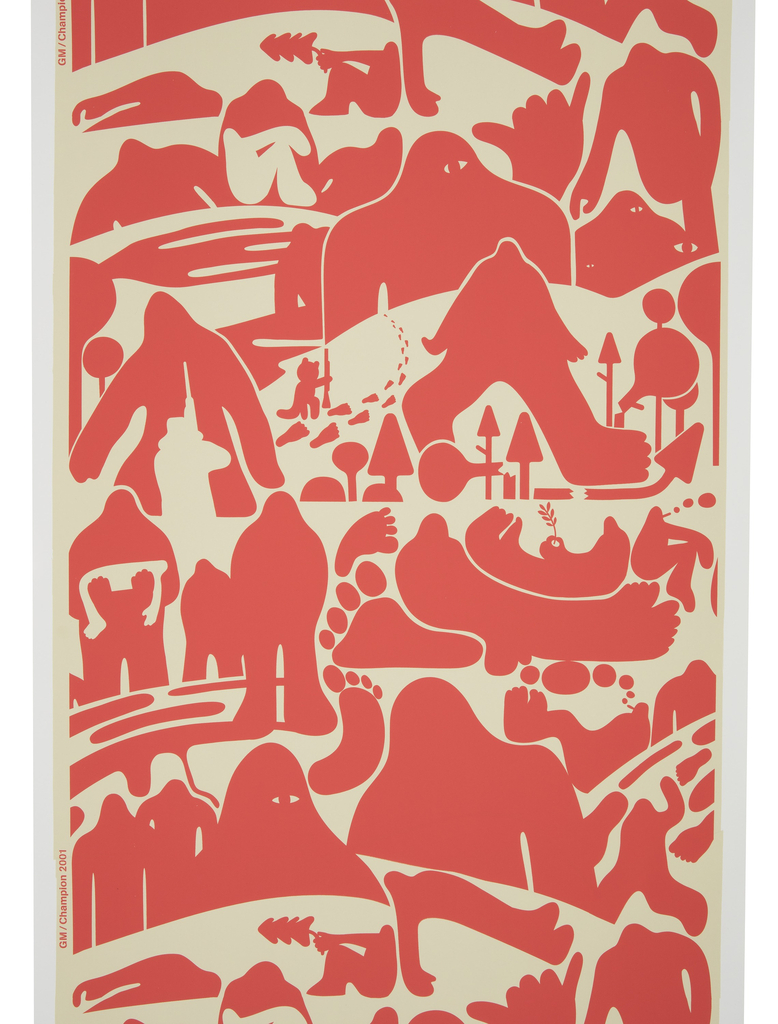
This is a fun wallpaper showing a great use of positive and negative space. “Shadows of the Paranormal” illustrates the story of the search for the fabled Big Foot. Details have been simplified to the bare minimum, with all motifs rendered as silhouettes, while the creature’s features are reduced to a pair of eyes. In...
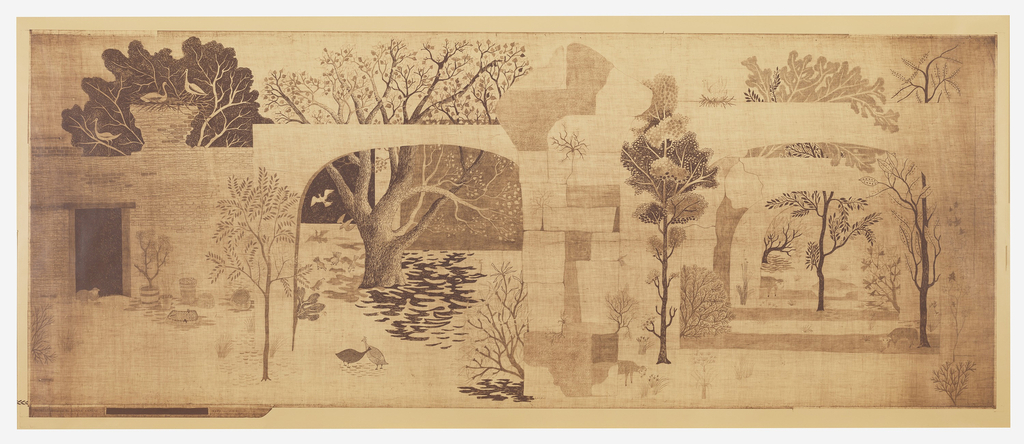
Arches is from the first collection of murals Ilonka Karasz designed in 1948 for Katzenbach & Warren, the New York wallpaper firm for whom she designed almost exclusively. Like the majority of her murals it was printed in the blueprint process, her favorite reproduction process for murals as it captured all the nuances of her...
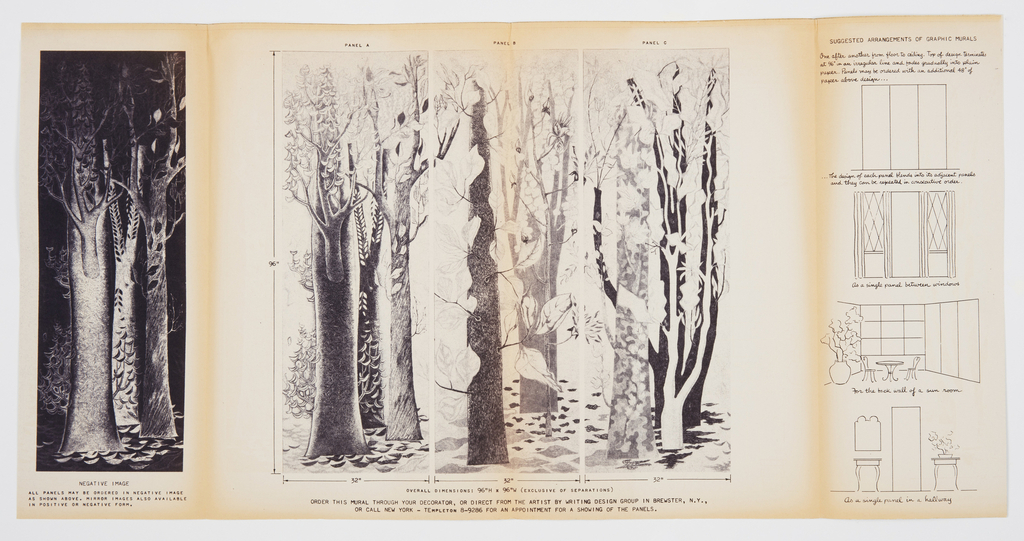
This promotional brochure for the Trees mural designed by Ilonka Karasz in 1960 contains a lot of information packed in an attractive format. This is printed in the luxograph process which was the same technique used to print the full-size murals. This technique was a blueprint method introduced by Katzenbach & Warren in 1947 for...
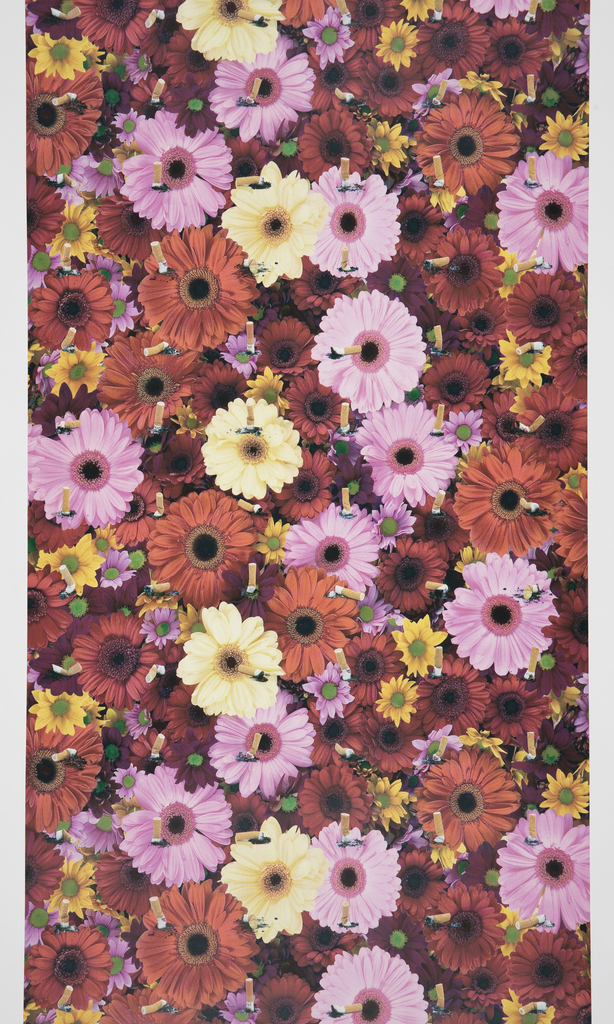
Damien Hirst’s “Beautiful Inside My Head Forever” wallpaper is an unexpected interpretation of a floral wallpaper containing a dense pattern of brightly colored flowers with a grid of smashed cigarette butts printed on top. The design plays on the contrasting themes of beauty and trash, or life and death, as Hirst equates littered ashtrays with...
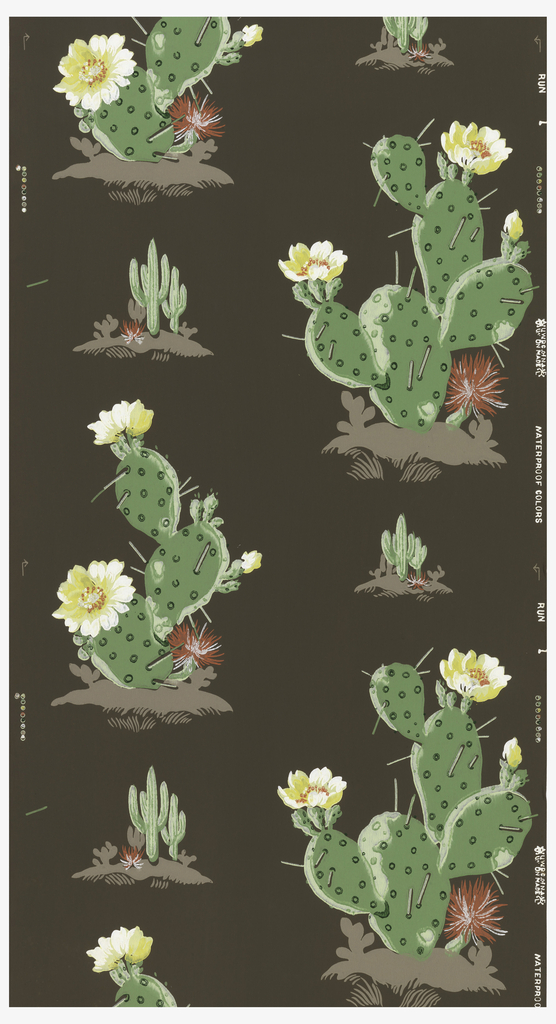
During the time period that this wallpaper was produced, the United States was experiencing some political unrest due to the ramifications of World War II. During the war years all artistic and design related activities slowed down substantially as manufacturers were unable to introduce new patterns as raw materials were reserved for the war effort....
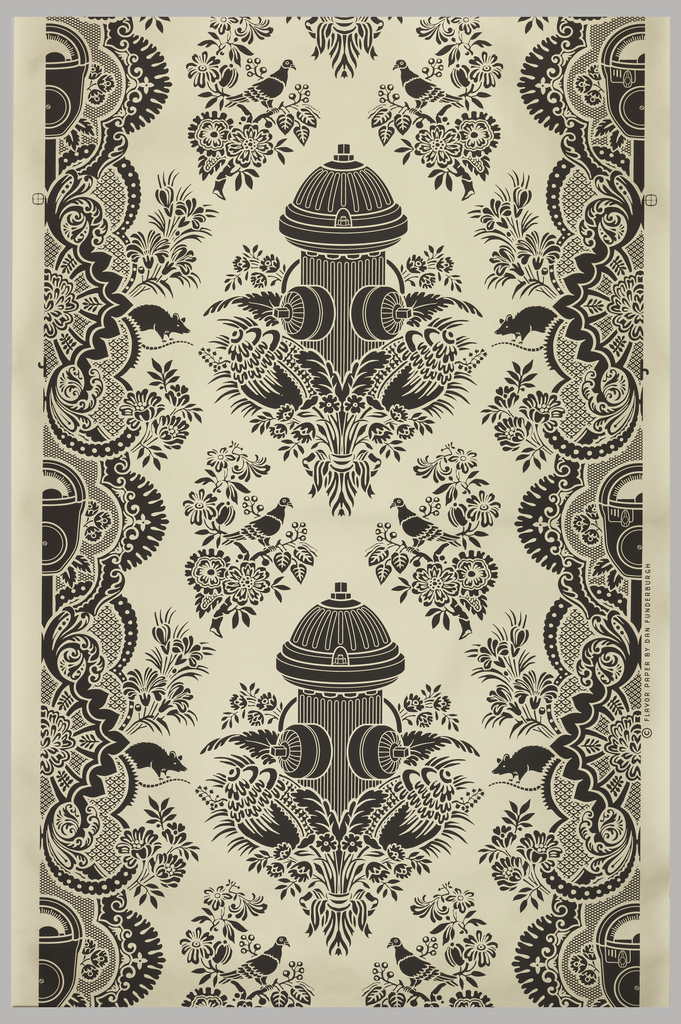
City Park is a repeating sidewall paper designed by Dan Funderbrugh for Flavor Paper. It was acquired by the Cooper Hewitt in 2007 and is among a variety of more modern papers that have been obtained by the museum as of late. Collecting from all time periods is essential in keeping museum records up to...

This wallpaper is part of a French sidewall design that was originally created circa 1850. It was acquired by the museum through a donation by Helen Fioratto, who has run the L’Antiquaire & the Connoisseur Inc. since the two galleries merged in 1982. The medium has been identified as “machine printed on paper” which would...
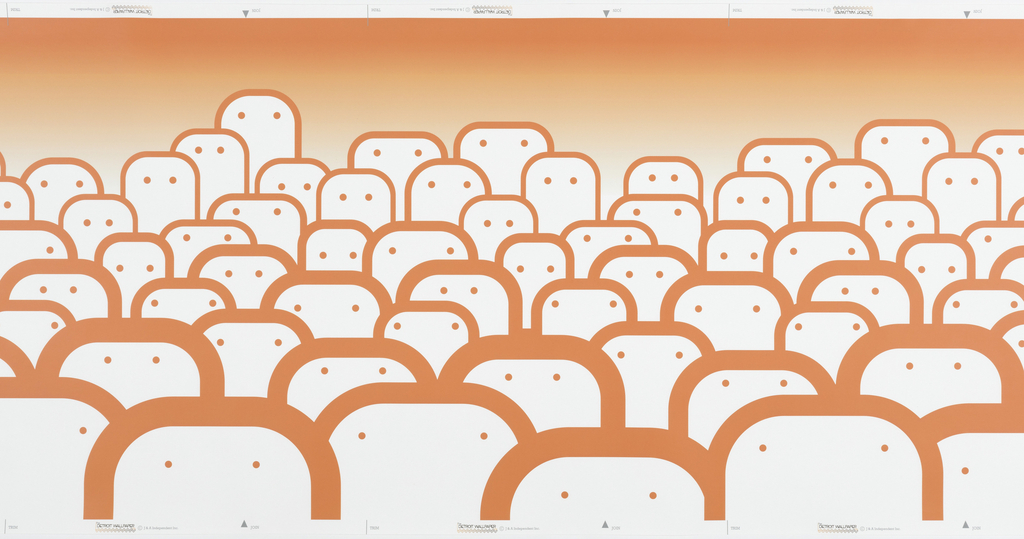
Peepers is a wallpaper border designed with children in mind. It is less infantile in design than other children’s papers so will not be so quickly outgrown and can be and can be paired with another wallpaper or used alone on a painted wall to create an inexpensive decoration. The amorphous figures get smaller as...
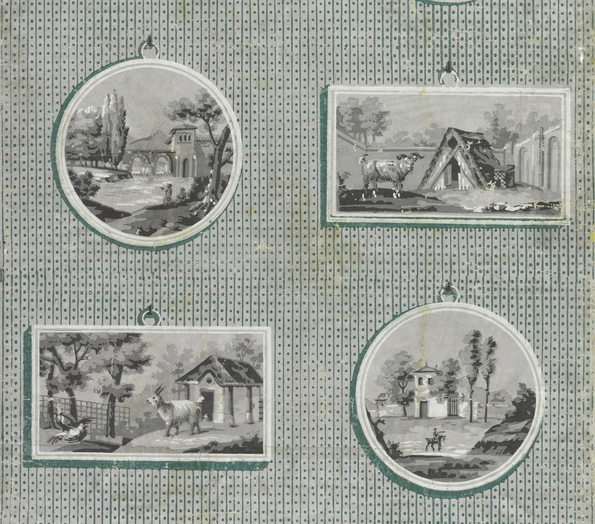
I came across an image of this print room paper and became fascinated as I took a closer look at each of the framed landscape views. Each view contains a figure and a structure. And half the figures happen to be goats, living in these beautifully styled shelters. Just to confirm these were actually houses...
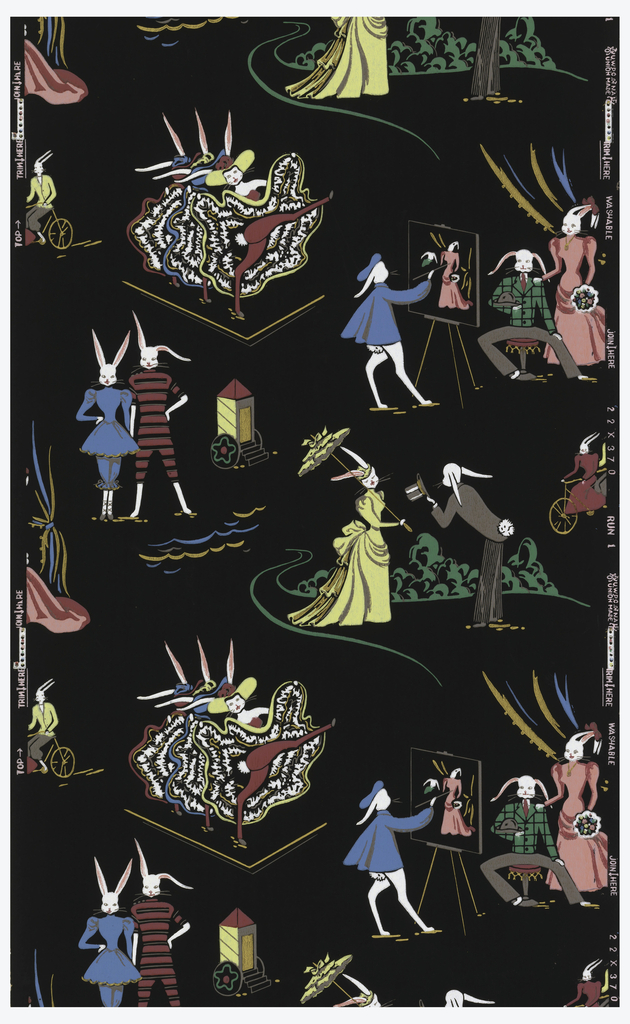
When it comes to post-war wallpapers the kitsch award goes to American manufacturers. From the late 1940s through the 1950s the United States churned out more novelty wallpapers containing a greater volume of funky, humorous designs than probably all other nations combined. This wallpaper with rabbits is a perfect example, with Victorian bunnies sporting bathing...
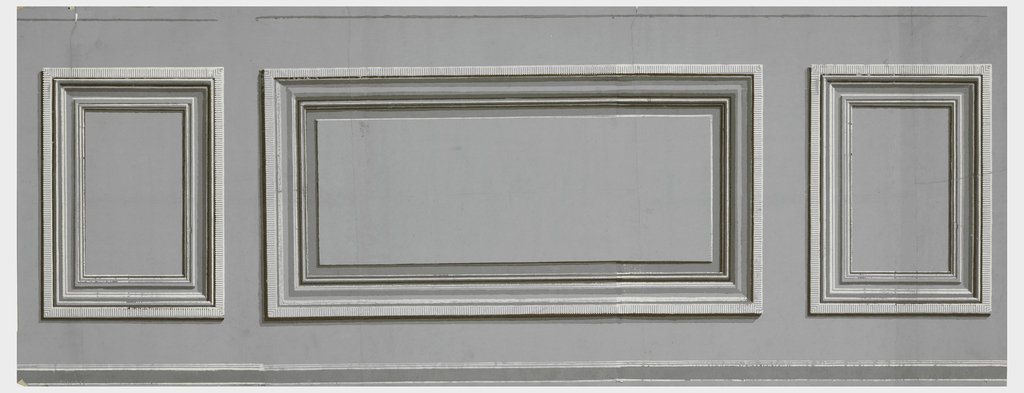
I thought it was about time to write about something other than a regular wallpaper. Wallpapers seem to get all the glory but there are other papers that pull their weight as well, like dado papers. Dado papers were used below the chair rail in rooms that lacked wood wainscots and were popular from the...
