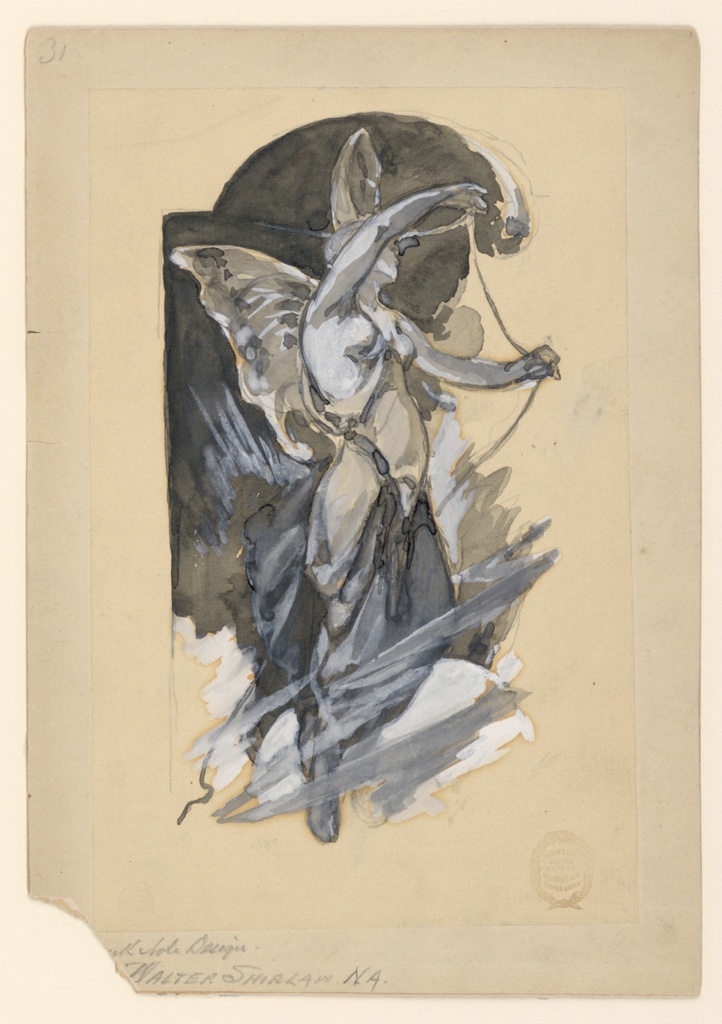
With her butterfly wings, this artfully draped female figure would seem more at home decorating a theater than ornamenting U.S. currency. Yet the designer, Walter Shirlaw, clearly labeled his drawing “Bank Note Design.” Shirlaw left school at the age of twelve and apprenticed himself to a bank note engraving company, believing that it would help...
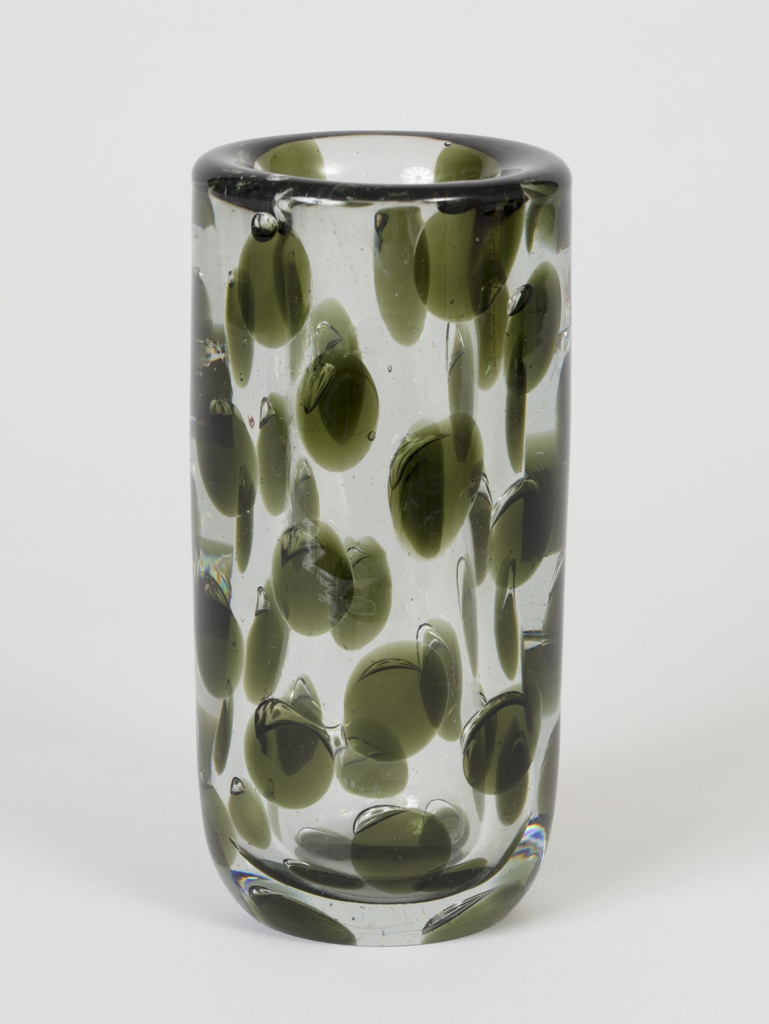
Saara Hopea (later Saara Hopea-Untracht) began her career as a furniture and lamp designer, but started designing glassware in about 1952, at a time when Finnish design was gaining prominence on the world stage for its strong attention to materials and sense of organic form in a modern idiom. Kaj Frank, Hopea’s former teacher at...
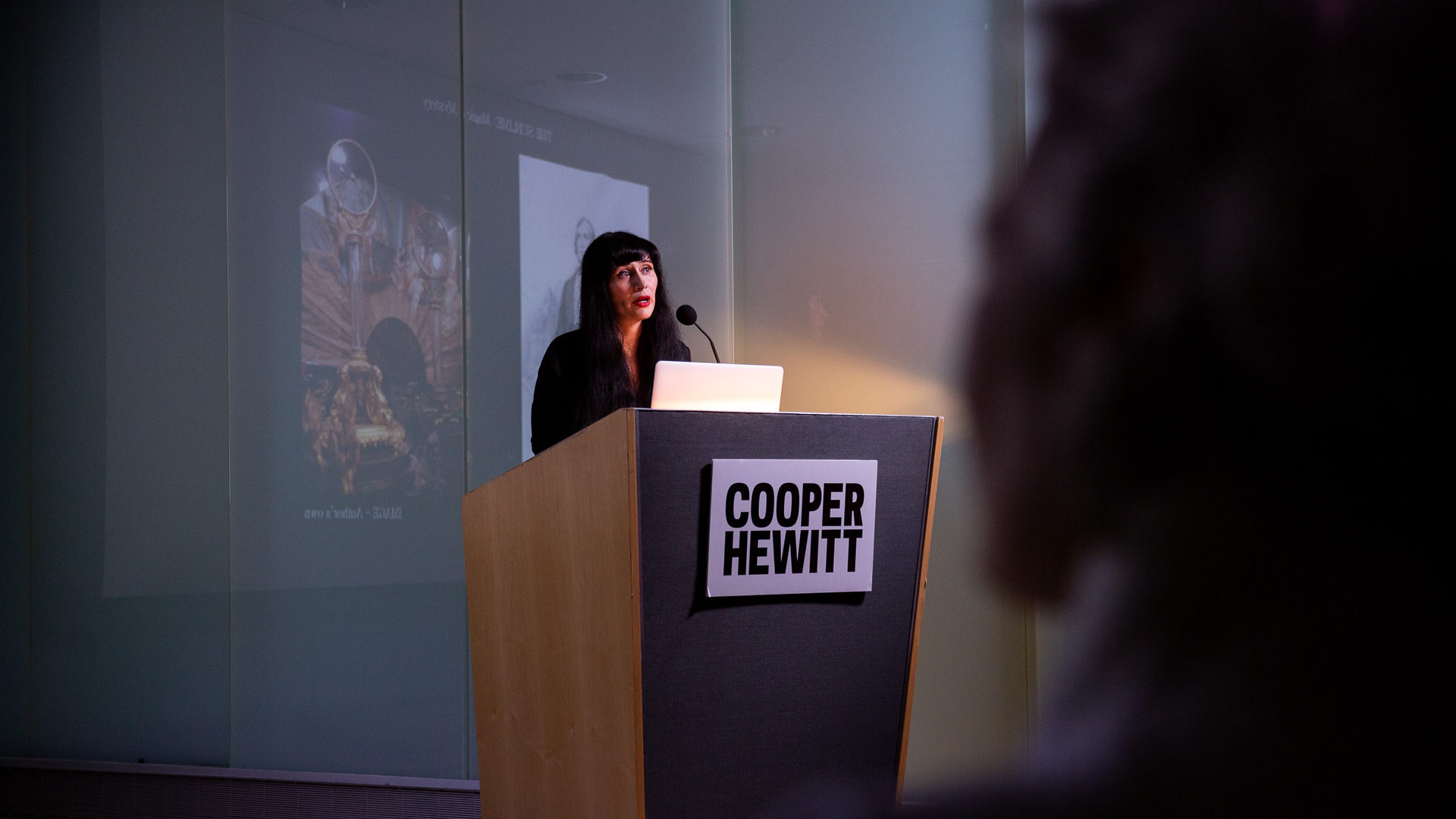
DESIGNING THE SUBLIME: MECHANISM, RISK, AND WONDER World-renowned antiquarian horologist Brittany Nicole Cox explores the diverse utilization of the machine in design through a selection of objects drawn from the collections of Cooper Hewitt and other Smithsonian museums. Examples range from a nineteenth-century singing bird box to the world’s first tuning fork watch. Cox makes...
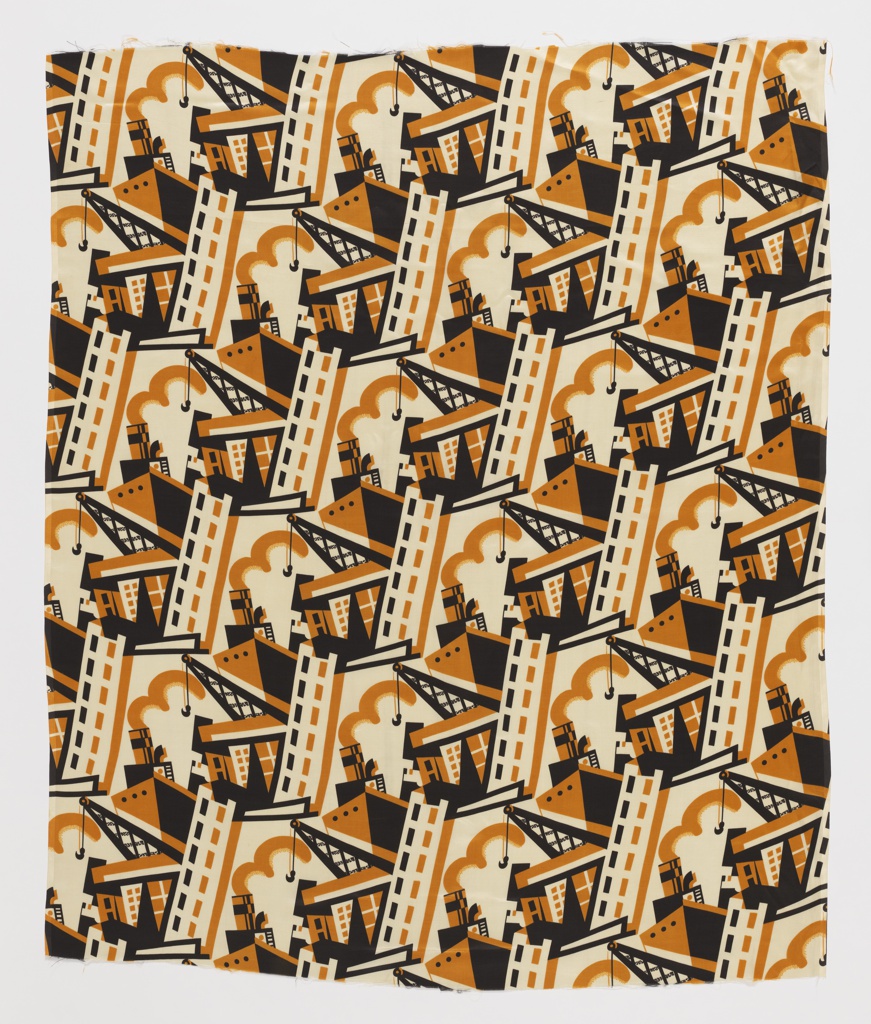
This Constructivist-inspired textile likely was produced in the United States during the mid-to-late 1920s. The designer is presently unknown, but presumably was an individual familiar with Russian Constructivist design principles, which took inspiration from the industrial world. Printed in dark yellow and black on creamy off-white silk satin, the textile has an overall design of...
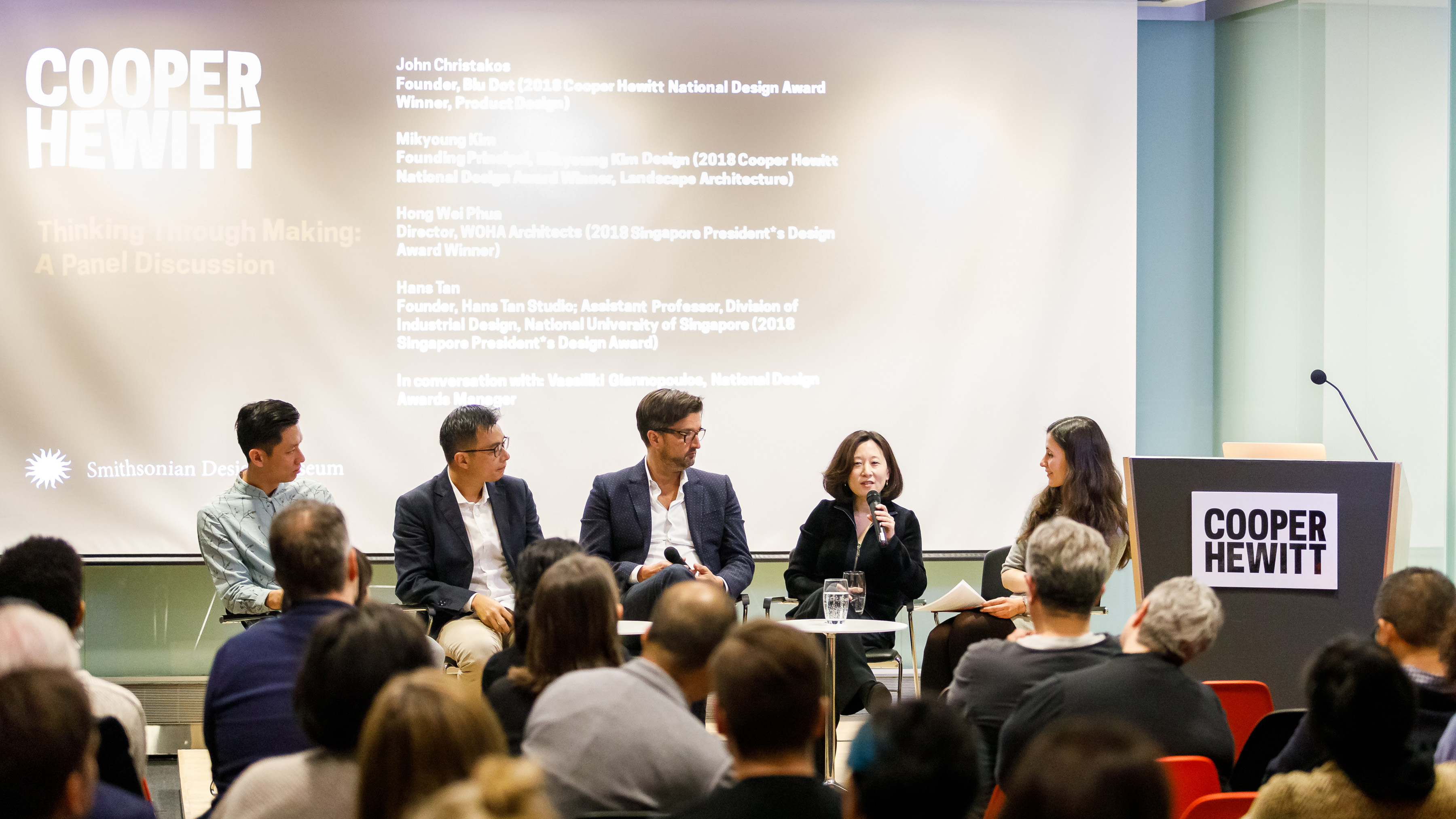
Cooper Hewitt, in collaboration with the DesignSingapore Council present an evening of conversation.
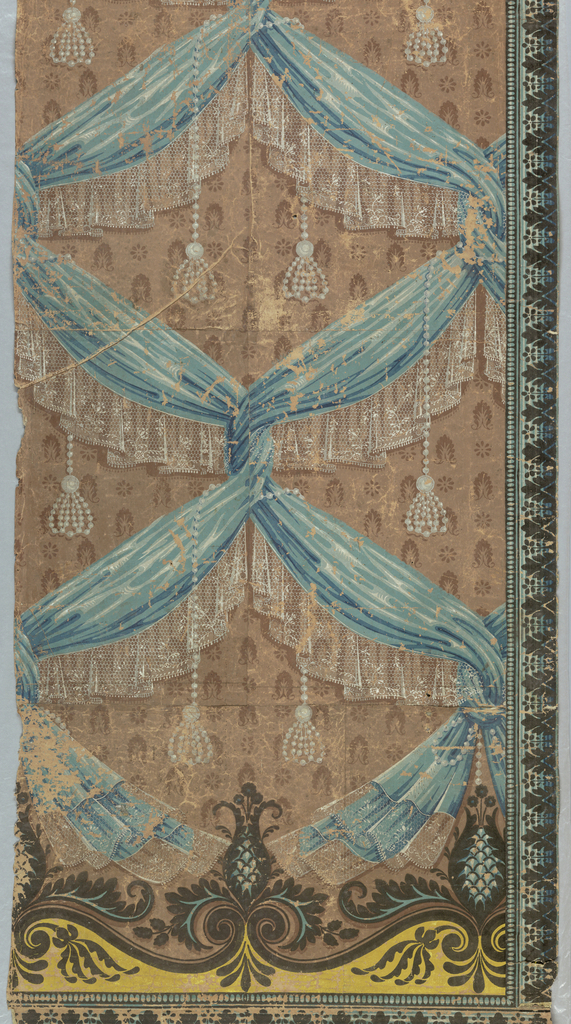
I wanted to share this unusual trompe l’oeil drapery wallpaper, where a length of fabric swags slightly then twists around another fabric swag, creating a diaper or trellis-like pattern. The fabric is adorned with a lace trim and tassels made of strung pearls. The bottom section of this panel is a wide border that shows...
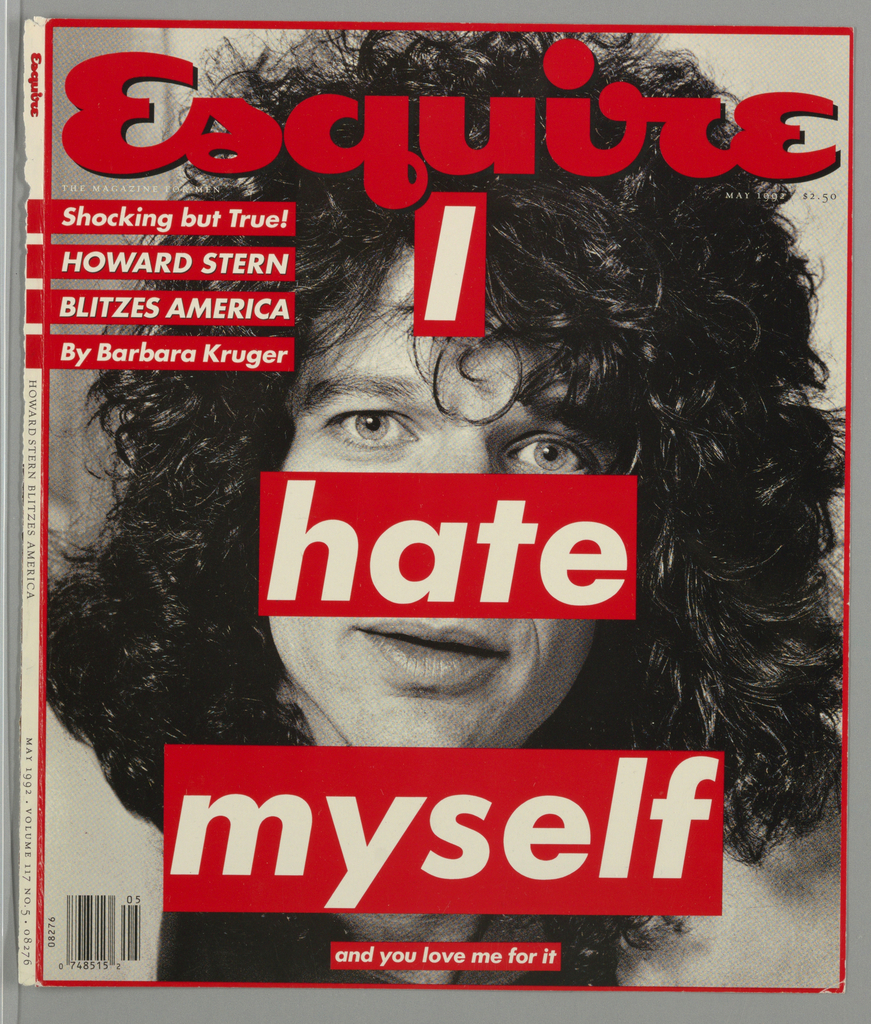
Known for her bold engagement with popular culture and mass communication, American conceptual artist Barbara Kruger provokes and entices the viewer with her cover design for the May 1992 issue of Esquire. Featuring a close-up, black and white photograph of the controversial shock-jock Howard Stern, the superimposed text obscures significant portions of his face, excluding...
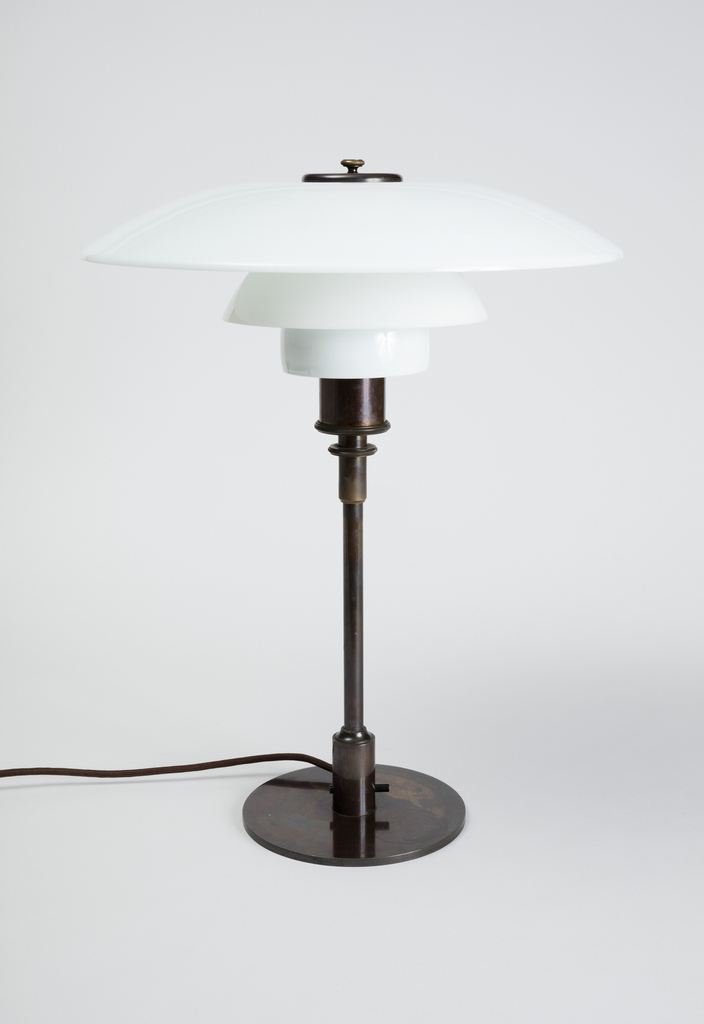
Danish architect and designer Poul Henningsen’s interest in light and lighting started at a young age when as a child in the 1900s, he observed the sharp glare from fixtures housing bare electric bulbs in his family home. Electric lighting was new, and older lighting devices, such as candlesticks or gas lamps, were being adapted...
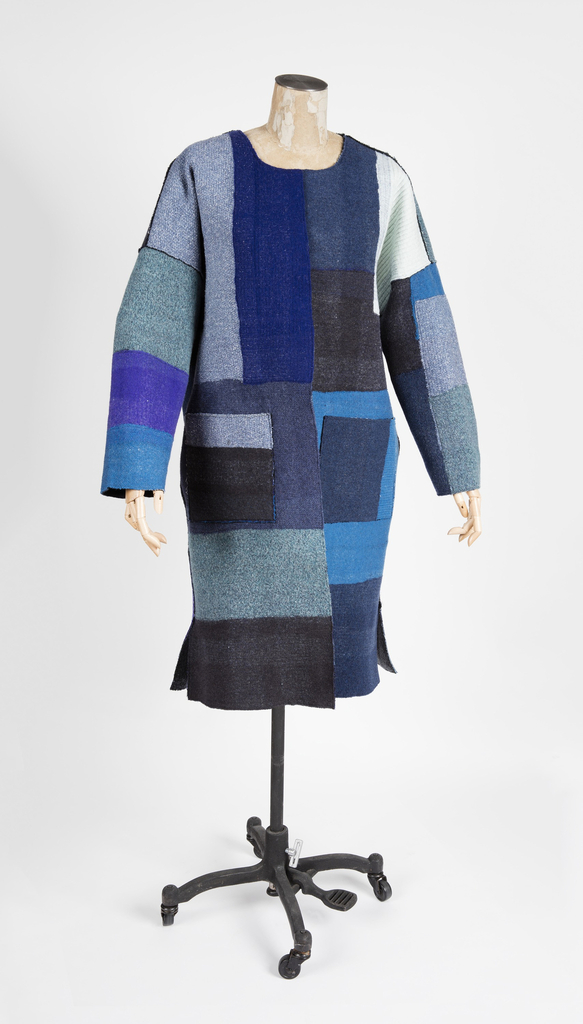
As part of Eileen Fisher’s numerous sustainability efforts, the company committed to taking back used Eileen Fisher garments from its customers. Since 2009, with almost no promotion of the initiative, over 600,000 garments were returned. About 40% are still usable; they are cleaned and repaired in the company’s recycling centers in Irvington, NY and Seattle...
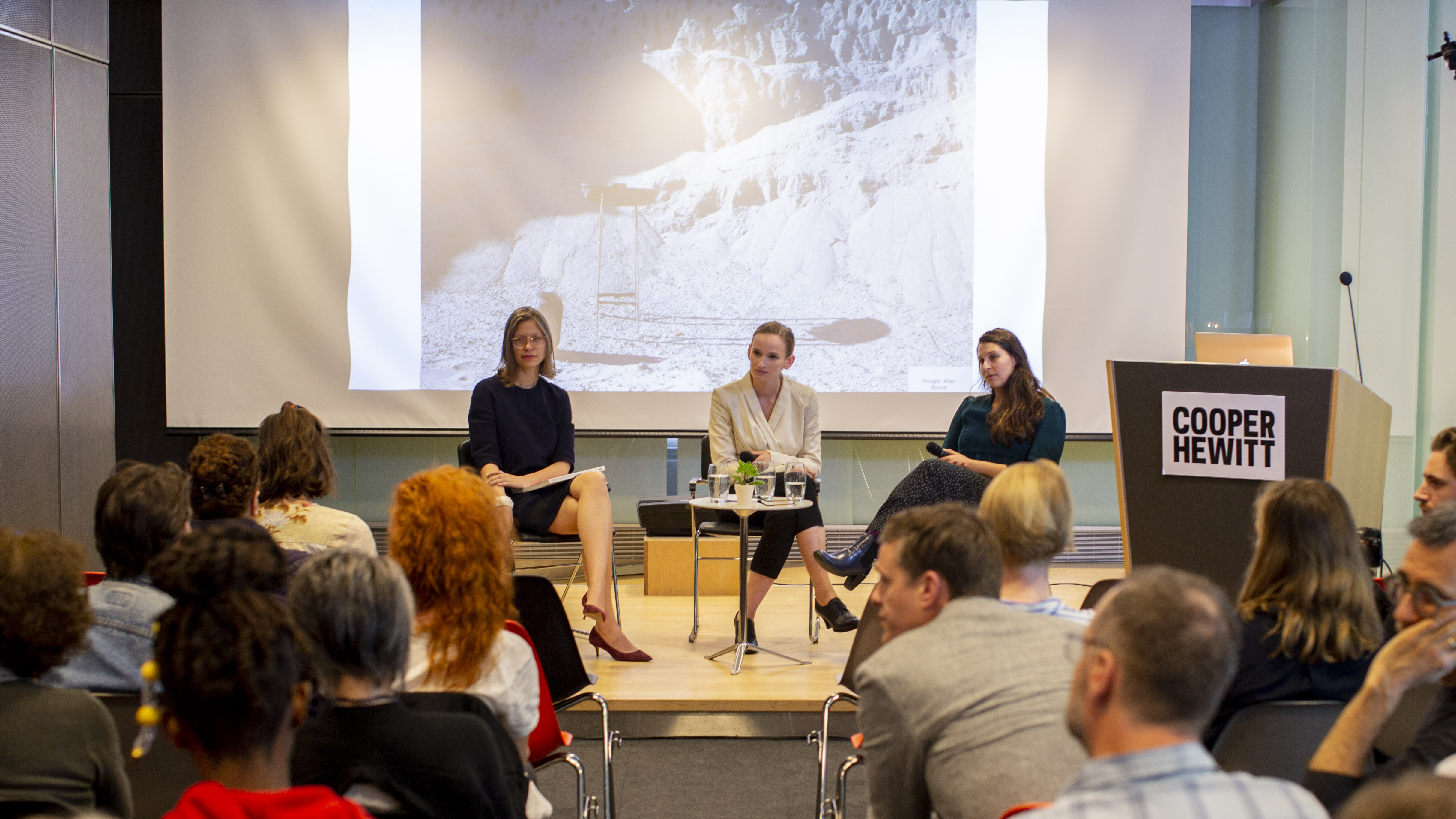
Designers Shahar Livne and Charlotte McCurdy in conversation with Caitlin Condell, Associate Curator and Head of Drawings, Prints & Graphic Design. Join us for a discussion exploring the ways in which designers consider the abundance of materials available to them in the 21st century. As the boundary between ‘synthetic’ and ‘natural’ materials becomes increasingly blurry,...
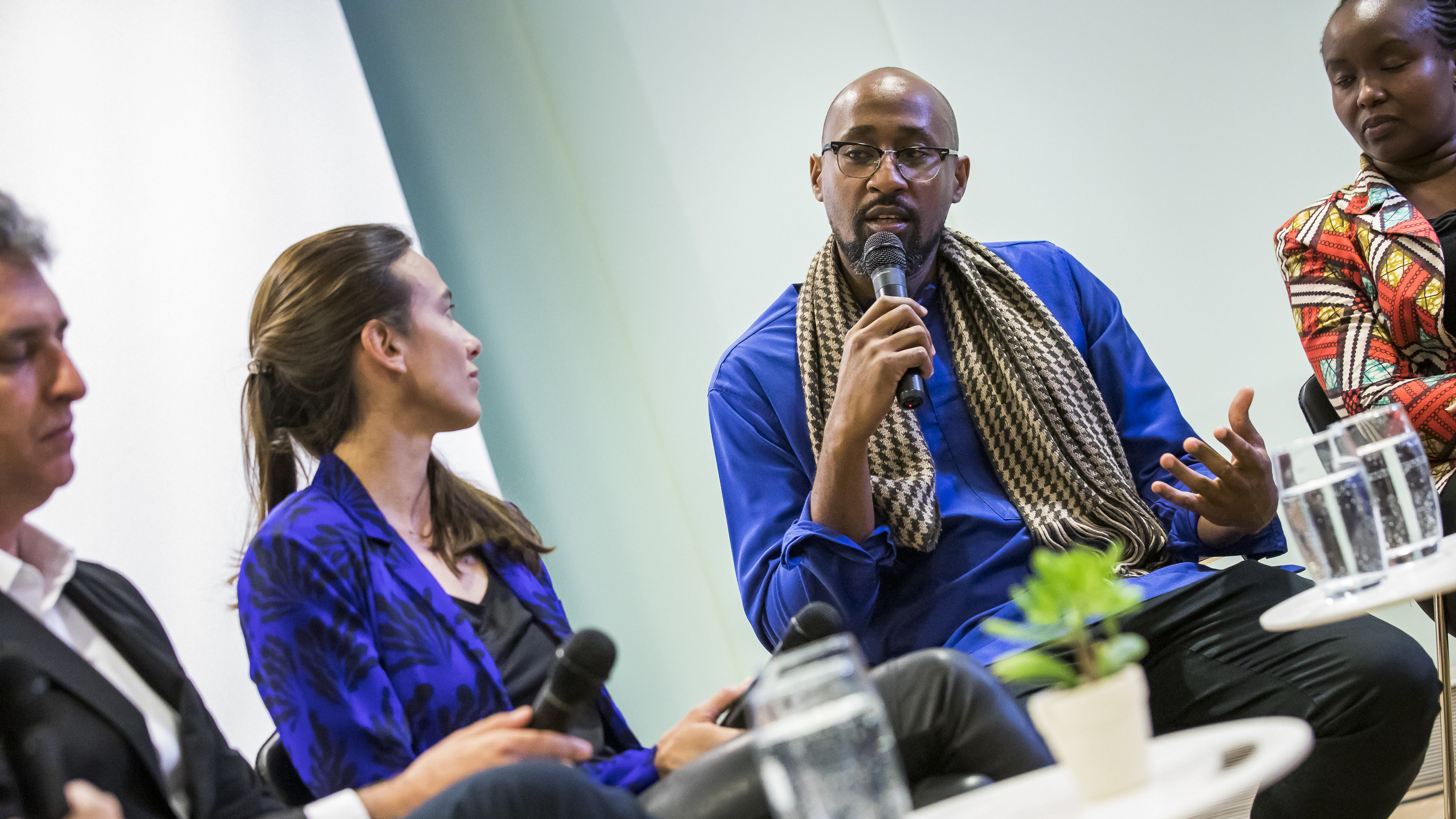
Designers from Ensamble Studio and CAVE Bureau in conversation with Matilda McQuaid, Deputy Curatorial Director.
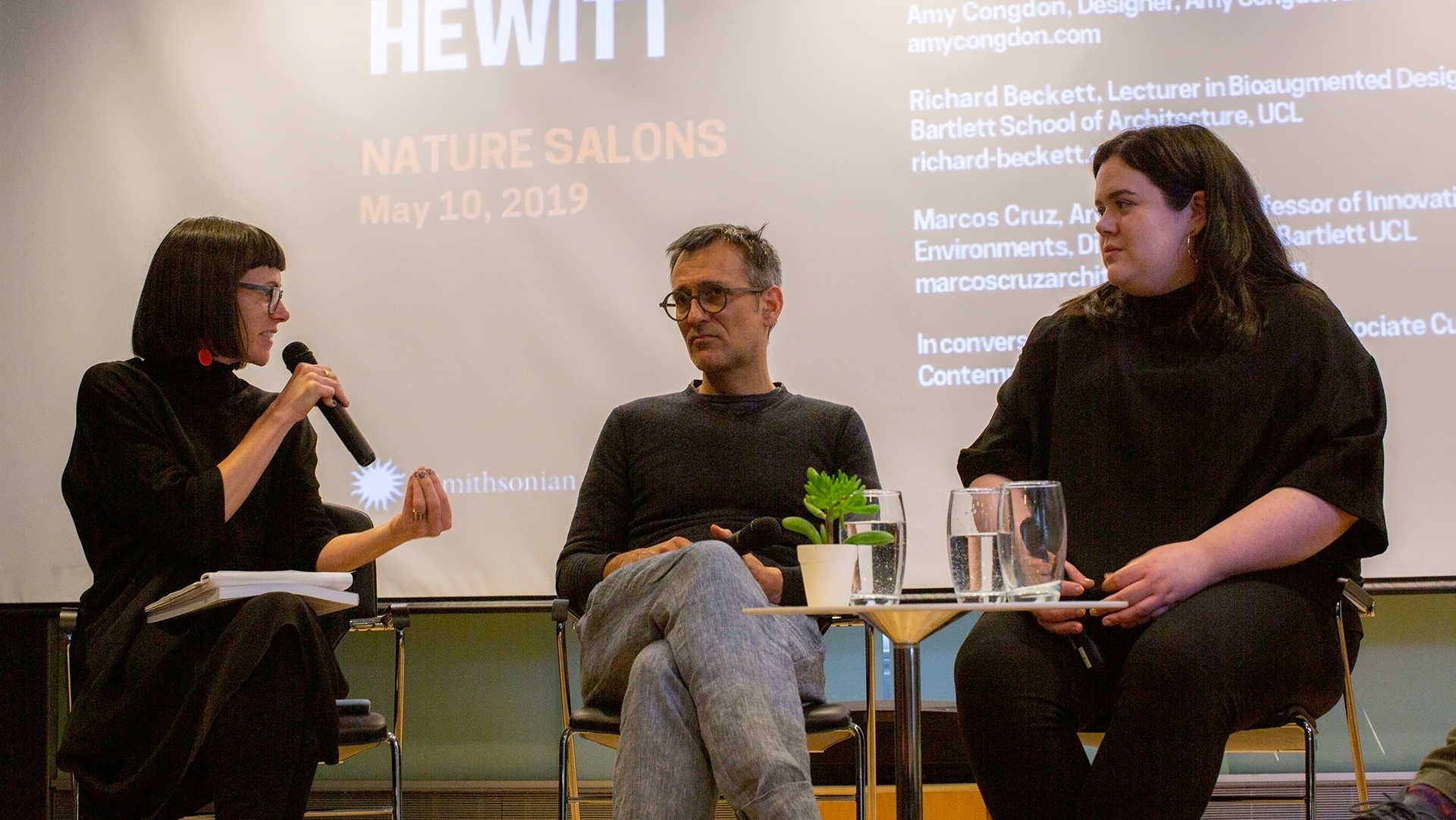
Talk on What role does biological growth play in 21st-century design?

Cooper Hewitt, Smithsonian Design Museum’s popular summer performance series, Cocktails at Cooper Hewitt, returns to the Arthur Ross Terrace and Garden. On Thursday evenings from June 13 to Aug. 15, live music, DJ sets and dance performances will activate one of the largest enclosed museum gardens in New York City. A launch party for the...
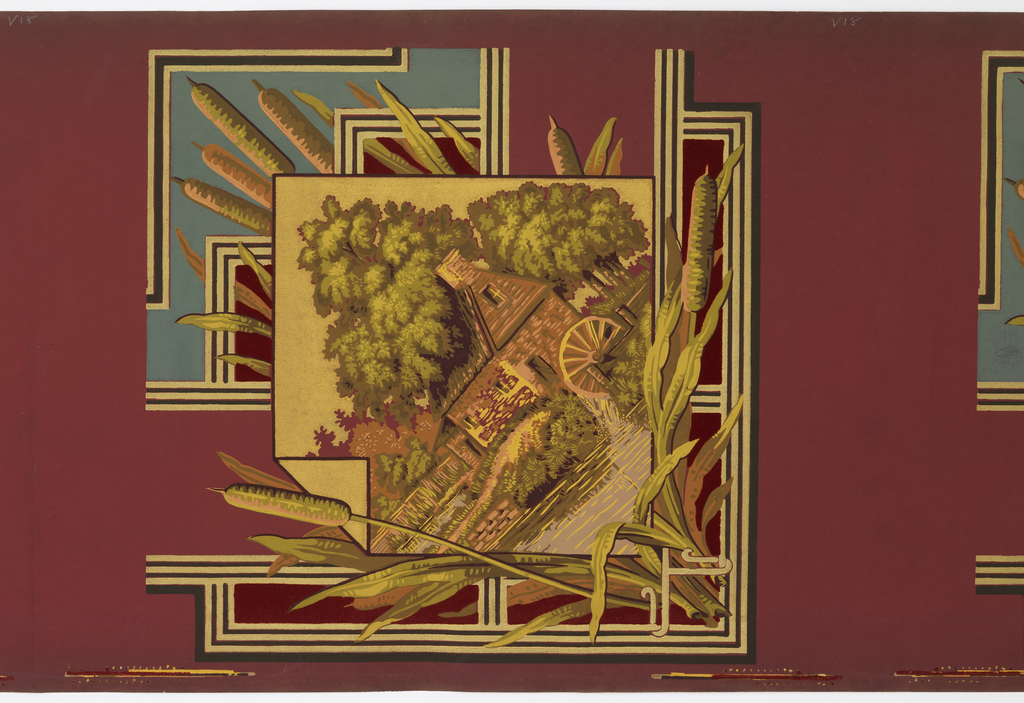
If you’ve ever thought it might be nice to be a fly on the wall, think about the fun you could have with a bird’s eye view from the ceiling. You could be part of the beautiful ceiling decoration that was so fashionable during the Gilded Age. Today’s wallpaper would have been part of that...
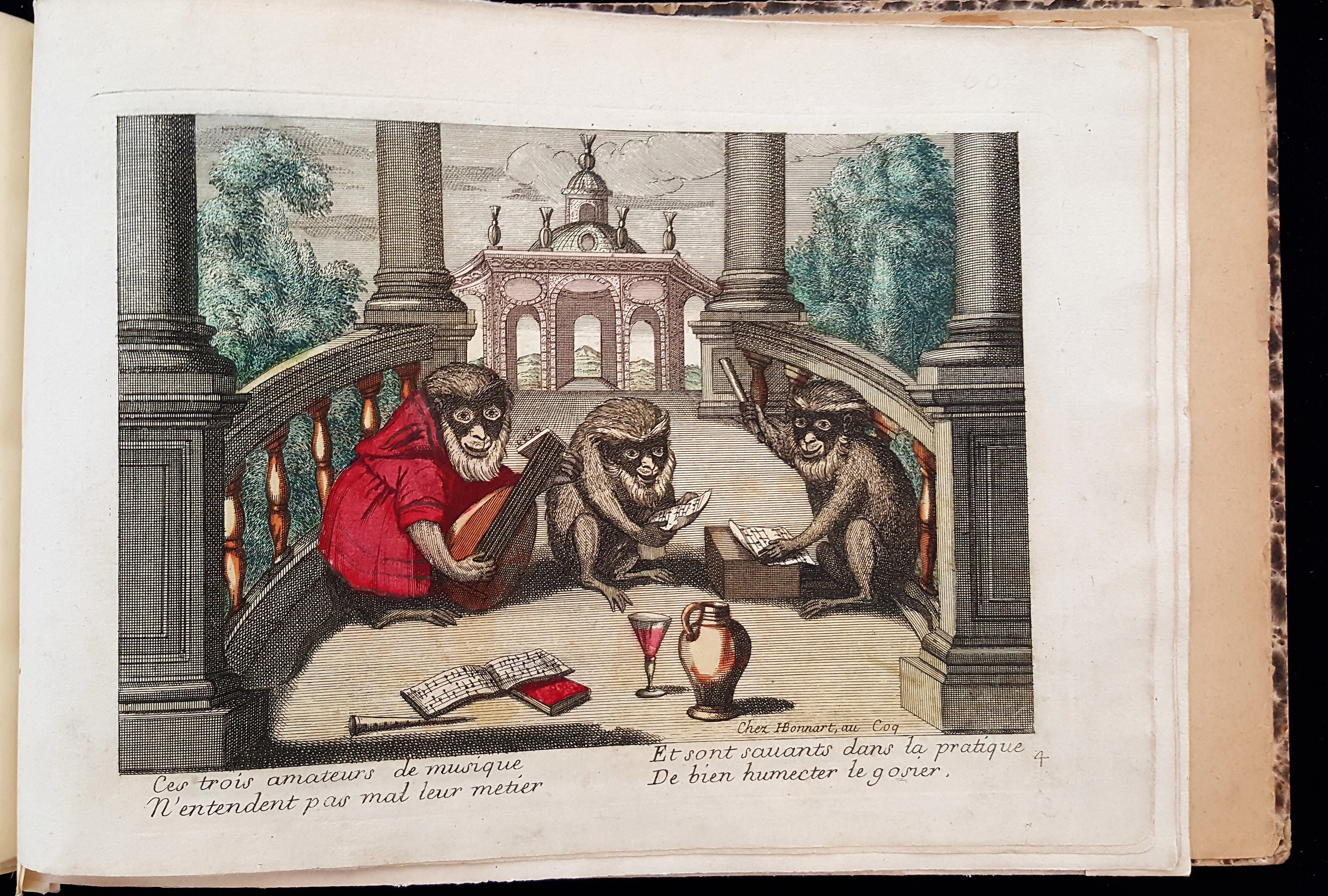
Monkeys have been a symbol in world cultures for thousands of years, representing qualities ranging from fertility, to evil, lust and wisdom. The negative image that the monkey had in Western culture gradually changed in the 17th century when monkeys were used as symbols to satirize human behavior in Flemish genre painting. This visual art...
