Object of the Day

Discover a different object from the Museum’s collection every day of the week!

Museum curators, conservators, and educators, as well as design enthusiasts like our teen Design Scholars, docents, and Master’s students, are sharing their favorite objects from Cooper-Hewitt’s incredible collection.

Many of these objects will be featured in the expanded collection galleries when Cooper-Hewitt reopens in 2014. Until then, “Object of the Day” is your uniquely-curated corner of the Museum!

Subscribe to Cooper-Hewitt's Object of the Day by Email

Discover Architecture- Carry A Magnet!

Posted by Elizabeth Broman, on Thursday May 30, 2013

On a long ago walking tour of downtown New York, I was charmed and mystified to see people pulling refrigerator magnets or little alphabet letters out of their pockets and having them cling to the deceptively ordinary front of a building! They stuck!

Cast iron architecture, Daniel Badger, Architectural Iron Works of the city of New York, Illustrations of iron architecture, Soho Cast Iron District, cast iron, Smithsonian Libraries, National Design Library
Illustrations of iron architecture by Daniel Badger

Inside wonders: A Japanese pattern book

Posted by Jen Cohlman Bracchi, on Wednesday May 29, 2013

Patterns found in nature have influenced human creativity for millennia and continue to inspire designers today. Can you guess what natural forms were used to create the designs in this pattern book?

Published in Kyoto by Unsōdō in 1913, its bold calligraphic lines, sweeping curves, and organic forms share characteristics with both Japan’s Rinpa and Europe’s Art Nouveau movements.  However, these shapes were derived in a new and unique way by a scientist, not a designer.

pattern book, Japan, shells
various patterns made from the cross sections of seashells

Wallpaper that Expands Your Horizons

Posted by Gregory Herringshaw, on Tuesday May 28, 2013

Wide landscape friezes were popularized by Walter Crane in 1896 and remained in vogue until around 1913. The use of these friezes led to a more simplified wall treatment in the Mission interior, and even though multiple patterns were still being used on a wall, the frieze became the dominant element. Wide friezes were usually hung at the top of the wall where the perspective shown in the landscapes visually expanded the size of the room.

wallpaper, frieze, landscape, repeat, mission

If I were a carpenter

Posted by Elizabeth Broman, on Monday May 27, 2013

Title translation: A representation of Inland and Foreign Wood: As well Trees as [sic] Shrubs Which are Collected by the Lovers of Natural History in Their Cabinets of Natural Curiosities for Use and Pleasure. According to Their Inward Properties and Natural  Colors  ...

Jan Christian Sepp, Smithsonian Libraries, Cooper-Hewitt National Design Library, Wood samples, marquetry, Veneer
jan Christian Sepp, Icones lignorum exoticorum

Dining Under the Stars

Posted by Alison Charny, on Sunday May 26, 2013

Joseph Urban’s design for the Roof Garden at the Hotel Gibson in Cincinnati, Ohio, reflects turn of the century summer-dining at its finest. Late-nineteenth century American roof gardens were inspired by European pleasure gardens, often devoted to entertainment.  New York producer, composer, and entrepreneur Rudolph Aronson is credited with not only bringing the roof garden to the United States, but also making it a place for entertainment as well as for food and drink.

Basic Chemistry

Posted by Caitlin Condell, on Saturday May 25, 2013

Years ago, I was out sick the week that my fellow high school students studied the periodic table.  I’ve always blamed missing that foundational moment of scientific education for my very poor mastery of some basic chemistry.  But there are certain concepts that I have had the opportunity to learn through personal experience.  Every day when I try to make salad dressing, I am confronted with one of them—oil and water just won’t mix.

Anthony Burrill, oil spill, screenprint, poster, graphic design, Graphic Design: Now in Production

Alexander Girard for Herman Miller

Posted by Gregory Herringshaw, on Friday May 24, 2013

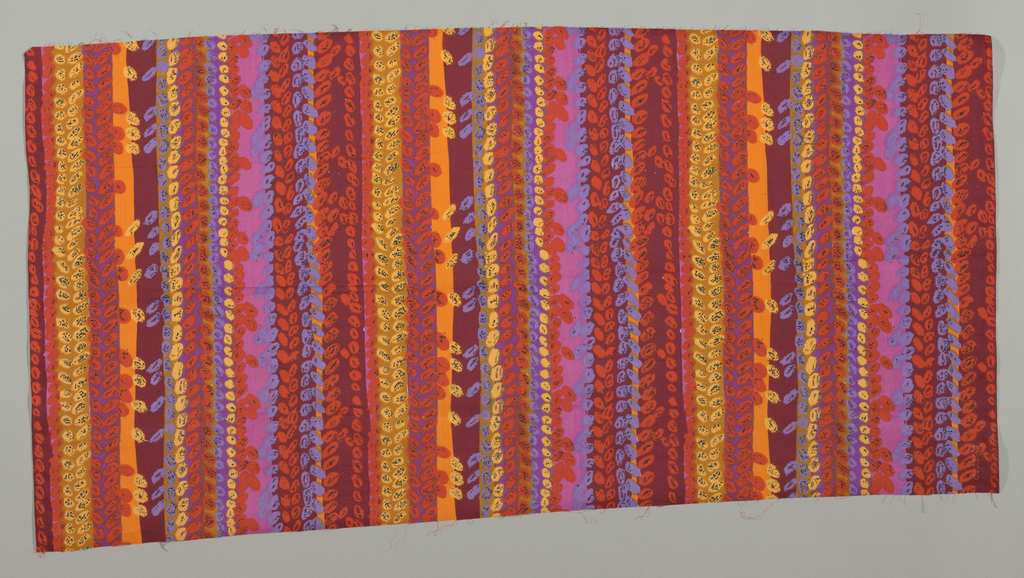
Alexander Girard was trained as an architect and began practicing architecture and interior design in the 1920s, and became the design director for Herman Miller’s textile division in 1952. Girard also became fascinated by international folk art which he began collecting on his travels in the 1930s and managed to amass over 100,000 pieces including toys, costumes, masks, textiles, beadwork and paintings. This formal training as an architect and love of folk art designs are two streams of inspiration apparent in Girard’s work.

Girard, sample book, wallpaper, folk art, Herman Miller

A Recipe Book for Dyestuffs

Posted by Kimberly Randall, on Thursday May 23, 2013

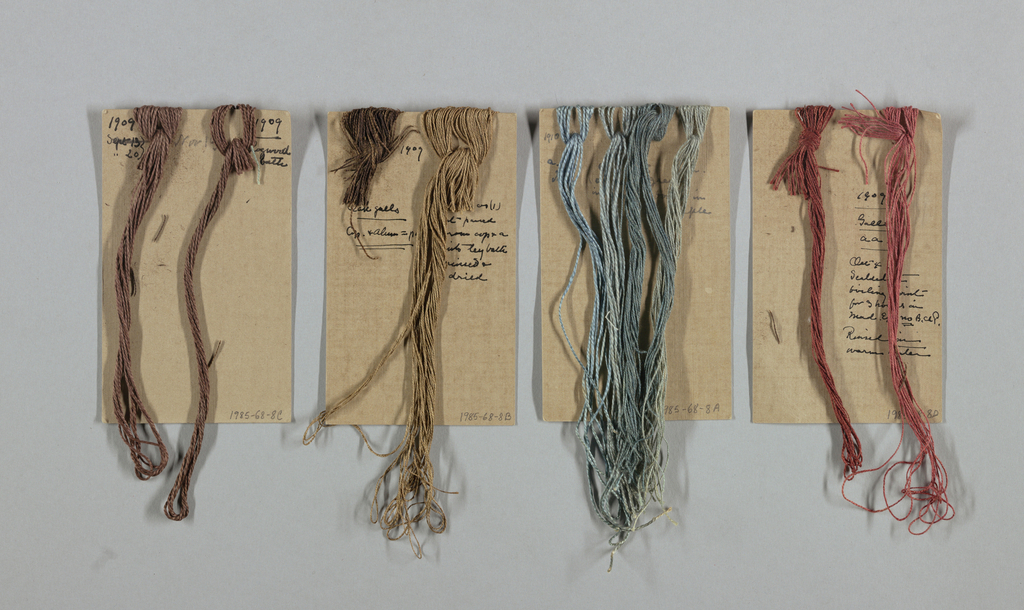
In the Textiles collection is a wonderful example of a dyer’s record book for printed textiles. The book has special significance as it was the personal property of Edmund Barnes, a textile dyer and printer from northern England. Barnes was working at an unspecified print works, probably in the early 1820s, when he began recording his dye recipes.

sample book, dyes, Swatch

To the Rescue!

Posted by Margaret Adler, on Wednesday May 22, 2013

An intrepid rescuer, clad in a seaman’s oilskin garb, and a swooning maiden, unprepared for the elements and limp in his arms, are thrust together by calamity. A blank sky with a threatening storm cloud heightens their isolation. We wonder where they are headed: at what or to whom does the hero direct his gaze?

Winslow Homer, U.S. Life-Saving Service (USLSS), Atlantic City, New York, Prouts Neck, drawing, painting

Beauty & Efficiency

Posted by Stephen H. Van Dyk, on Tuesday May 21, 2013

The progressive and innovative design and mechanics of the Marmon Sixteen – a custom-made, sixteen cylinder automobile manufactured in 1931 by the Indianapolis Marmon Motor Car Co. are promoted in this two volume publication.  The book details the theories and goals of the head designer, Walter Dorwin Teague (1883-1960), and the engineer, Howard C.

Marmon Sixteen, Walter Dorwin Teague, Howard C. Marmon, Industrial Design, Automobile Design

Pages