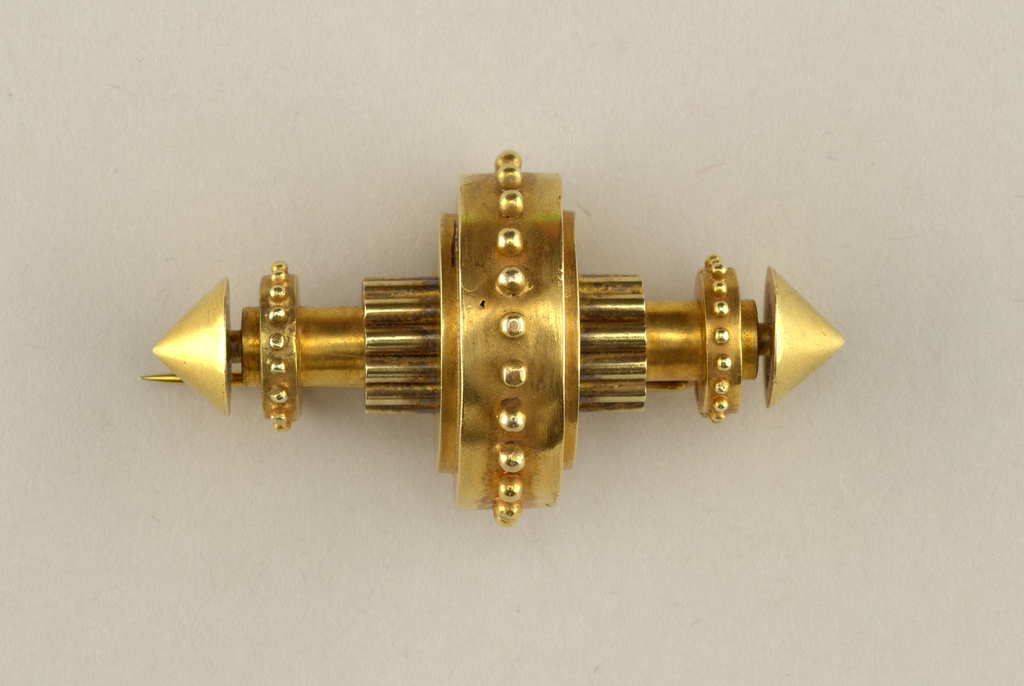
This very modern looking gold brooch dates to the 1870s. Its geometric form is comprised of cylindrical elements and tiny rivet-like bosses (round knobs, studs, or other protuberances). The symmetrical structure features a central shaft with two sets of ten small cylinders bundled around the center. Encircling these is a large beaded band at the...
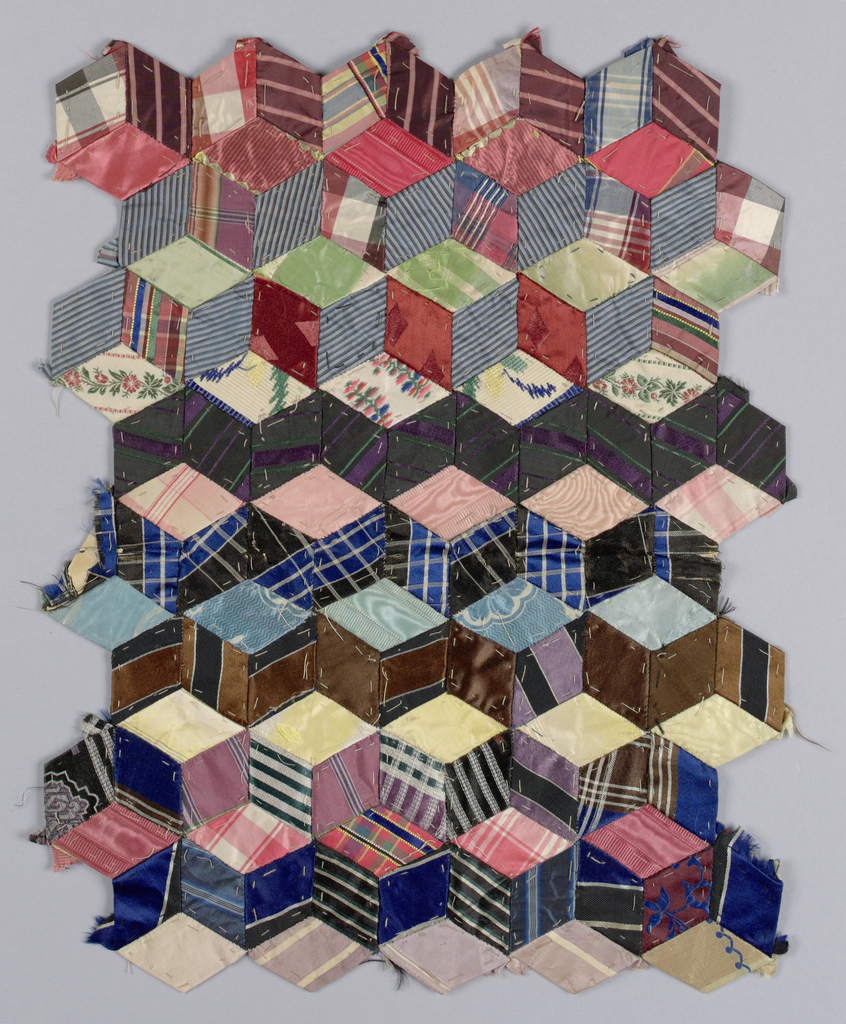
“Tumbling Blocks” is one of the most recognizable quilt patterns. As popular today as it was from the mid to late 1800s, it is a requisite pattern for any quilt collection. The roots of the pattern date back far longer than its use for American quilts. Tumbling Blocks has a long history in the grammar...
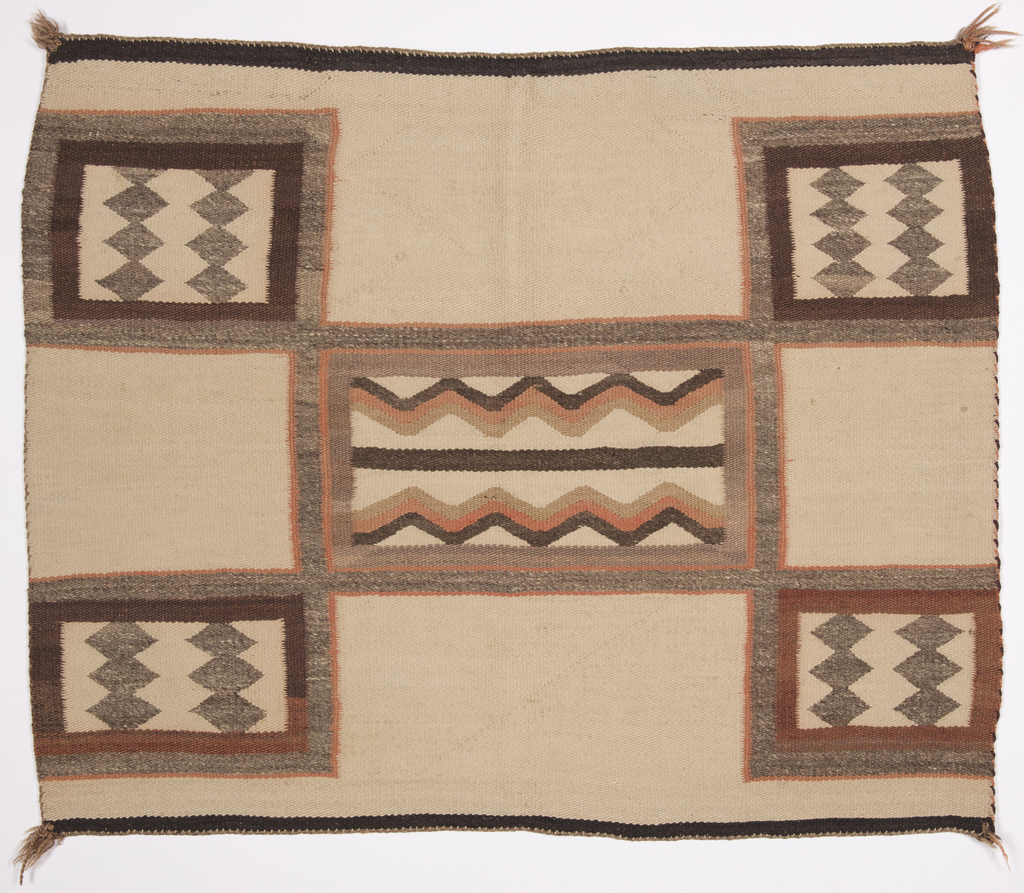
This single saddle blanket features five rectangles, each filled with the zigzag and diamond patterns the Navajo adapted so successfully from the Mexican serape. While in the 1870s and 80s these motifs were paired with exuberant use of color, by the 1880s some traders, such as J.L. Hubbell and C.N. Cotton, began to push for...
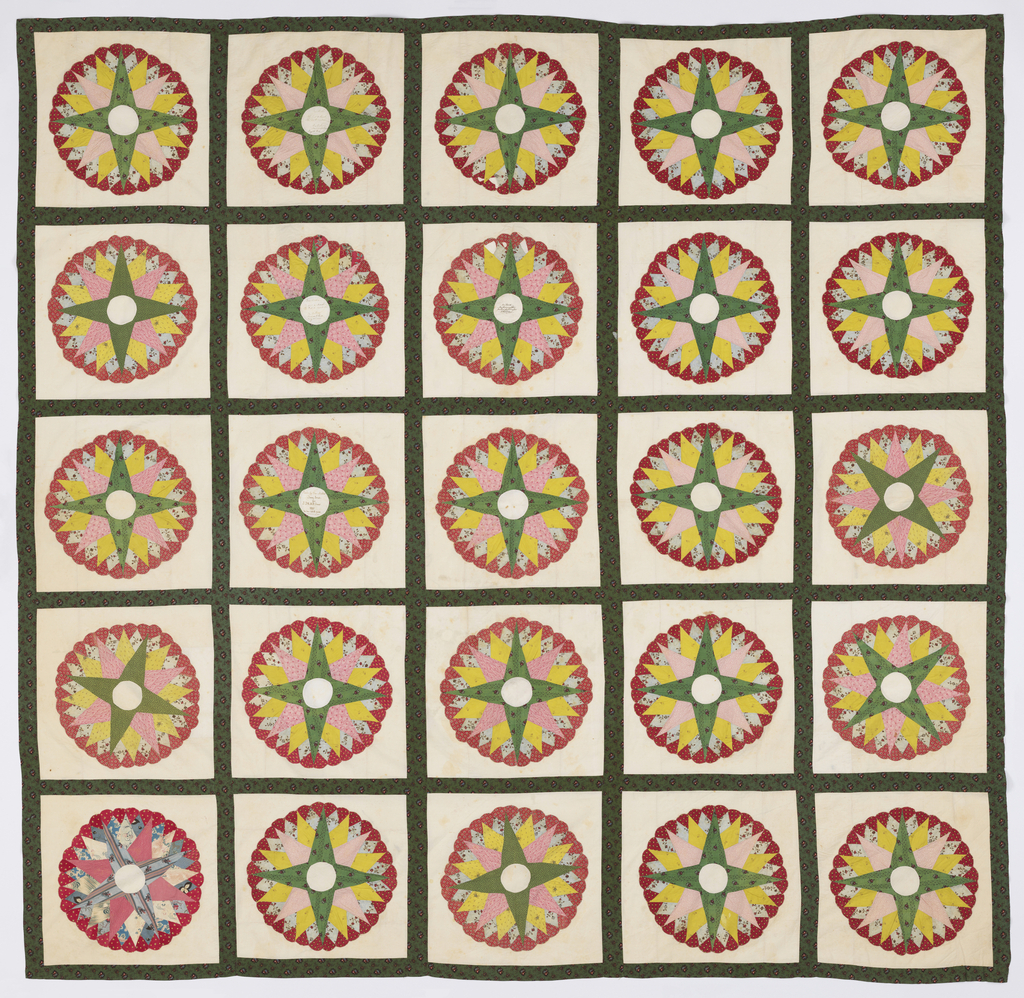
A very special family quilt in the Mariner’s Compass pattern was given to Cooper Hewitt, Smithsonian Design Museum by Susan Weitzman in 1972. Thanks to thoughtful, easy to read, handwritten inscriptions found on three of the twenty-five squares that make up the quilt, we know that Lacy Jones made the quilt in 1845, and that...
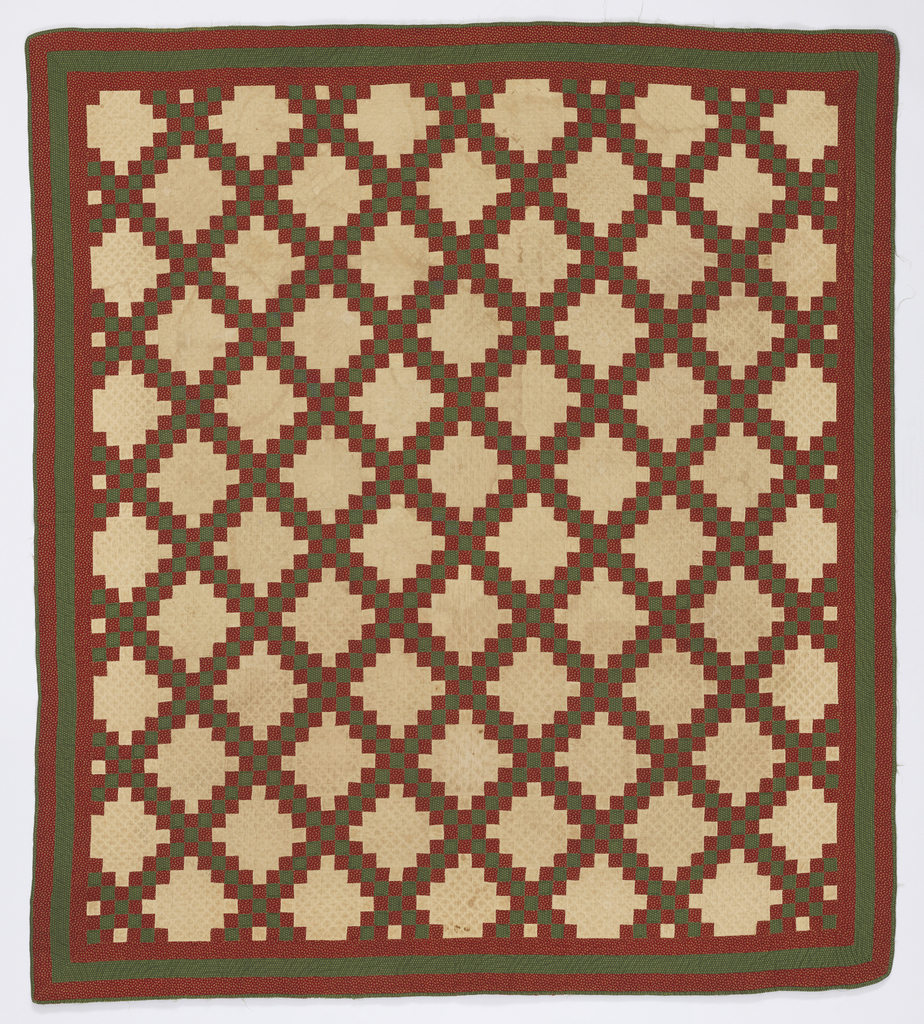
For centuries, quilt patterns and quilting techniques have been passed down from generation to generation and within generations, from sister-to-sister, cousin-to-cousin, or friend-to-friend. Without formal training, many quilters relied on their more experienced relatives to teach them the best methods. The museum is fortunate to have two quilts from the same family, the Reeds of...
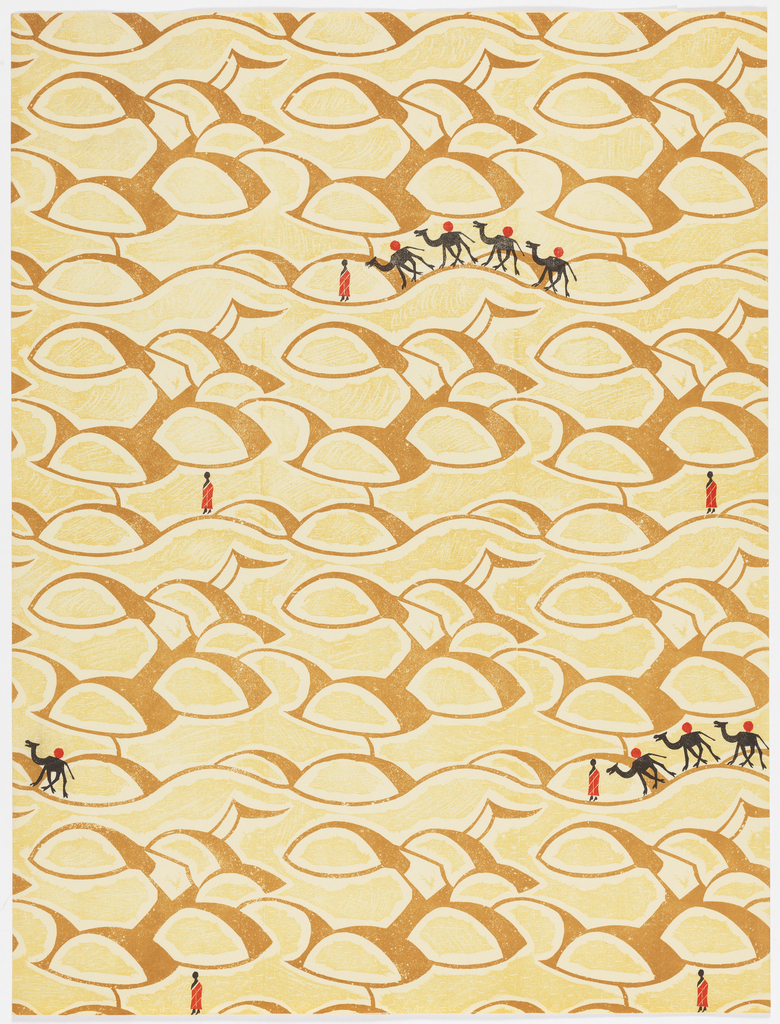
Dunes flow over one another in waves as caravans of people and camels navigate the treacherous terrain of the Sahara. The oscillating lines that the figures stand on are reminiscent of a winding river or the ocean surf. While this composition is relatively simple, its whimsical elements, such as the faces of the camels and...
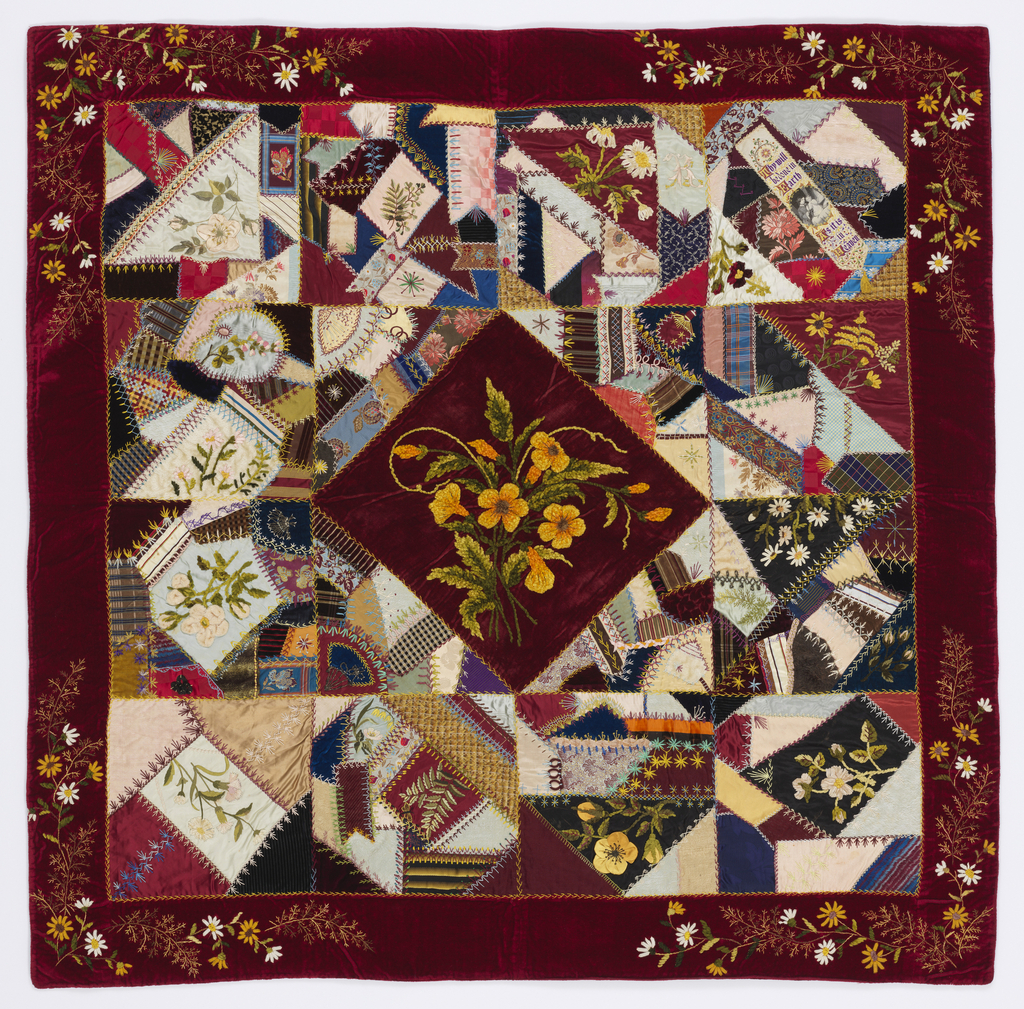
Cooper Hewitt is fortunate to have in its collection two quilts made by close relatives: Caroline Hammond Reed and her daughter-in-law, Frances Kingsley Reed, from Anderson, South Carolina. Both quilts were donated by Helen Allen Stanbury, a New Yorker who was a native of Anderson. Frances Kingsley Reed (1845–1902), wife of Caroline Hammond Reed’s son...
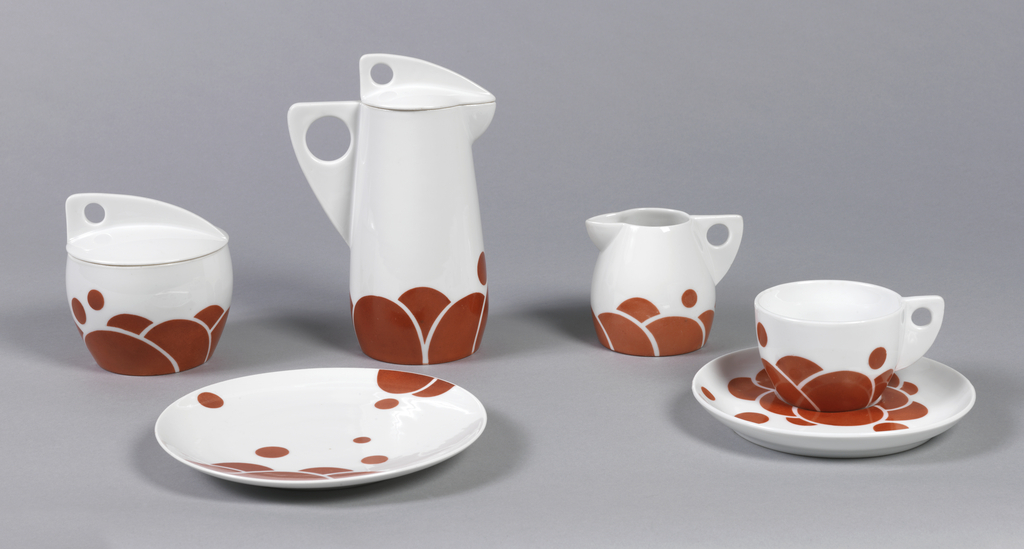
In celebration of Women’s History Month, March Object of the Day posts highlight women designers in the collection. Today’s blog post was written by Adriane Dalton and originally published on September 17, 2013. Born in 1877, Jutta Sika was an Austrian designer working in a variety of different media. Sika received formal training in both...
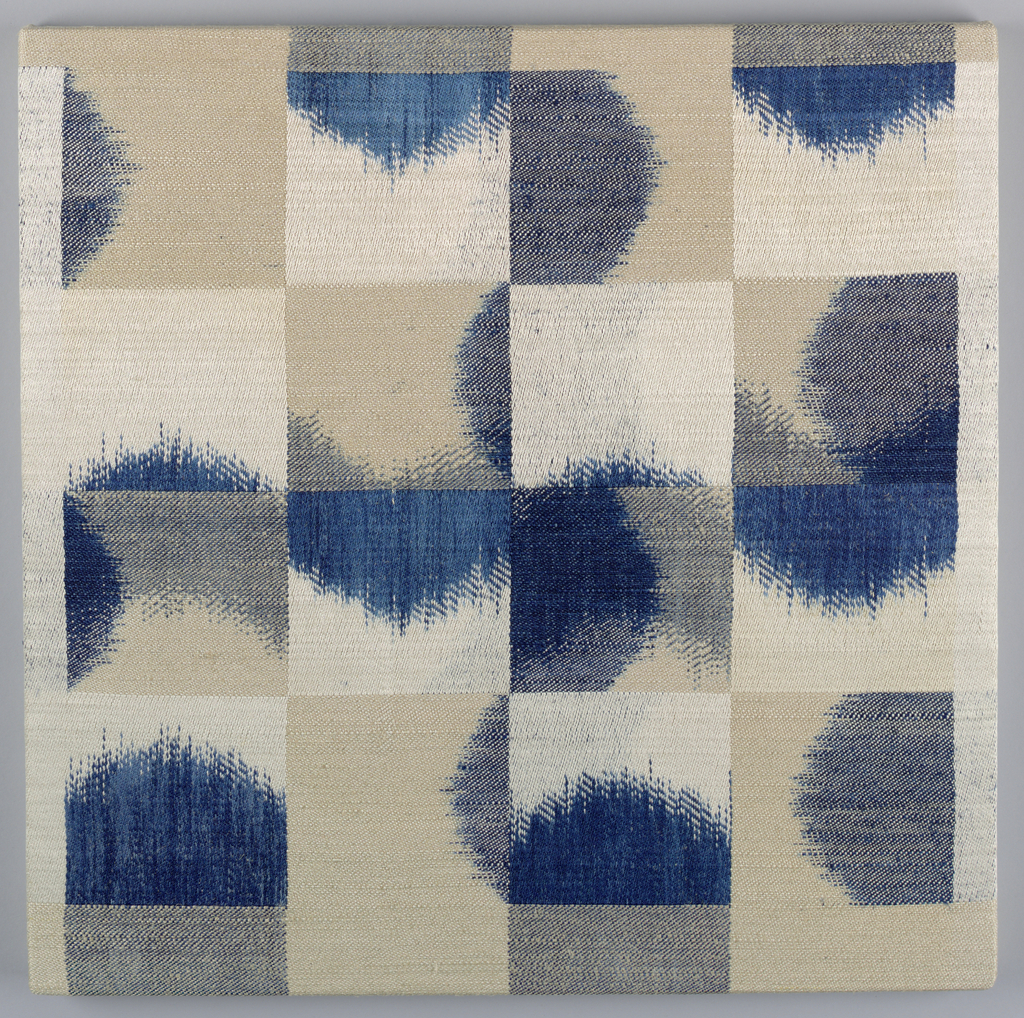
In celebration of Women’s History Month, March Object of the Day posts highlight women designers in the collection. Today’s blog post was written by Lucy Commoner and originally published February 17, 2013. Ethel Stein died this month at 100. Cooper Hewitt, Smithsonian Design Museum is fortunate to have in its collection three textiles designed and...
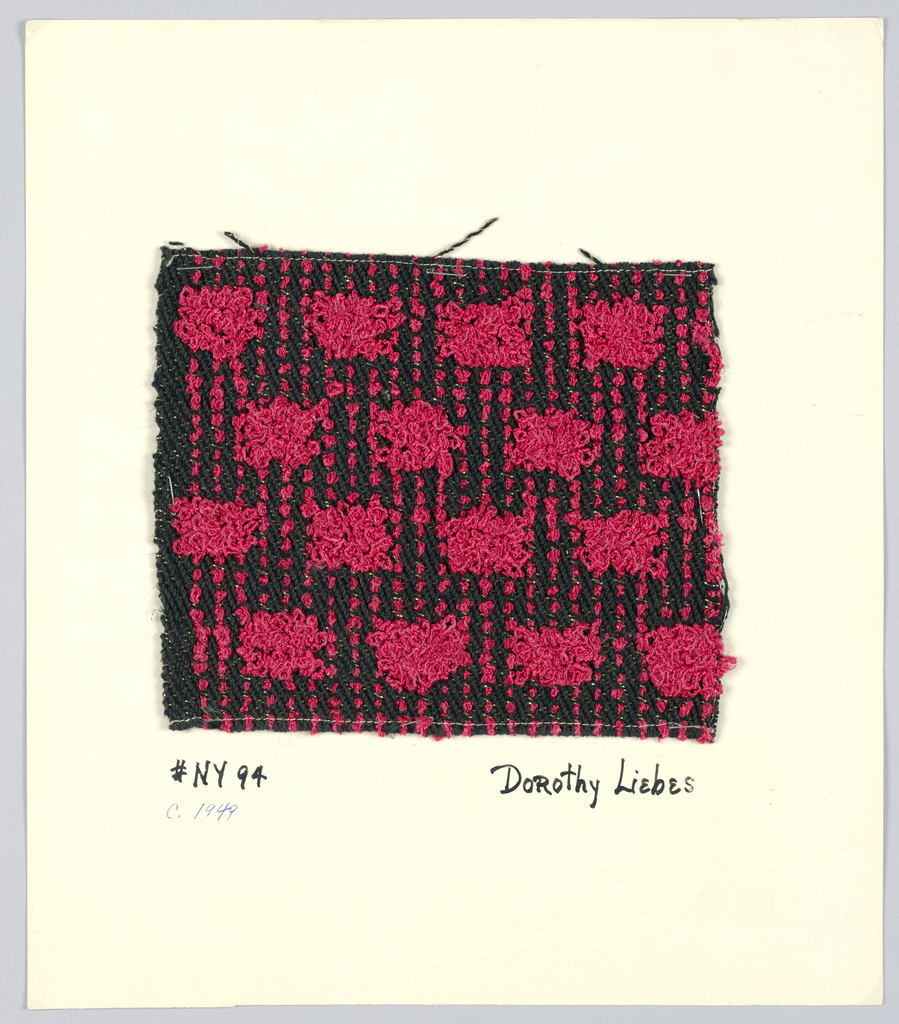
In celebration of Women’s History Month, March Object of the Day posts highlight women designers in the collection. Today’s blog post was written by Maleyne Syracuse and originally published on March 20, 2013. Weaver and textile designer Dorothy Liebes had twin obsessions: texture and color, both exemplified by this sample from the museum’s collection. Liebes’...
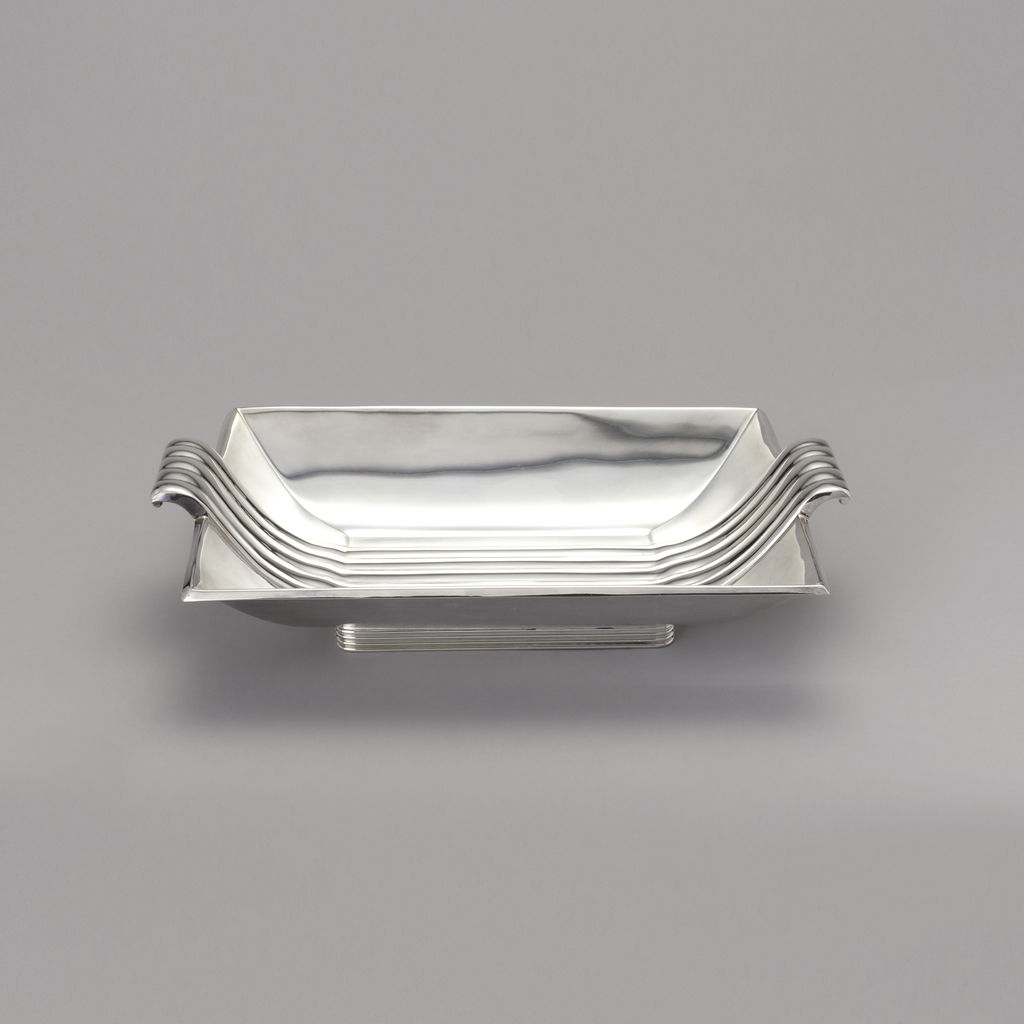
In celebration of Women’s History Month, March Object of the Day posts highlight women designers in the collection. Today’s blog post was written by Andrea Osgood and originally published March 31, 2014. In the late 1920s, industrial design began to emerge as a viable field in the United States. Because of the Great Depression, there...
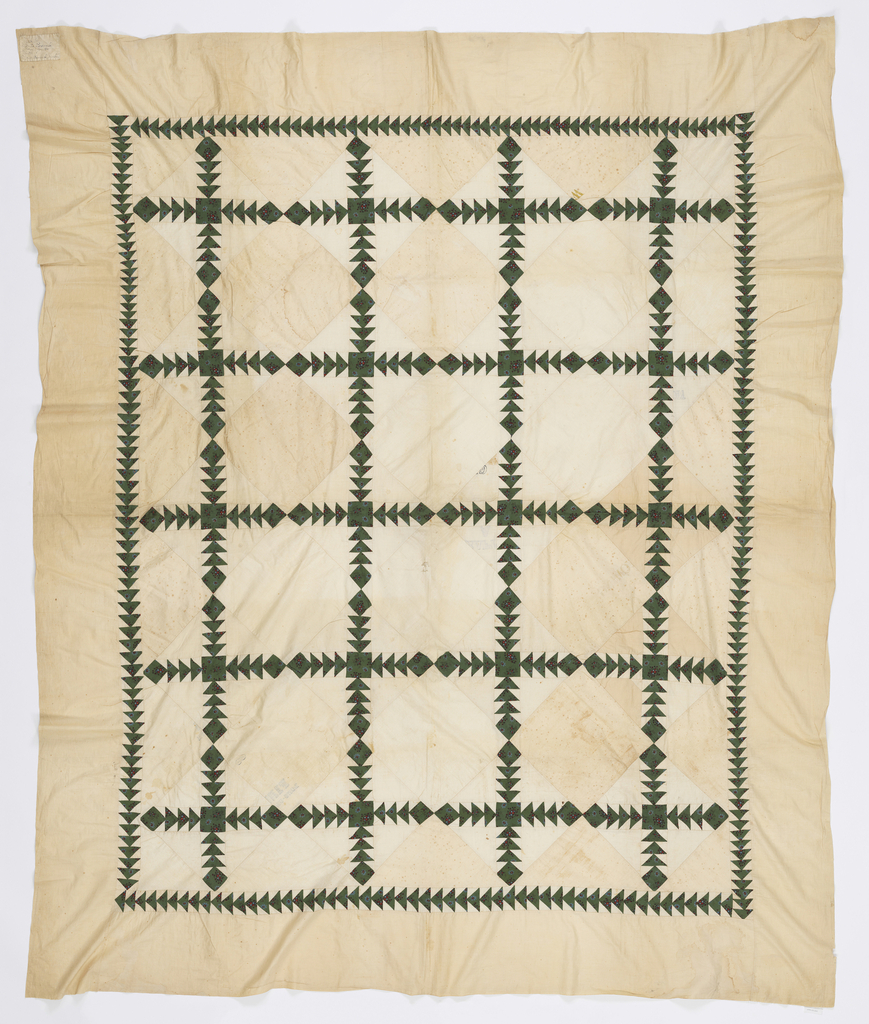
Author: Jeffery McCullough One of the most challenging aspects of researching quilts is that, for many of them, there is no identifying information about the maker. Fortunately, this quilt top has a handwritten label stitched to it, which states “Made by Martha Brownlee born 1 Nov. 1801 Mother of Mary Brownlee Meloy.” Martha Brownlee was...
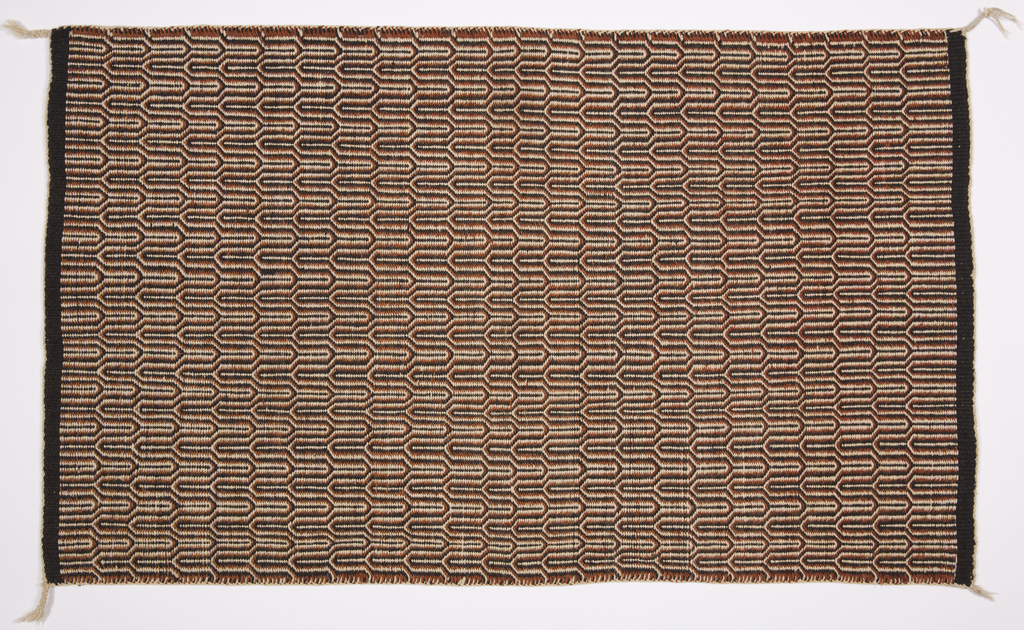
Saddle blankets — placed under the saddle to protect the horse from chafing and pressure from the saddle — continued to be used by the Navajo long after handwoven garments became impractical. By the 1950s, when this blanket was woven, the dramatic shoulder blankets for which the Navajo are famous were made far more frequently...
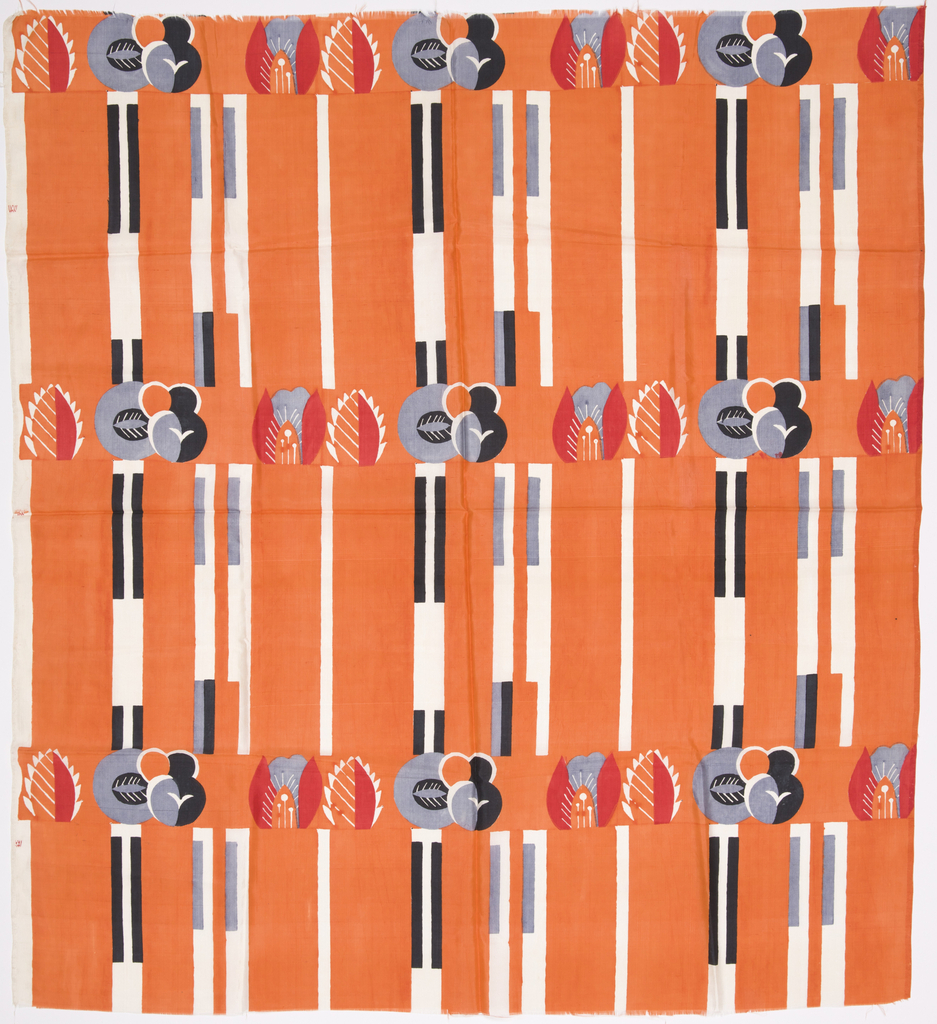
Mathilde Flögl was a prolific and multi-disiplinary designer at the Wiener Werkstätte. Her experience as a graphic designer translated well for much of the surface design she executed in wallcoverings, glass, ceramics and textiles. She created ceramic figurines, assisted Josef Hoffmann with the ornamental elements in his metal work and interiors, and designed lace patterns...
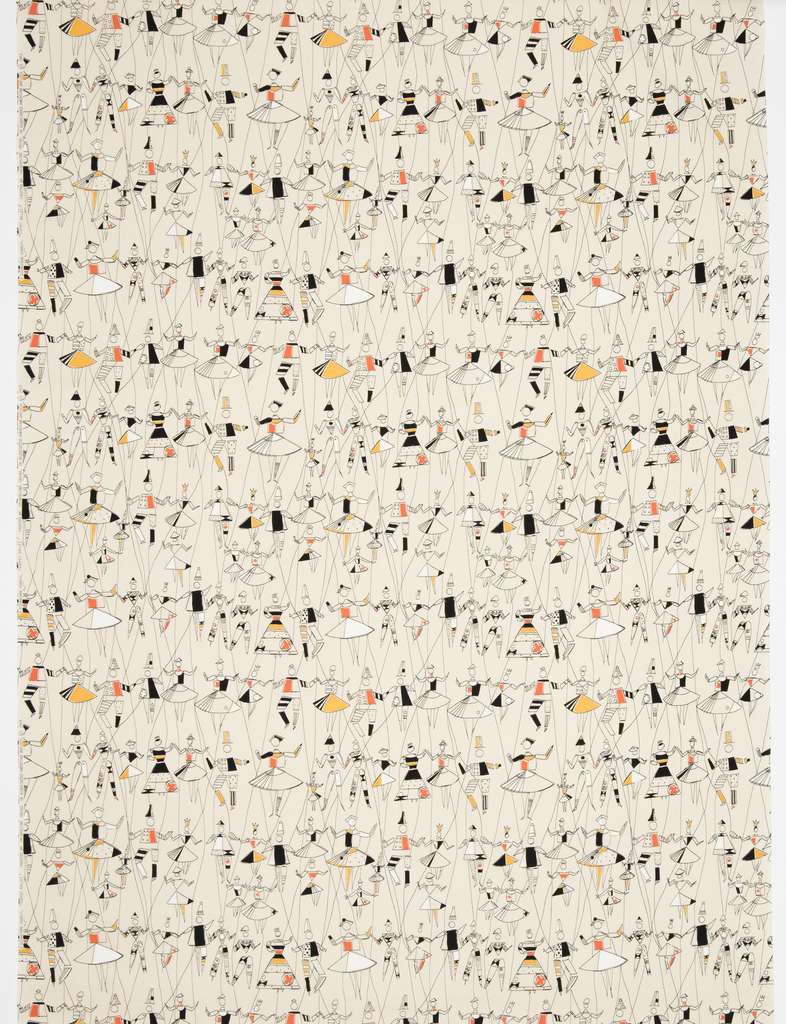
Jacqueline Groag was one of the United Kingdom’s most influential post-war textile designers. She began her career at the famed Wiener Werkstätte in Vienna before designing and producing hand-printed textiles for some of the top Parisian fashion houses, including Chanel, Lanvin, Worth, Schiaparelli, and Poiret. She was also one of only a few of the...
