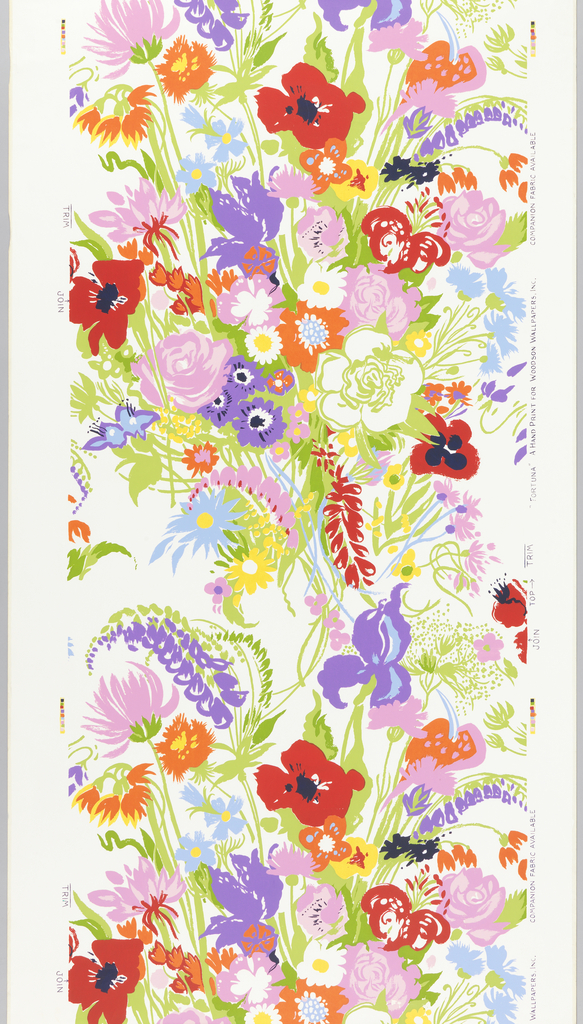
This spring is extra-special at the Cooper Hewitt because the garden is completely renovated and once again open to anyone who needs a nice place to sit on a sunny afternoon. In anticipation of fun times and fair weather, we wanted to feature this vibrant floral wallpaper that presents its own take on 1960s “flower power.”...
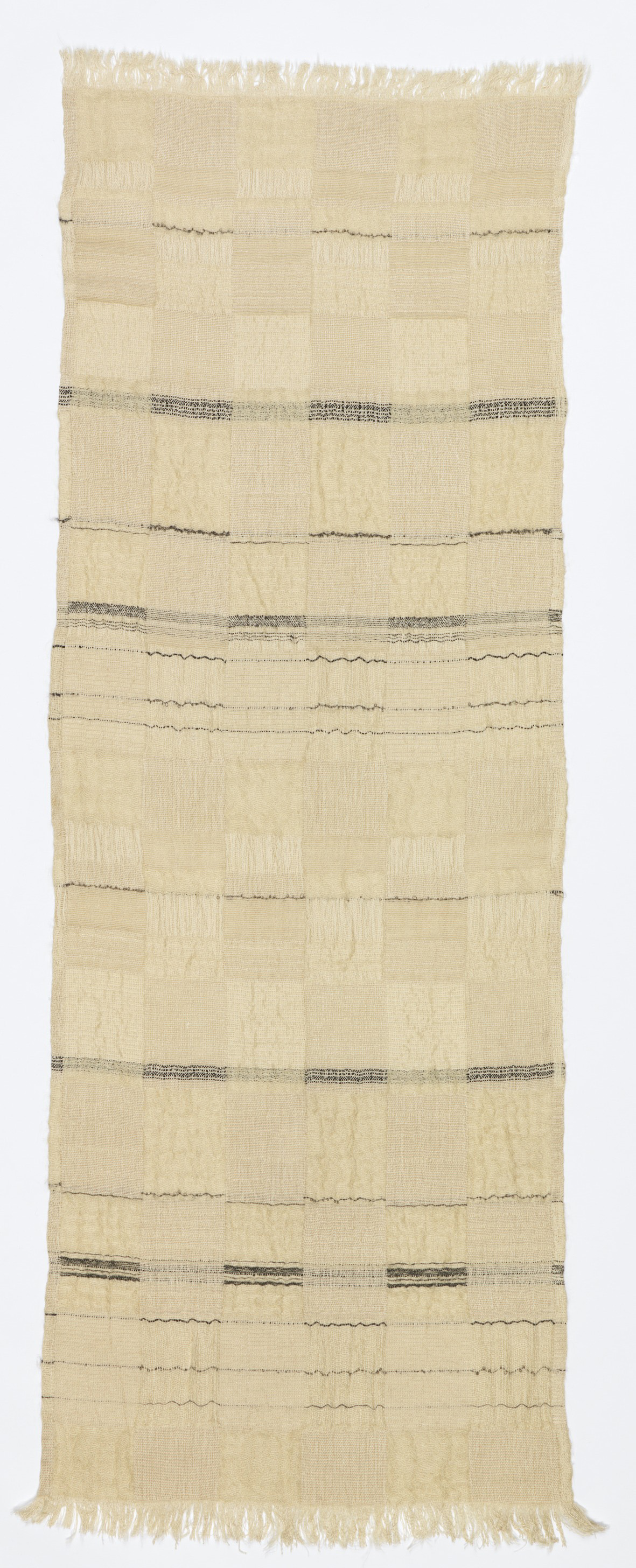
Trude Guermonprez was a much-admired weaver and professor of textile arts at California College of Art. She was trained at the School of Fine and Applied Arts in Halle, Germany, sometimes called the “little Bauhaus,” as many of its faculty had studied or taught there. After World War II, she made her way to California...
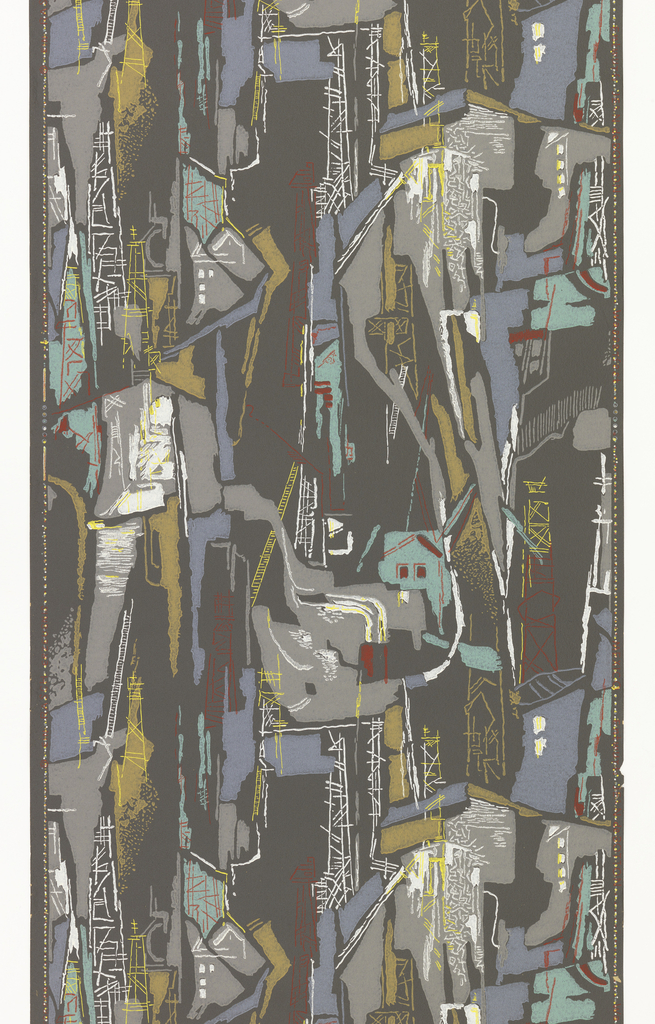
In the mid-twentieth century, German wallpaper company Rasch marketed wallpapers designed by noted contemporary artists to the American public. The product line was called the “International Artists Collection,” and appealed to consumers who wanted their homes and offices to reflect cutting edge of contemporary art. Explaining the creative motivation behind this partnership of artist and...
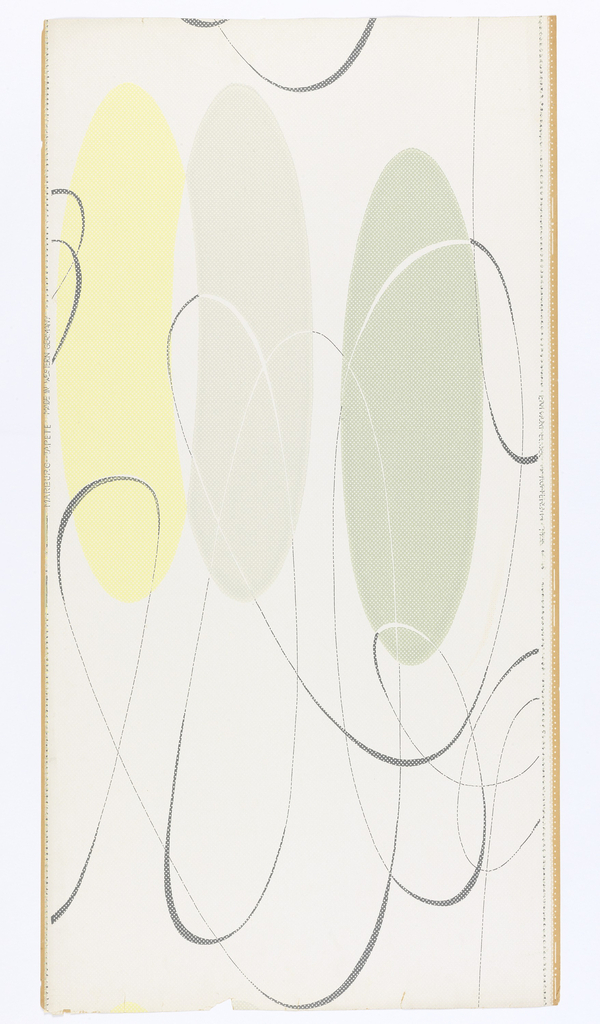
In celebration of Women’s History Month, Cooper Hewitt is dedicating select Object of the Day entries to the work of women designers in our collection. This sidewall was designed by Elsbeth Kupferoth, one of the most prolific pattern designers of post-war Germany. Kupferoth got her start as a student at the Berlin Textile und Modeschüle....
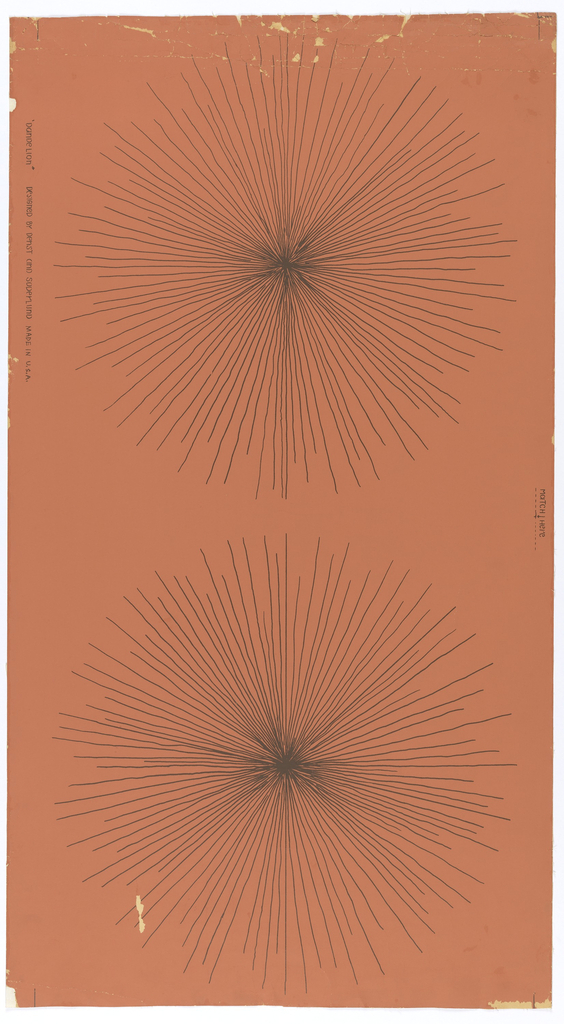
This sidewall was designed by the firm Denst & Soderlund in 1952-53. Thin, wavering black lines radiate out from a central point forming a large round motif resembling a dandelion flower gone to seed. The motif is repeated vertically on the panel, and is so large that it only takes two “dandelions” to cover the...

Pewter, an alloy of tin and lead, used to bring to mind matte, anthracite-grey mugs, flasks, and tableware susceptible to serving up lead poisoning, in addition to whatever else the kitchen had to offer. In other words, anything but this lozenge-shaped, organic biscuit box, marked “KAYSERZINN”. This perception was changed when Engelbert Kayser created “KAYSERZINN”...
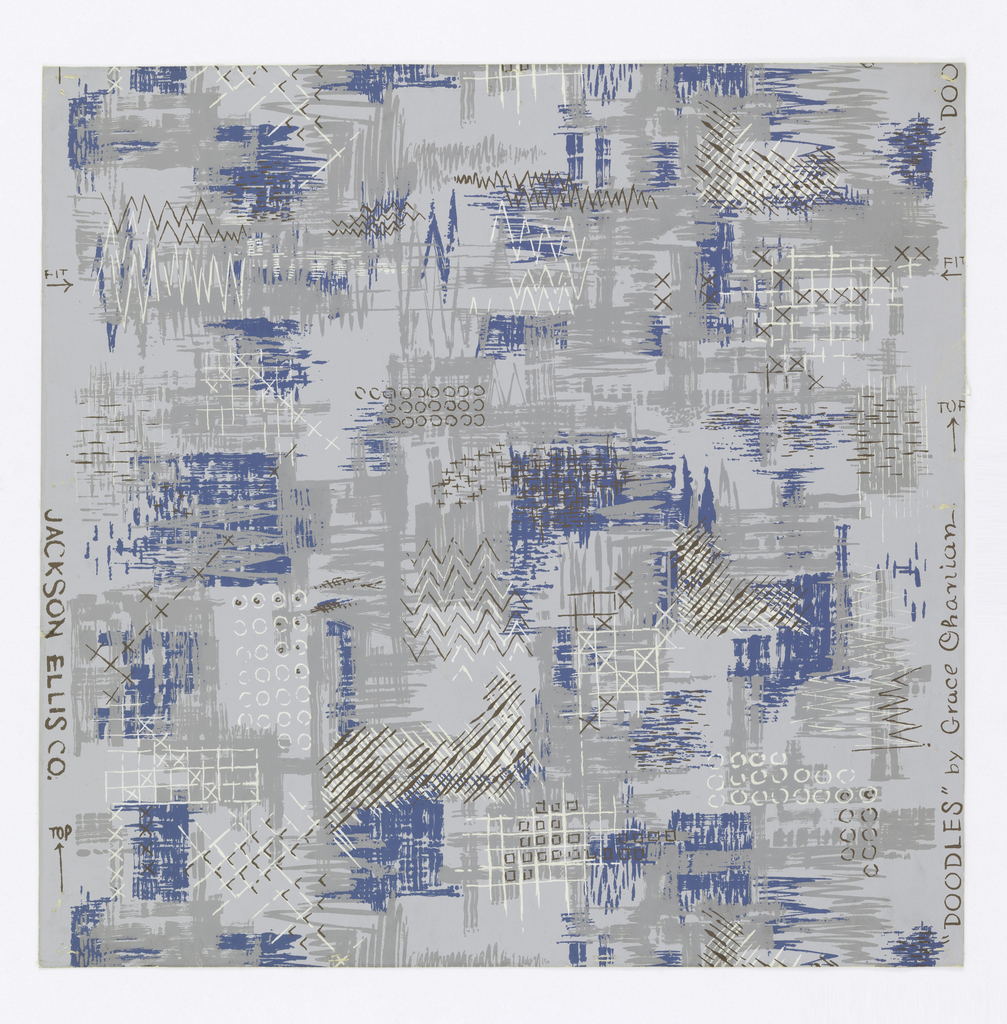
Non-representational wallpaper was a major trend in the 1950s. A large portion of consumers were looking to distance themselves from the overly-fussy, representational wallpapers of the pre-war era, and instead looked to geometry, modernist design and abstract art for inspiration. Because of newly available low-cost screen printing methods, wallpaper manufactures were able to introduce a...
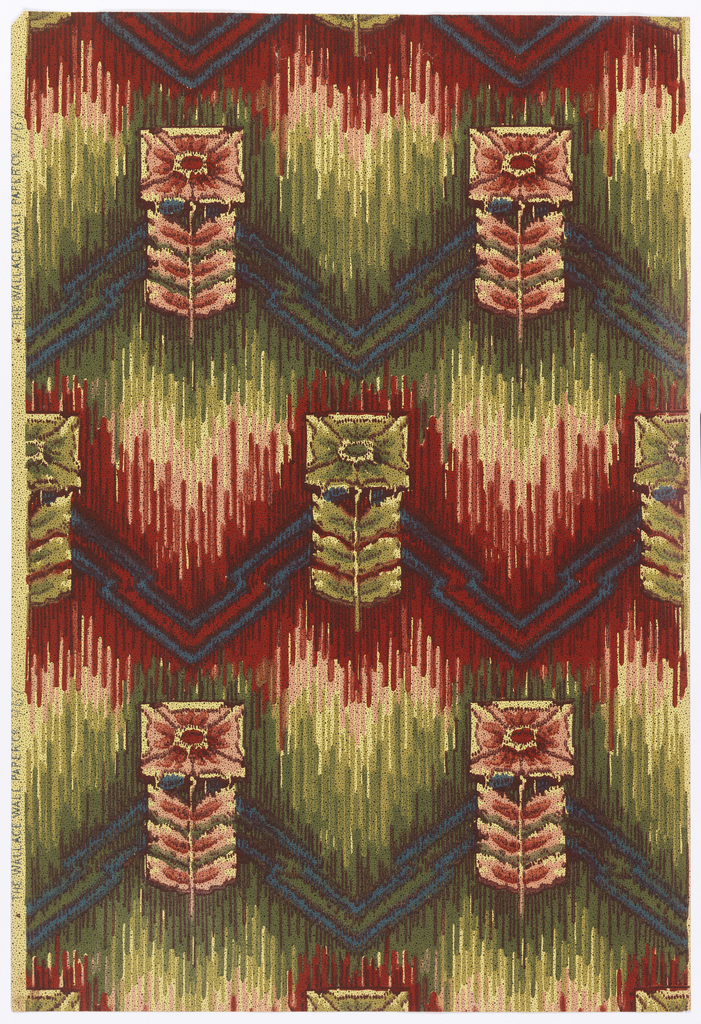
This wallpaper manufactured by Wallace Wall-Paper Co. is dated 1906-08. Although it is machine-printed on paper, the vertical thread-like lines make it look like a woven textile. A variety of textiles have been used to cover walls, so it is not surprising that the earliest and consistent influence on wallpaper design has come from textiles....
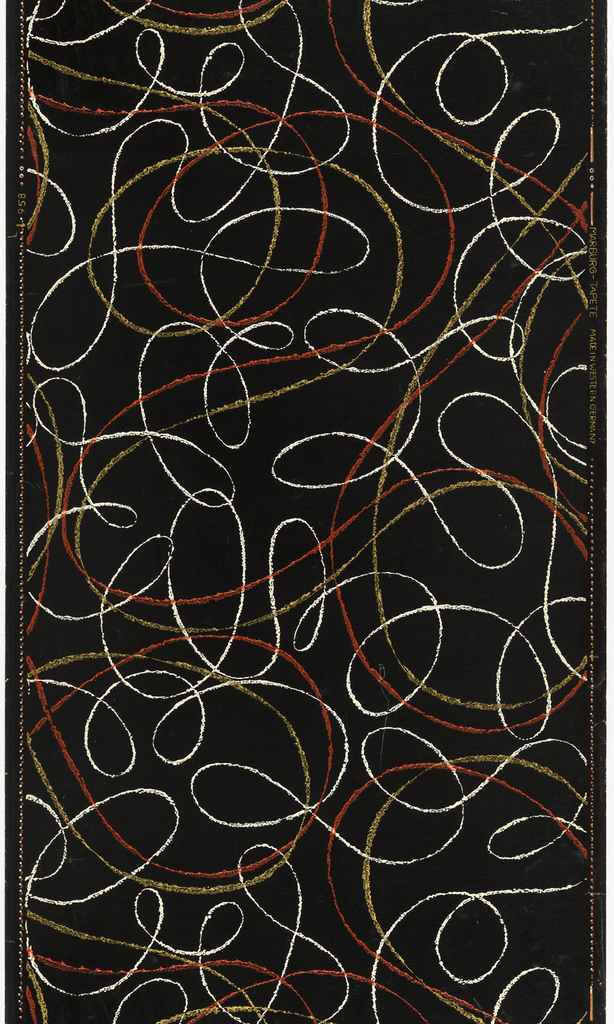
Though Marburger Tapetenfabrik is among the oldest wallpaper manufacturers in Europe, in the 1950s they eschewed traditional patterns and became one of the many companies producing ‘contemporary’ designs meant to compliment the new, modern houses popping up all over Europe and America in the building booms following World War II. What, exactly, made wallpaper contemporary...
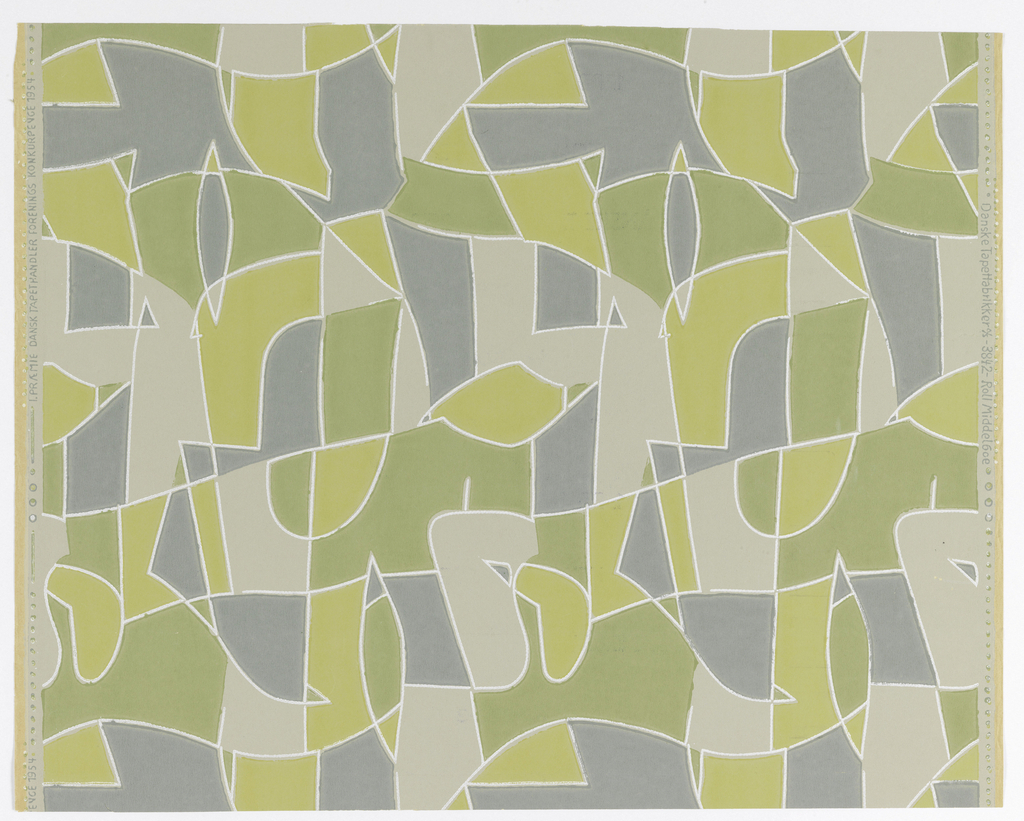
This unobtrusive sidewall was designed c.1954 – 1955 by Rolf Middelboe for the Danske Tapetfabbriker company, and it is a great example of midcentury “Danish Modern” design. Thin white lines wander over the paper, sometimes angular sometimes curvilinear, creating a patchwork of abstract polygons. The shapes are filled with muted tones of grays and greens,...
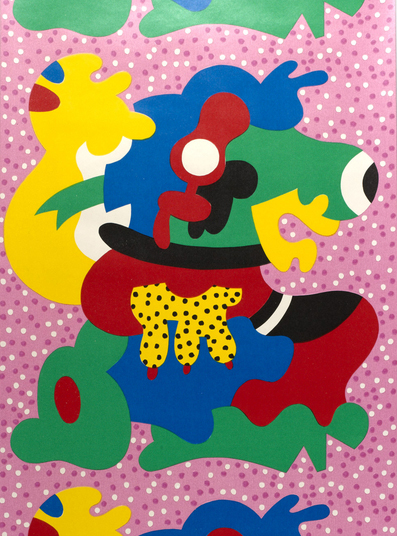
The Happy Cow is a children’s wallpaper designed by the celebrated German artist, Otmar Alt, for the “Xartwall” collection of wallpapers produced by Marburger Tapentenfabrik in the 1970s. The paper features a goofy cow made up of amorphous, puzzle-like blocks of bold primary colors. She floats atop a pink polka dotted background that looks like...
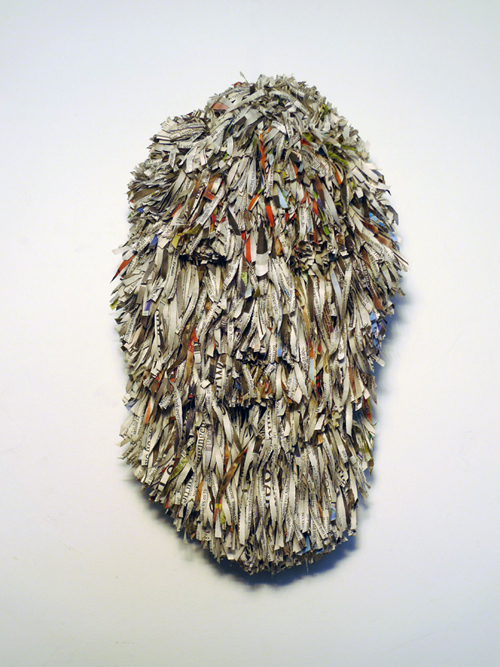
The Daily Pattern is a Dutch blog dedicated to “textile design in progress.” Run by Swiss designer Zara Atelj, the blog collects unusual bits of data— weather reports, economic stats, even inkjet printer glitches—and repurposes them as abstract textile patterns. Pattern based on news data over a period of 48 days An experiment with newspaper...
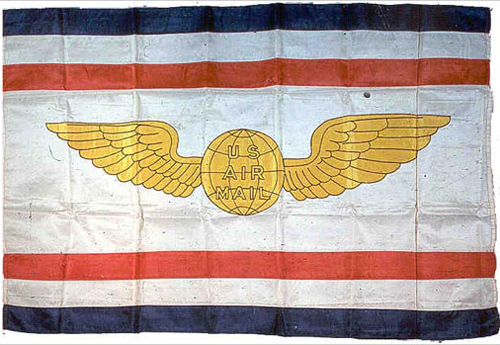
The final grand challenge posed by Secretary Wayne Clough for the new strategic plan of the Smithsonian is explained by the sentence: “America is an increasingly diverse society that shares a history, ideals, and an indomitable, innovative spirit. We will use our resources across disciplines to explore what it means to be an American and...
