A Bed for Living
This stylishly and supremely practical day bed reflects a collaboration between Frederick Kiesler and Marguerita Mergentime. It was created for Mergentime’s NYC apartment in the mid-1930s, and is Kiesler’s only known residential commission. Containing three storage compartments, a bookshelf, a swing-out bed tray for reading or eating, and an attached lamp, the bed is really...
Image of textile piece 1919.
Peche’s Ornamental Ombré
Matilda McQuiad discusses this ombré textile by prominent Austrian designer Dagobert Peche.
Surface of Luxury
Sarah D. Coffin and Cynthia Trope discuss this lavish yet modern sharkskin desk, now on view in The Jazz Age: American Style in the 1920s.
The Master Silk Printer
Elizabeth Broman discusses the 1920s trade catalogue The Master Silk Printer.
Image of drawings by IIonka Karasz.
Tabletop Geometry
Gail Davidson discusses modernist designer Ilonka Karasz's geometric iterations for tableware.
Alternating vibrant yellow and blue lines form staircase-like zigzags diagonally across a cream-colored textile, with horizontal black lines accenting each "stair."
Painterly Effects
Tissu simultané no. 46, a bold geometric design of blue, yellow, and black lines on a white ground, has the hallmark characteristics of Sonia Delaunay’s textiles from the 1920s: contrasting colors with abstract, geometric, or rounded patterns that are block-printed on cotton or silk fabric. In fact, she often printed the same pattern and colorway...
Photograph of ceiling fixture, Rockefeller Center, 1932.
Cosmic Caldwell
Jennifer Cohlman Bracchi discusses this Caldwell lighting fixture, created for Rockefeller Center in 1932.
Paris, Indoors and Outdoors: Thérèse Bonney
Elizabeth Broman discusses the work of influential Jazz-Age photojournalist Thérèse Bonney.
View of a liviing room designed by Sue et Mare at Lord & Taylor. The round display consists of two padded arm chairs, a low coffee table with rounded legs, and a tall, paneled plinth on which stands a statue of a nude figure.
Beautiful Objects for General Consumption: The New York Department Store and Modern Design in the 1920s
In the 1920s, the New York department store was an early promoter and exhibitor of European modernism and a distiller of these new styles for the American consumer. Good Furniture magazine reported in 1928 that “Lord and Taylor has taken a very definite step forward toward the actual placing of modern furniture in American homes.”[1]...
Image of Gods Man Lynd Ward Cover Blog.
A Wordless Novel: God’s Man
Cooper Hewitt Smithsonian Design Library librarian Elizabeth Broman discusses a 1929 American wordless novel.
Picture of Textile: Paradis Terrestre (Earthly Paradise)
Forbidden Fruit
In this fabric, designer Jean Beaumont uses a lush pattern of oversized exotic florals and foliage, interspersed with stylized animal and human figures, to call forth an idyllic scene of paradise on earth. This, however, is a fleeting paradise, as the female figure (Eve) hands the forbidden fruit to the male (Adam). This sophisticated evocation...
Subtle but Strong
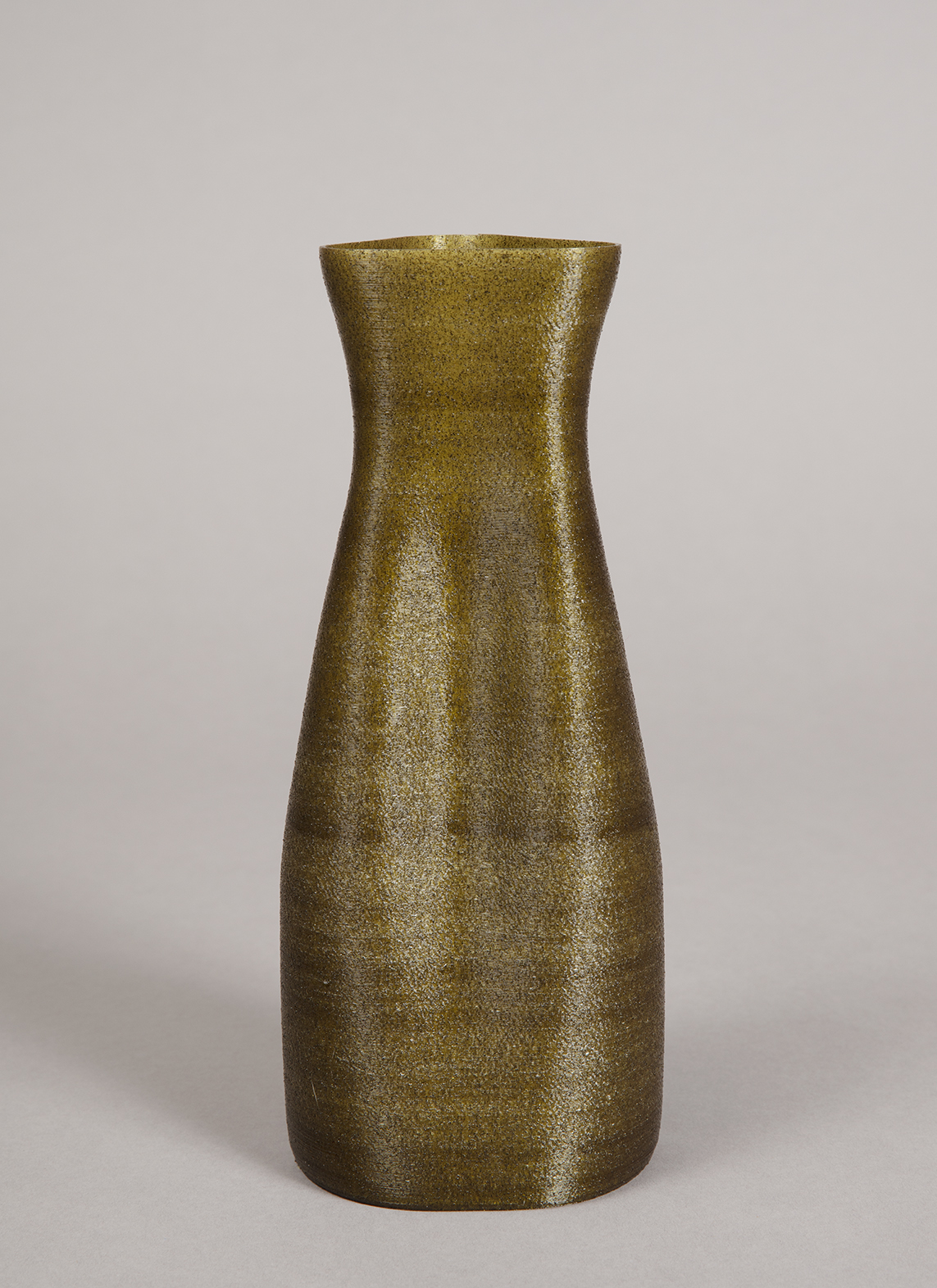
Sarah D. Coffin discusses the technical excellence of this Lobmeyr Ambassador vase, now on view in The Jazz Age: American Style in the 1920s.
Image of a Poster, Symphony of a Big City, 1928.
Berlin: Symphony of a Big City
Caitlin Condell discusses this Russian movie poster that utilizes themes of modernity, Constructivism, urban imagery, and the avant-garde found in The Jazz Age: American Style in the 1920s.
Picture of a Textile, 1920–1929, designed by Thomas Lamb
Jazz Goddess
This textile pattern features Diana, Roman goddess of the hunt, bow in hand, accompanied by her hunting dogs and surrounding by her prey—antelopes or gazelles. Diana—as a metaphor for commerce and the hunt for profits—was a popular theme in the 1920s. This highly stylized rendering of the huntress surrounded by prancing animals may have been...
Skyscrapers in the Jazz Age: A Tour with Curator Sarah Coffin
Join curator Sarah Coffin for a Facebook Live tour of The Jazz Age: American Style in the 1920s.