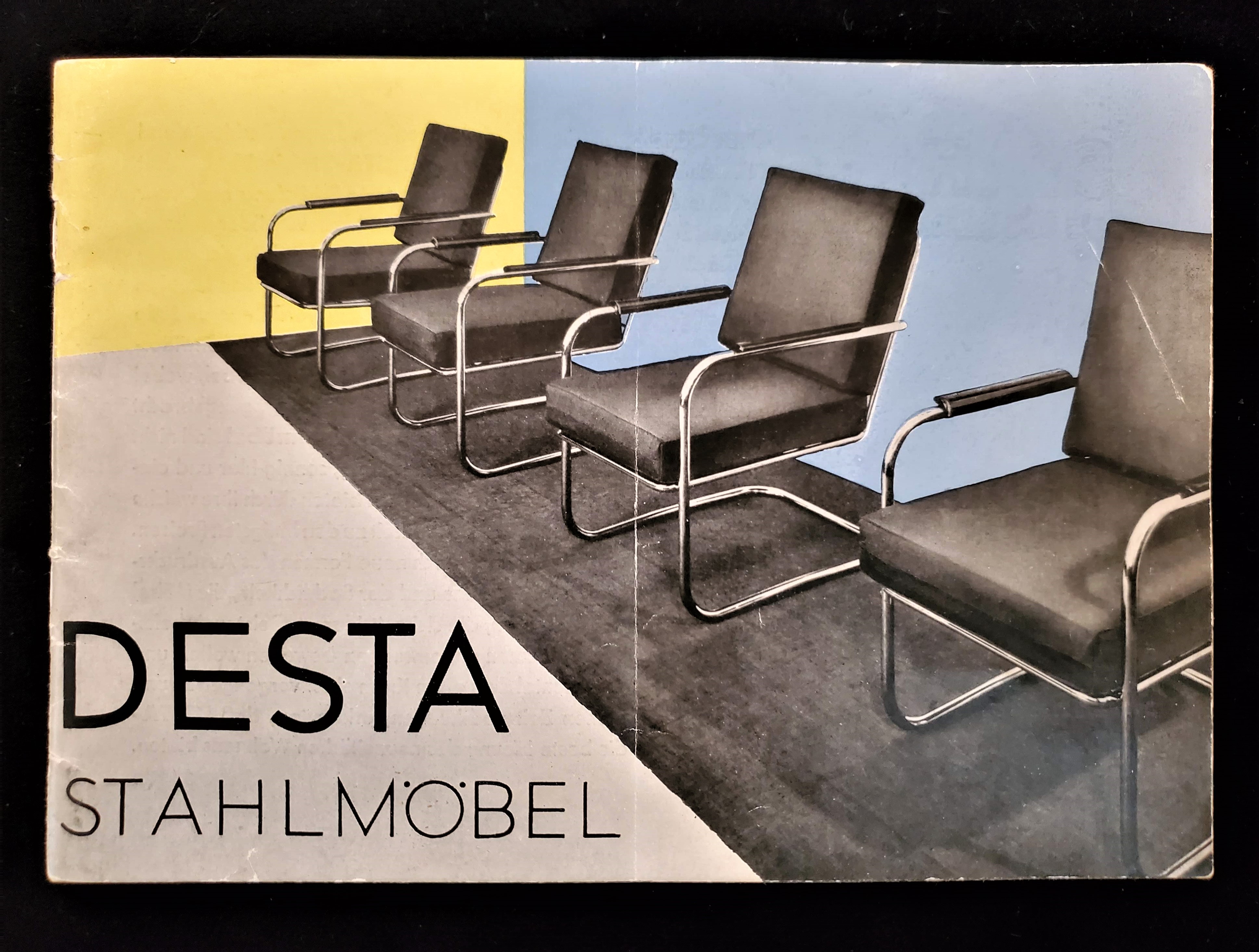
The Bauhaus, a school of design and architecture founded in Weimar, Germany, in 1919 by Architect Walter Gropius, had the goal of developing unity of the arts through craftsmanship taught in specialized workshops by key theorists and practitioners, among them Johannes Itten, Marcel Breuer, Lázló Mology-Nagy, Mies van der Rohe, Oskar Schlemmer, Josef Albers, and...
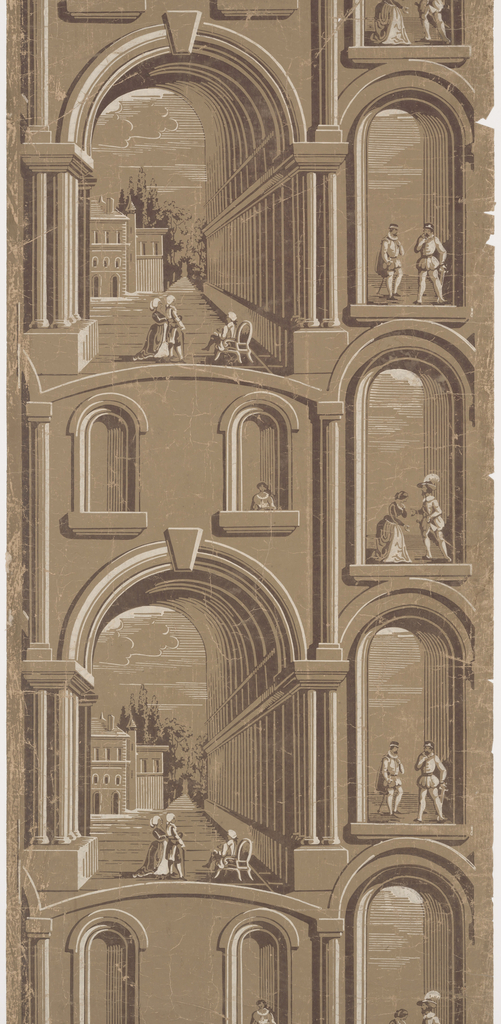
This is a pillar and arch paper, the format of which was introduced in England in the late eighteenth century. These papers consisted of a series of pillars and arches, with any variety of motifs used to occupy the space under the arch. The scale and repeat size was usually quite large so these designs...
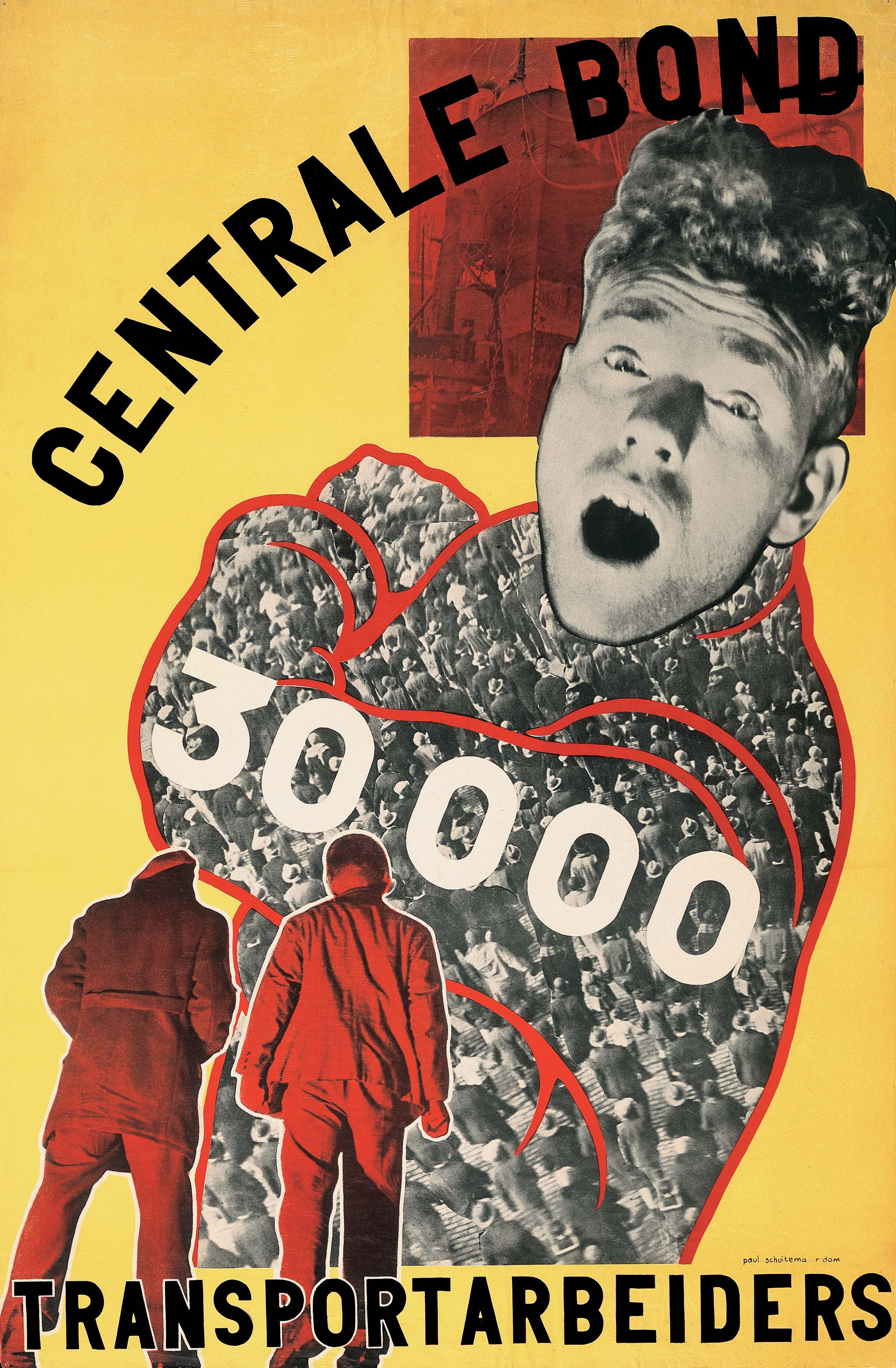
This rare poster was created in 1930 Paul Schuitema (Dutch, 1897–1968). The poster came to Cooper Hewitt in 2019 as a gift from Merrill C. Berman, one of the world’s most influential collectors of modern graphic design and a longtime collaborator with our museum. With this recent gift, Schuitema’s poster is coming home to Cooper...
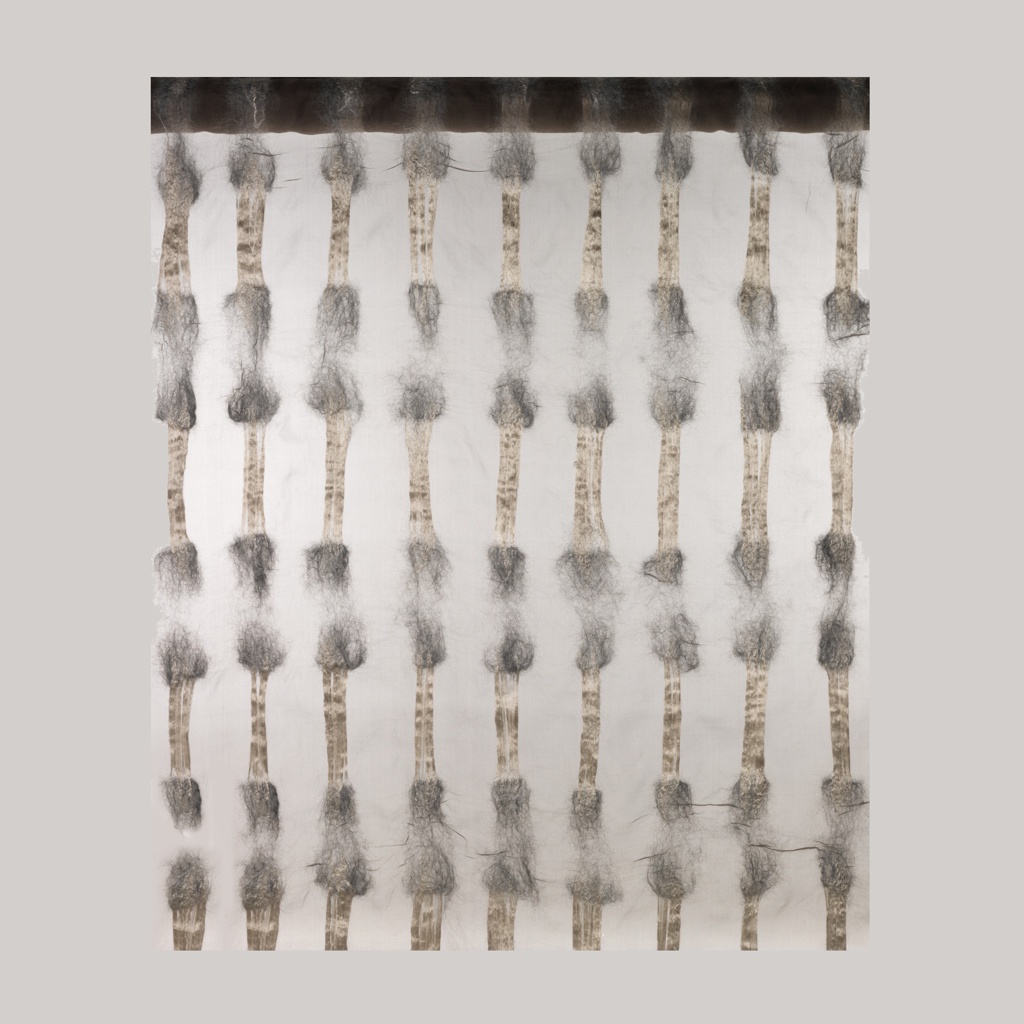
SI Alpaca demonstrates Claudy Jongstra’s interests in combining sheerness and opacity in lightweight, translucent structures, and in reintroducing historic dye plants such as madder and weld to the Netherlands. Jongstra planted a research garden specifically devoted to dye plants, and has studied with dye masters to learn historic techniques. SI Alpaca is dyed with walnut....
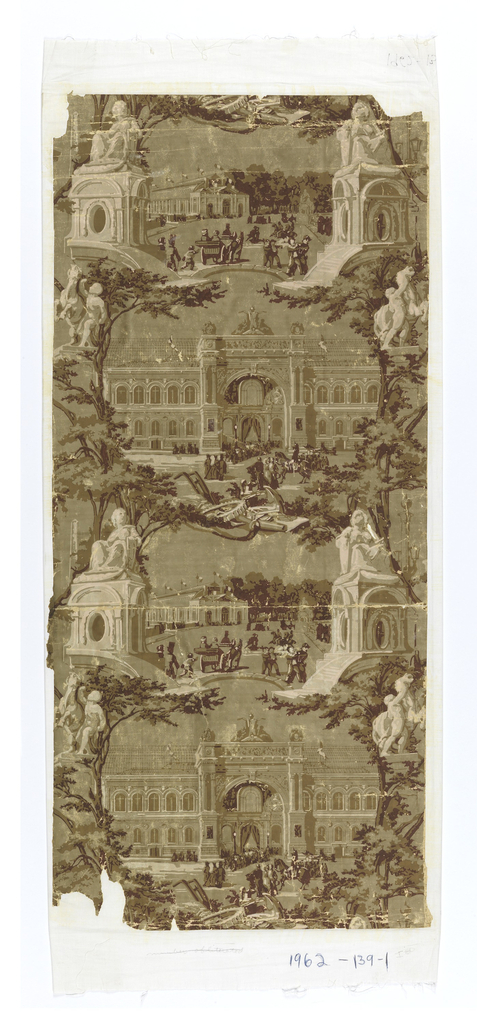
Wallpapers have a long history of celebrating innovations in technology, especially when it involves mobility. Early steam-powered locomotives and paddle boats, automobiles and airplanes are frequent themes. Feats of civil engineering including the Brooklyn Bridge are also highlighted. Here is a wallpaper celebrating industrial progress. This paper is commemorating the Exposition Universelle of 1855, the...
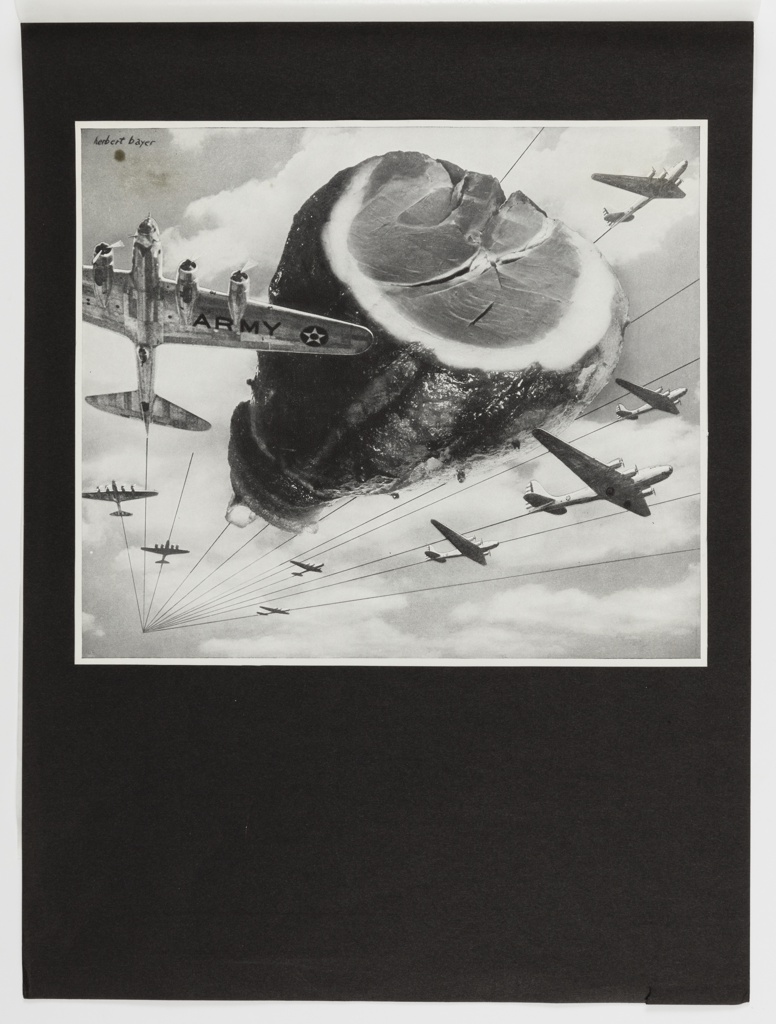
A pork shank flies through the air, flanked by nine Allied bombers. Perspective lines shoot out from a distant point of origin, emphasizing the speed, impact, and patriotic urgency of the heroic ham and her military escort. But why? Signed “herbert bayer” in the upper left corner, this mysterious black-and-white printed photomontage is part of...
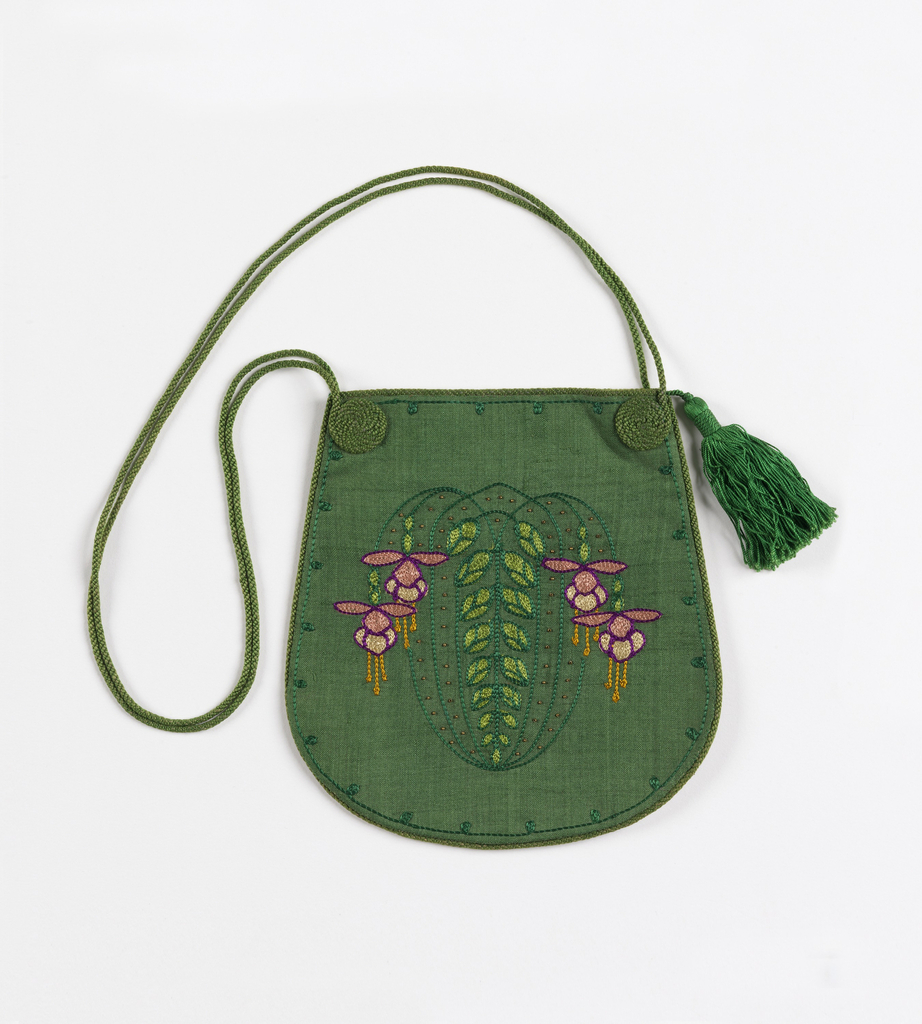
Author: Rachel Pool This green purse is made from silk embroidery, plant fibers, and glass beads. A single tassel dangles from one side of the purse. Made between 1910 and 1912, the purse exhibits the Art Nouveau design style, indicated by the embroidered motif that displays organic patterns taken from nature, shown in the form...
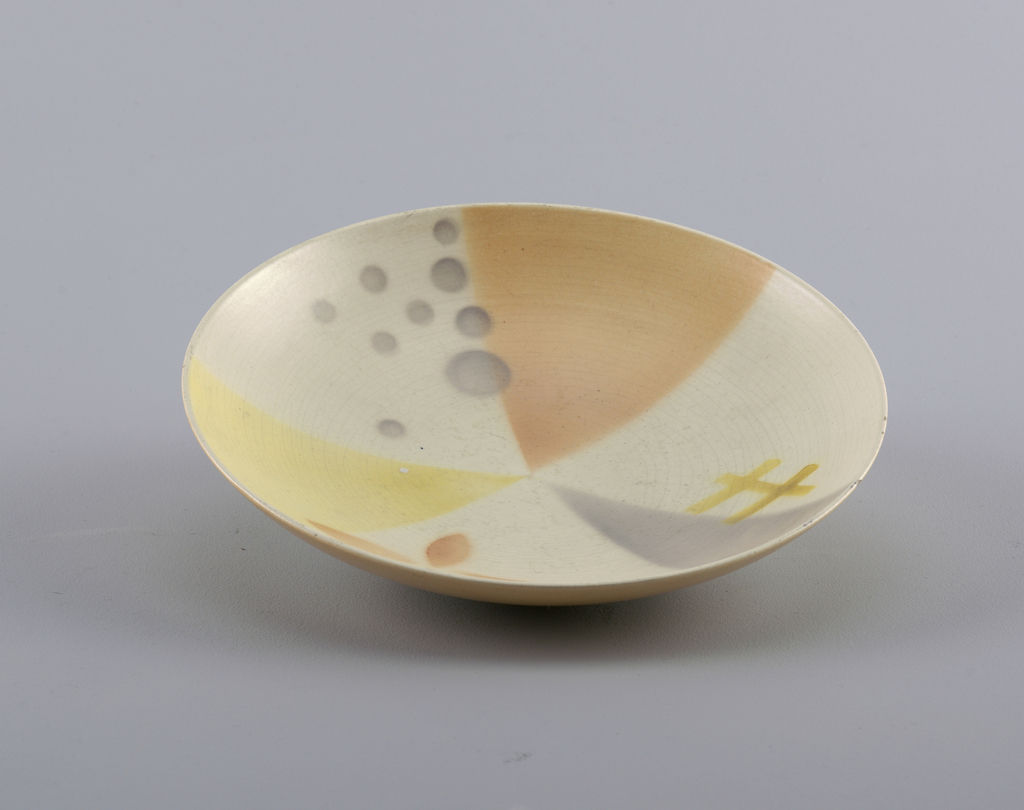
A compressor rumbling. A nozzle hissing. The colorful geometric shapes decorating this otherwise straightforward dish were not painted by hand. Rather they were applied by a device novel to the world of ceramics: the airbrush. The important and prolific German designer, Martha Katzer (1897–1947), created this dish for the Karlsruhe Majolika Manufaktur (KMM) in Baden,...
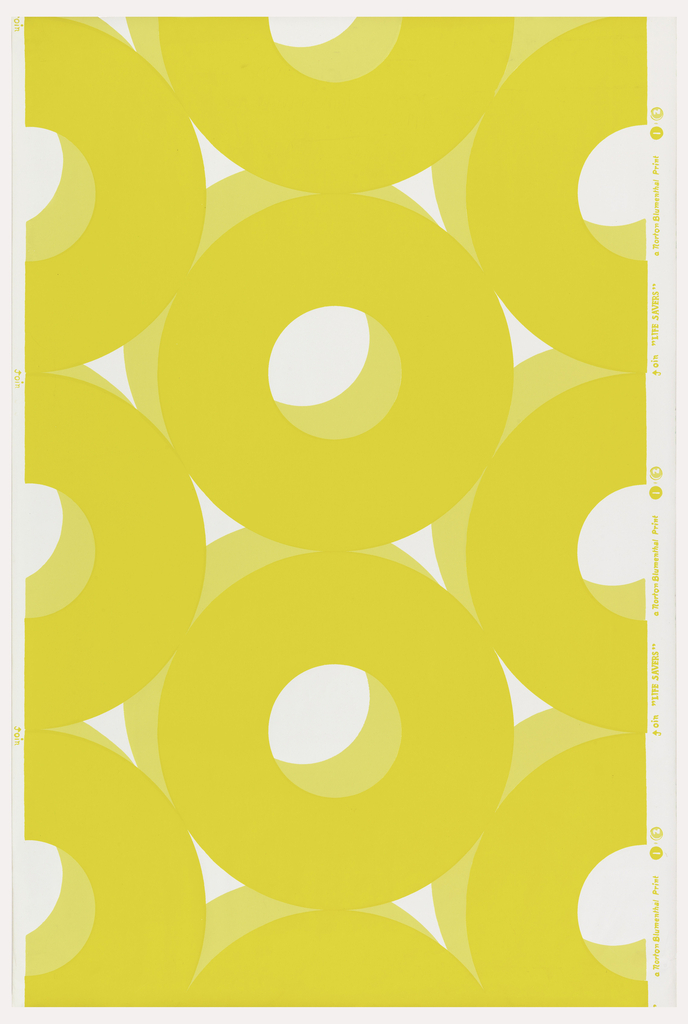
In case these gray winter skies are getting you down, here is a perky wallpaper to brighten the mood. Aptly titled “Life Savers,” this wallcovering enlivened the interiors market sometime in the early 1970s. The design consists of circles, or life savers if you will, tightly aligned in polka dot fashion. The front of each...
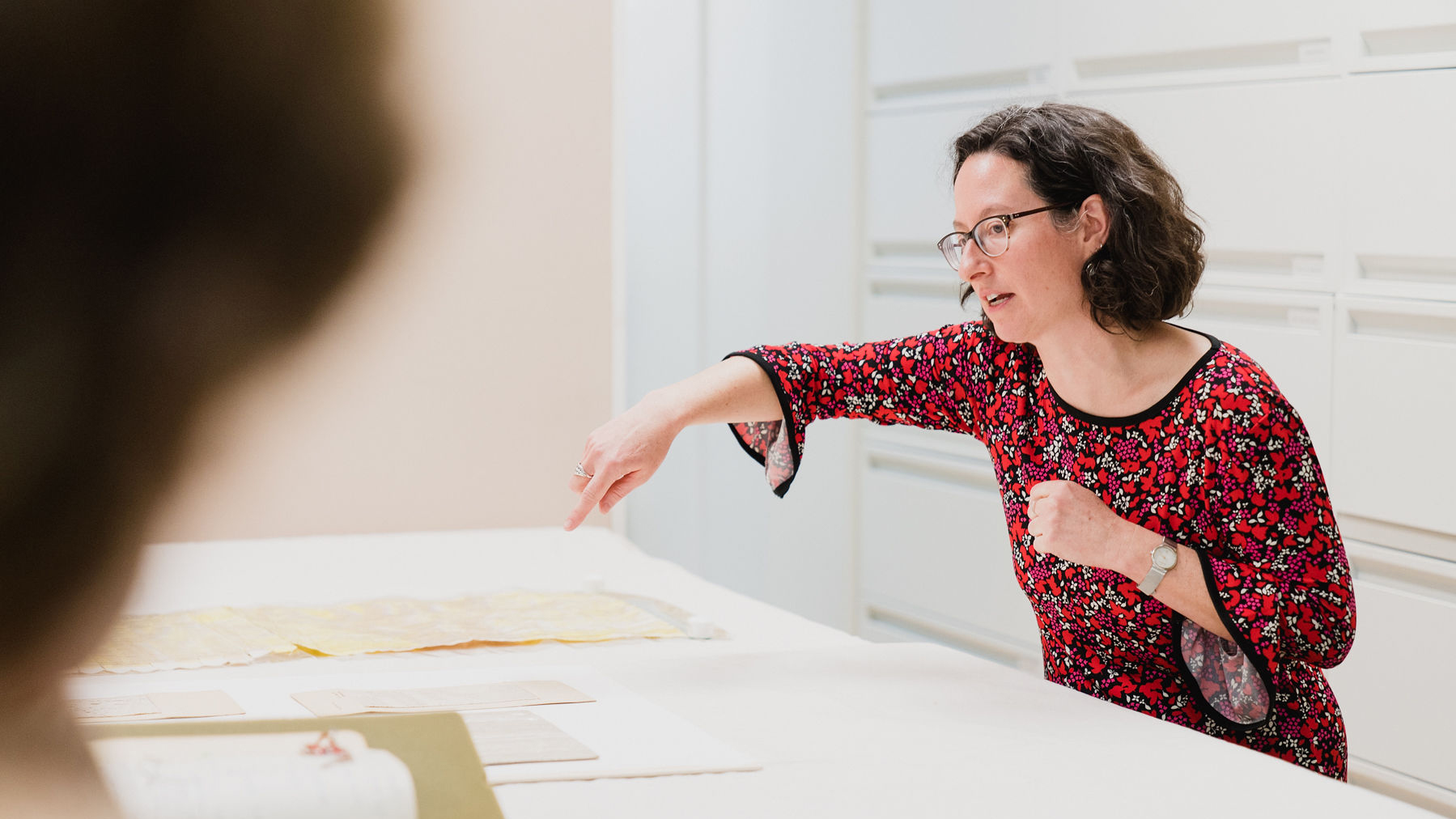
In mid-twentieth century San Francisco, two women explored new directions in weaving and the design of fabrics and wallcoverings. Join us to discover the works of émigré Trude Guermonprez (1910-1976), an inventive and inspiring weaver, textile designer, and teacher, and her contemporary Lanette Scheeline (1910-2001), a Bay Area native who operated a successful textile and...
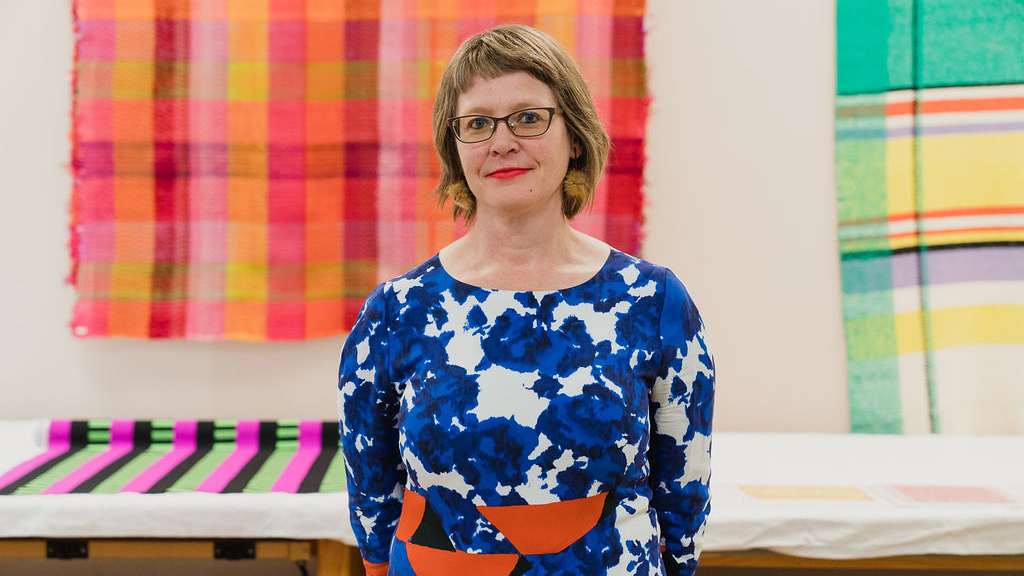
Cooper Hewitt hosts RISD Museum Curator of Costume and Textiles Kate Irvin in a design talk exploring the experimental materials, novelty textures, and “vibrating” color palette in textiles generated by designer and entrepreneur Dorothy Wright Liebes (1897-1972), nationally recognized in her own time as America’s “First Lady of the looms.” Read more about Doroty Liebes....
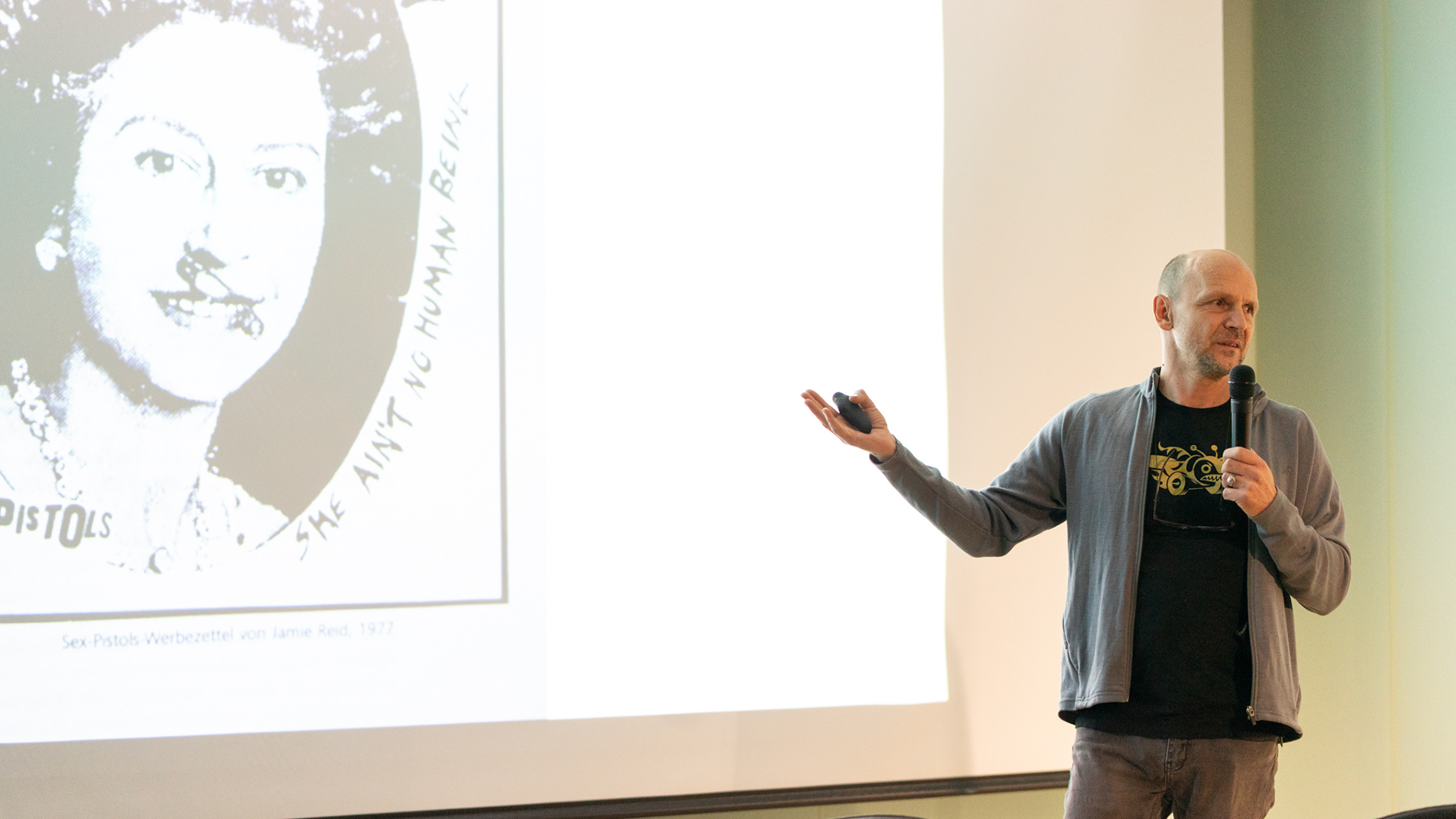
Cooper Hewitt welcomed Wellington, New Zealand-based artist Karl Fritsch. Playful and tough, intricate and coarse, Fritsch’s avant-garde pieces challenge the concept of what jewelry, and sculpture, can be. Joined by Fritsch Jeanne Greenberg Rohaytn, owner of Salon 94 and Alexandra Cunningham Cameron, Curator of Contemporary Design. SPEAKERS Karl Fritsch began his education...
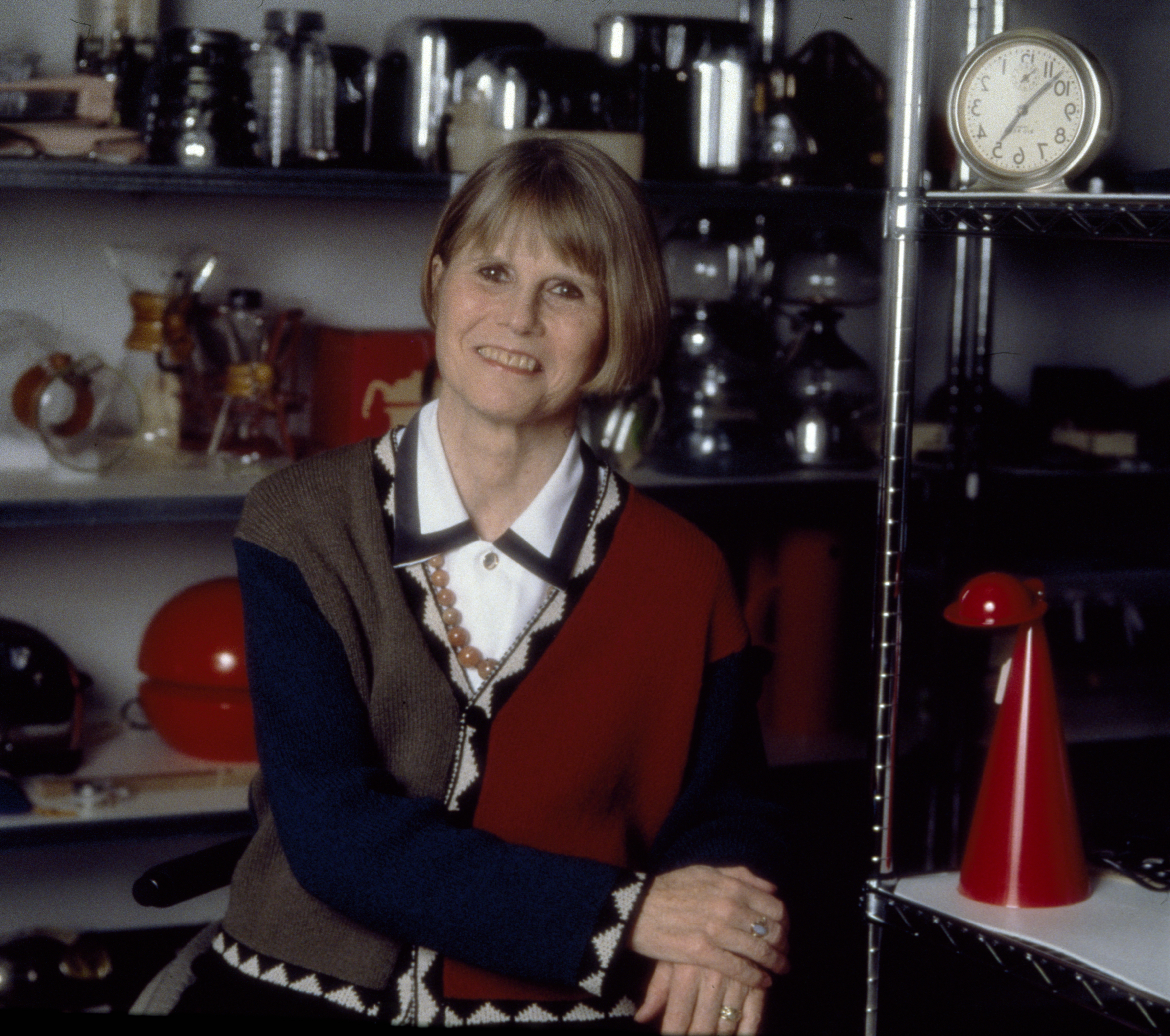
This tribute to Dianne Pilgrim was composed by Ellen Lupton. The world of design has lost a great friend with the passing of Dianne Pilgrim (1941–2019), director emeritus of Cooper Hewitt, Smithsonian Design Museum. When Pilgrim joined the museum as director in 1988, she brought her deep scholarly knowledge of American design as well as...
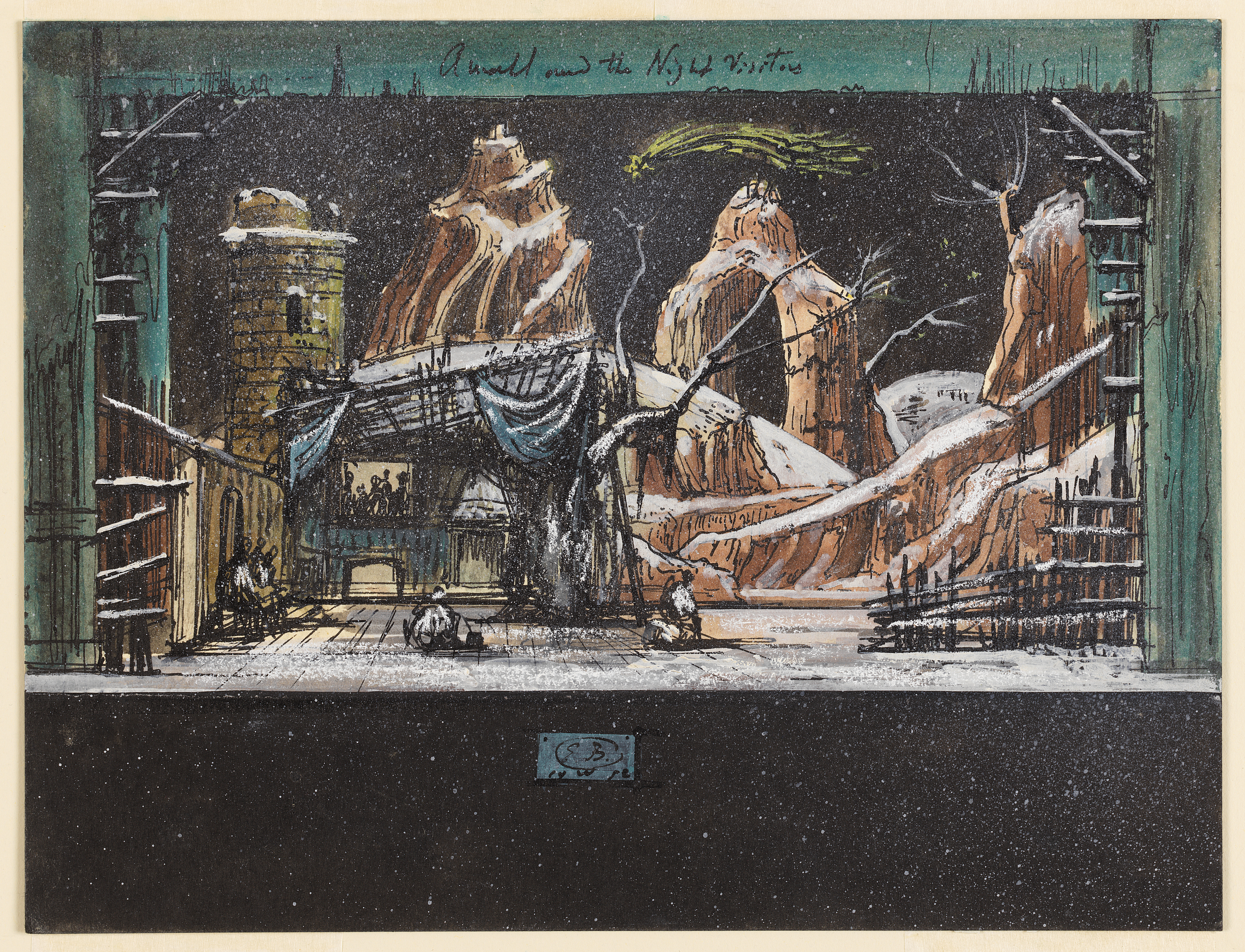
Amahl and the Night Visitors was the original Hallmark Christmas movie. The one-act opera by Gian Carlo Menotti was the first opera composed for television in the United States. Commissioned by NBC, it was first performed on Christmas Eve in 1951 from a studio in Rockefeller Center. Sponsored by Hallmark, it was also the debut...
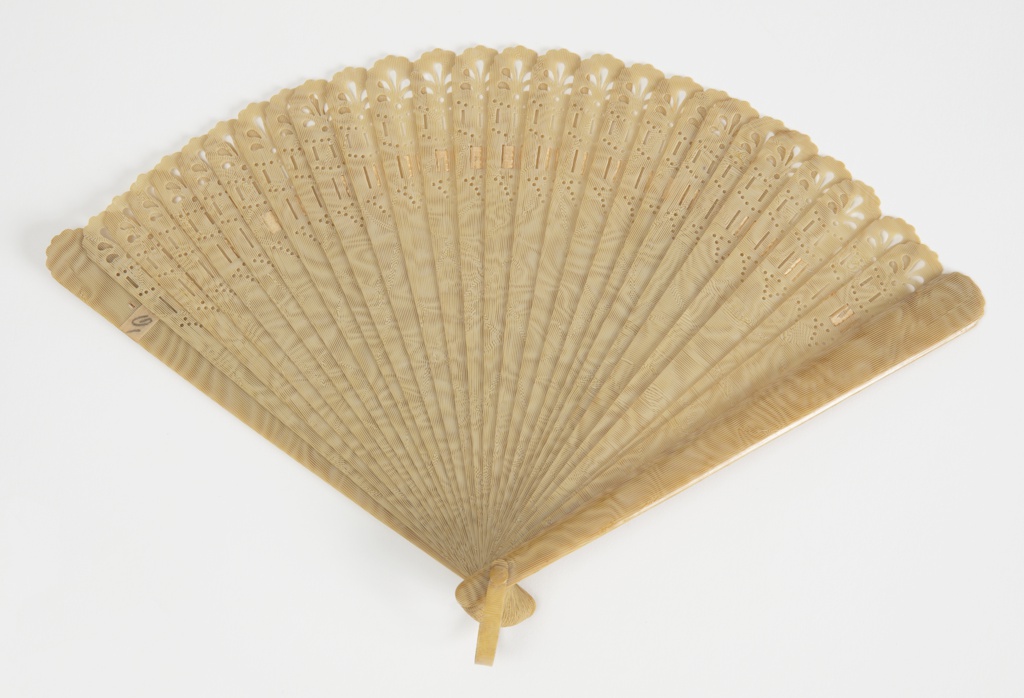
This fan is in “good” condition for cellulose nitrate and therefore a rarity. Cellulose nitrate is an early plastic polymer invented in the mid-nineteenth century and derived from cellulose that is treated with nitric acid. The material gradually degrades, releasing nitric acid. This fan documents a time of experimentation when substitutions for costly natural materials,...
