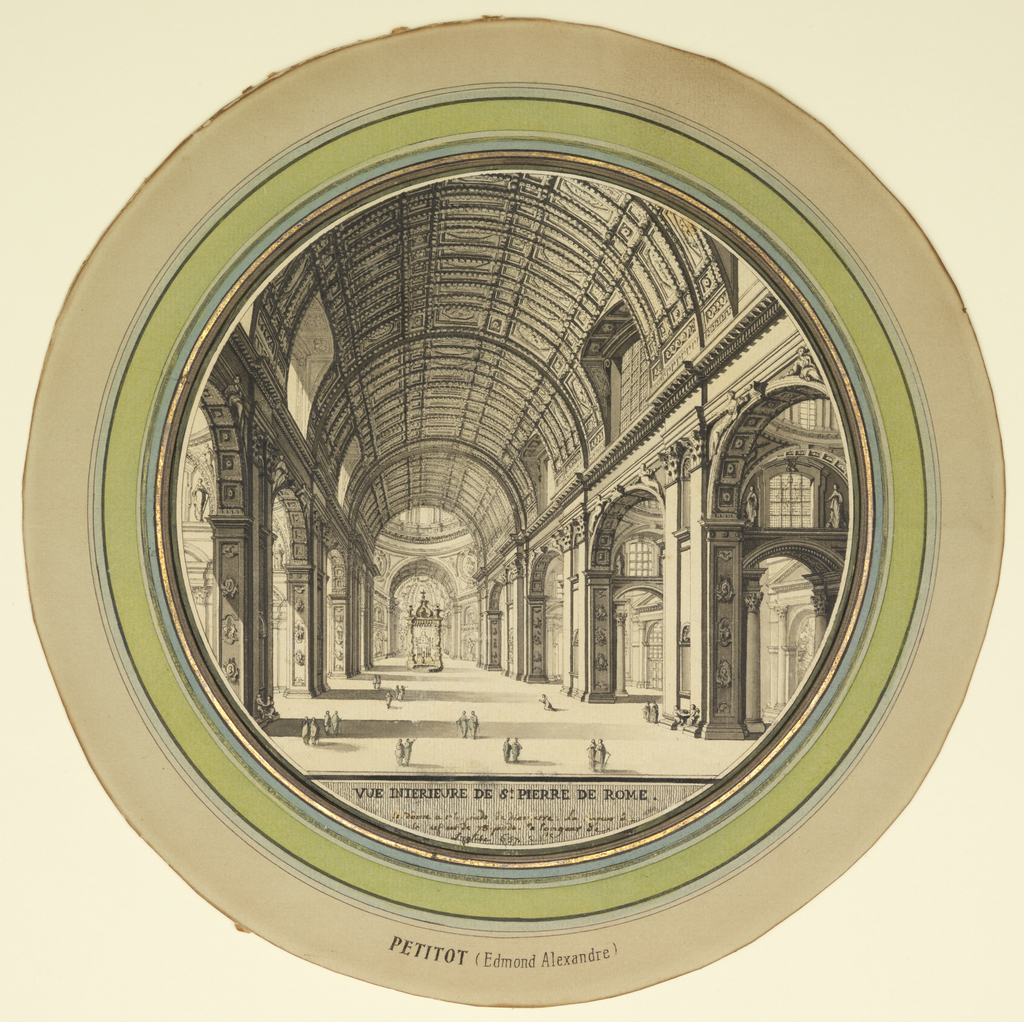
This drawing, Interior of St. Peter's in Rome, has been attributed to Enneamond Alexandre Petitot, although it is likely that the drawing is by an unidentified artist working either in the circle of Giovanni Batista Piranesi or the workshop of Giuseppe Vasi, both of whom created scenes of notable monuments in Rome for the tourist trade in...
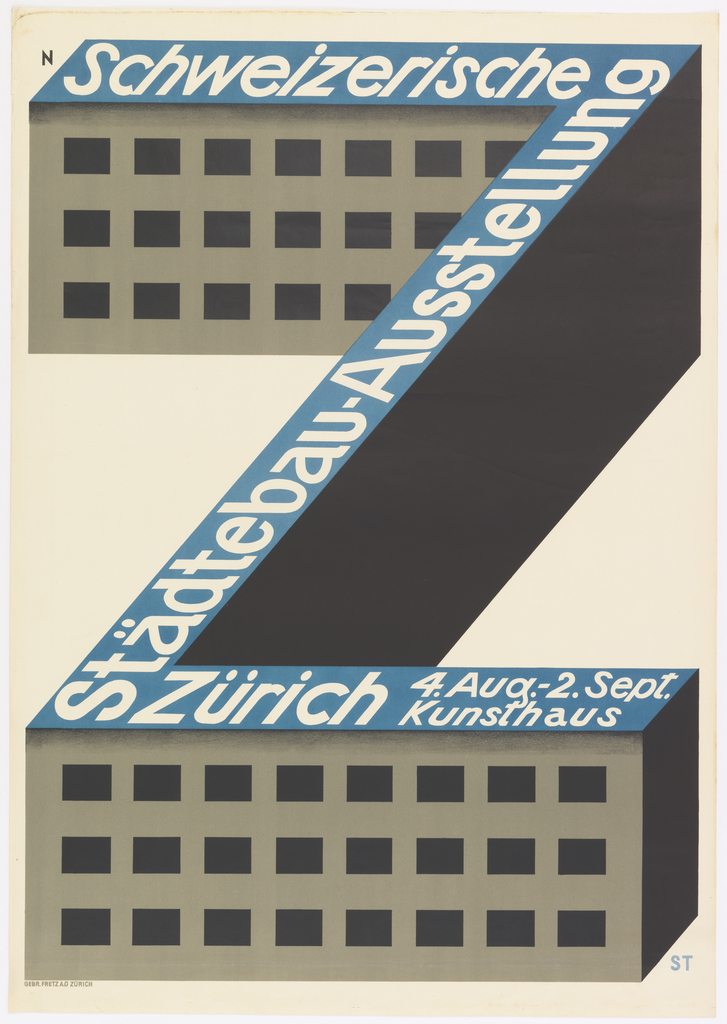
Niklaus Stoecklin was one of a group of early 20th century Swiss graphic designers including Emile Cardinaux, Otto Morach, and Otto Baumberger who originally trained as painters. While many of these early graphic designers celebrated the Swiss landscape, Stoecklin, with the Germans Ludwig Hohlwein and Burkhard Mangold, focused on manufactured and industrial good and products. Studying...
![This Soviet film poster for the German 1927 movie "Die Symphonie der Grossstadt" ["Symphony of a Metropolis"], depicts a mechanical man composed of a head with a movie camera for one eye, a watch on his neck, with one arm typing on a typewriter and the other arm in the form of a pen. This figure is placed in front of a flat and tilted skyscraper. The title of the film, in red, runs diagonally along the lower edge while the movie credits in white parallel the diagonal building.](https://www.cooperhewitt.org/wp-content/uploads/2013/10/63541_54fcf635592d5203_b.jpg)
Vladimir and Georgii Stenberg were born in Moscow, in 1899 and 1900. They attended the Stroganov School of Applied Art and took classes in military engineering. In the early 1920s they joined with other artists including Alexander Rodchenko in an exhibition of Constructivist sculpture and painting. The Stenbergs' contributions were non objective sculptures of glass, metal, wire, and wood showing lines and planes floating in space. Their earliest graphic design efforts were for the theater which the Soviet state supported as a powerful propaganda tool. They provided inventive and graphic costumes and sets for the Moscow Chamber Theater productions by George Bernard Shaw, Eugene O'Neill and Bertolt Brecht. In one case they included the names of the characters running down the sides of their costumes.
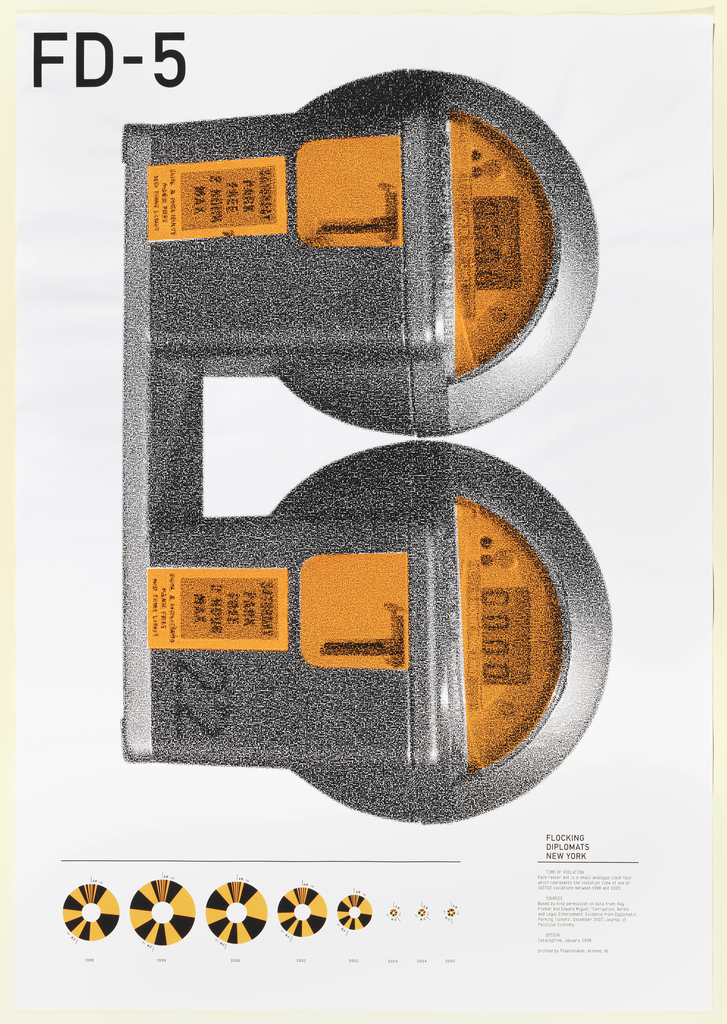
On the occasion of the United Nations meetings in New York City this week (September 23 – September 27, 2013) a series of prints by the Dutch firm Catalogtree are humorously relevant. For this project, the principals, Joris Maltha and Daniel Gross, tracked down the raw data (who, where, when) concerning parking violations by United...
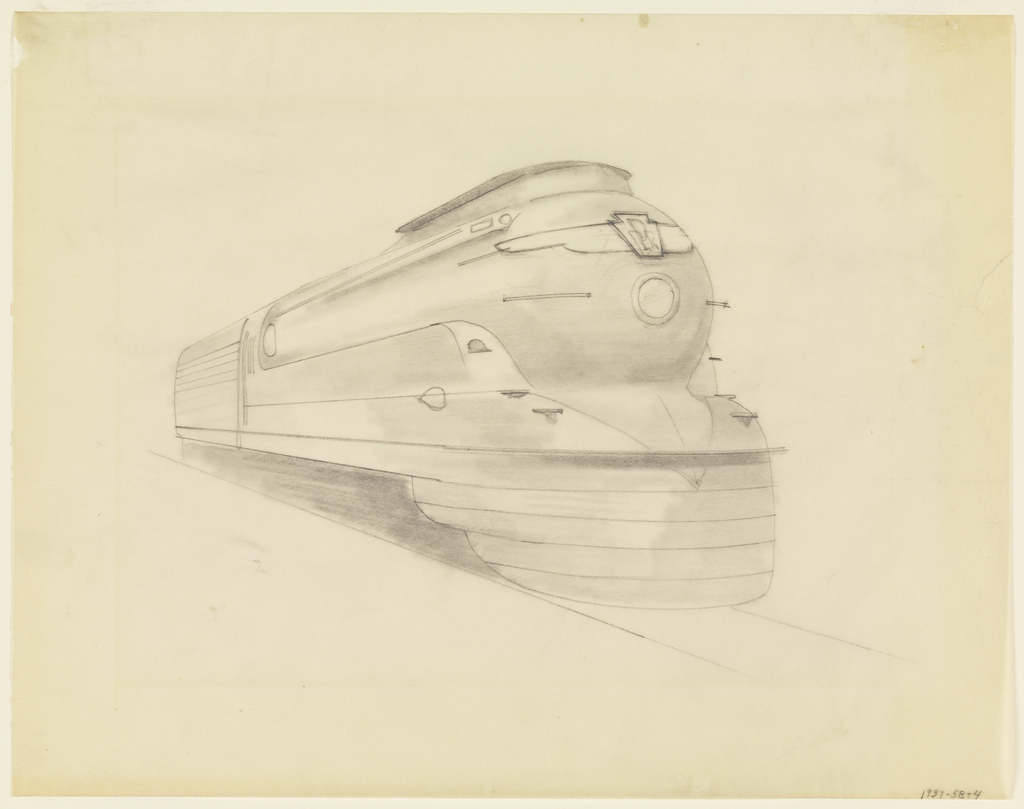
It could be argued that the 1930s was the golden era of the industrial designer in America. During the Depression, American manufacturers had to compete for limited consumer dollars. Industry leaders turned to a crop of former theater and graphic designers including Norman Bel Geddes, Walter Dorwin Teague, Henry Dreyfuss, and Raymond Loewy to restyle...
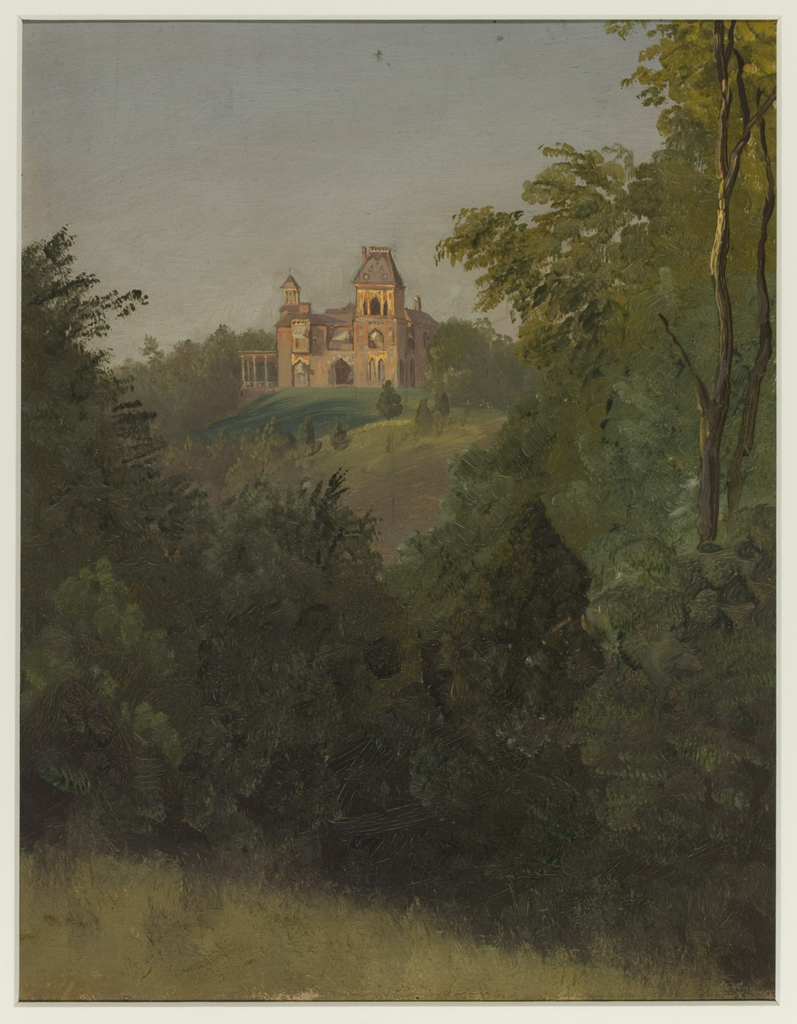
This view of Frederic Edwin Church’s home Olana outside Hudson, New York is one of 2,035 oil sketches and graphite drawings by Church in Cooper-Hewitt’s collections. The Church archive represents the largest collection of the artist’s works on paper in the world! Church was one of the most prominent figures in the Hudson River School,...
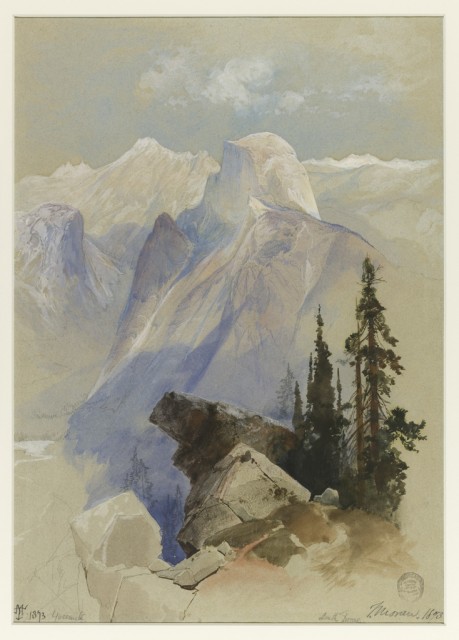
Thomas Moran was one of the artists who in the mid-nineteenth century produced landscape images of the West that contributed to and reinforced the development of an American identity. These views, however, were frequently constructed, edited, or manipulated to reinforce a sense of national pride and feeling of unity during and immediately following the Civil...
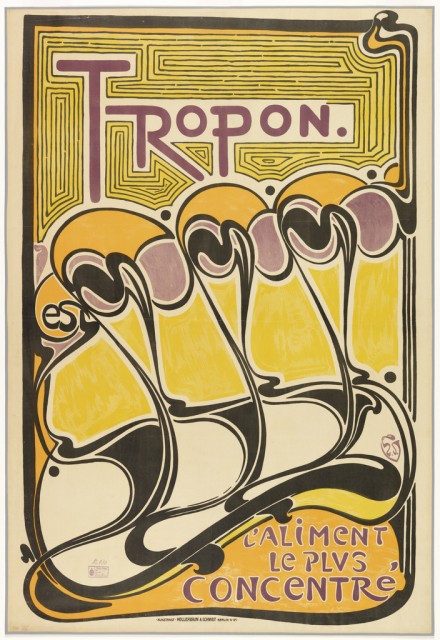
With its sinuous curving line, asymmetrical composition, and integration of colors, forms, and lettering, this poster by the Belgian industrial designer, Hendrikus Van de Velde, ranks among the icons of the Art Nouveau movement. In 1898, the General Manager of the Tropon firm, manufacturers of a health supplement developed from egg whites, commissioned Van de...
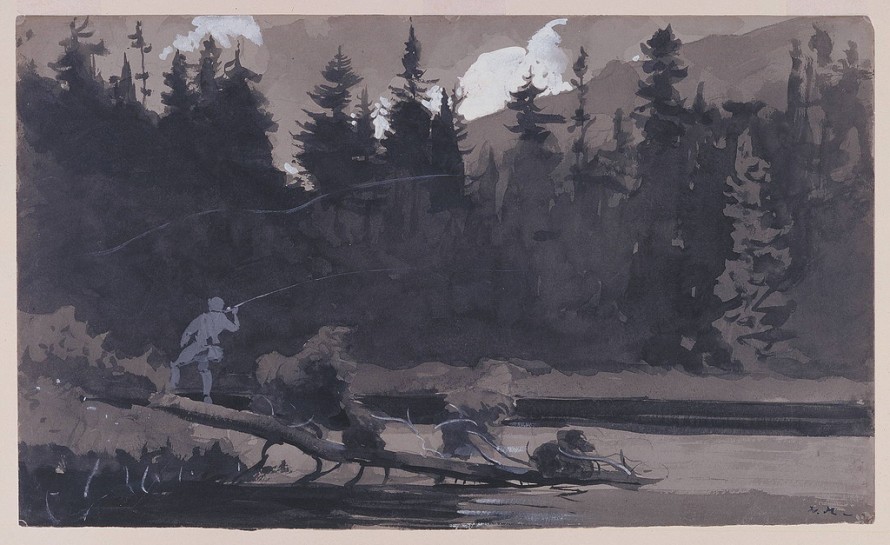
Winslow Homer and his brother Charles Savage Homer Jr. were avid fly-fishermen. They went on many fishing trips together in warm weather at the North Woods Club in the Adirondacks and at the exclusive Torelli Fish and Game Club in the province of Quebec, and during the winter months on the Saint John’s River, Florida. ...
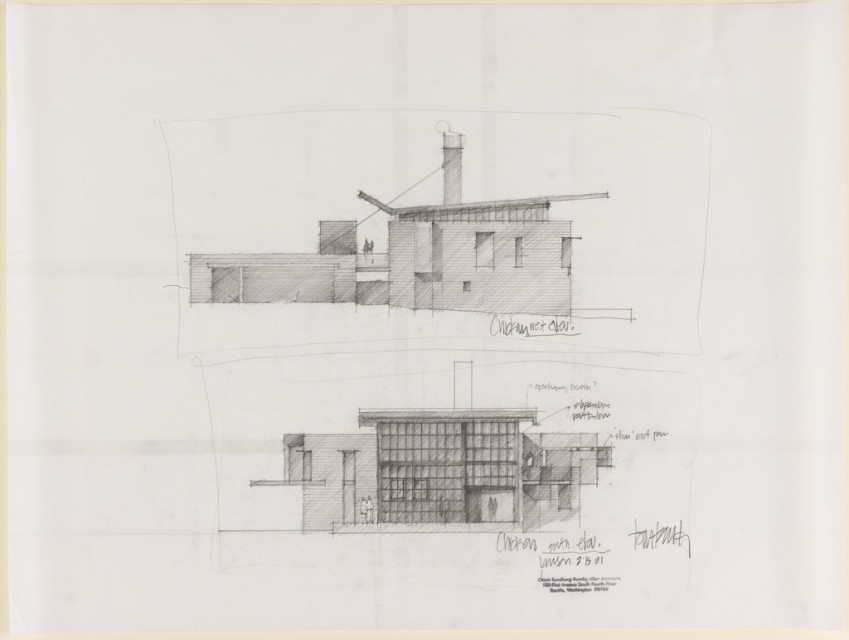
An image on the front cover of I.D. Magazine first drew me toward this weekend vacation home by 2008 National Design Award Winner Tom Kundig, with the unlikely name of Chicken Point Cabin. The interconnection of domestic and natural space was especially alluring to me. A native of the Pacific Northwest, Mr. Kundig comes from a...
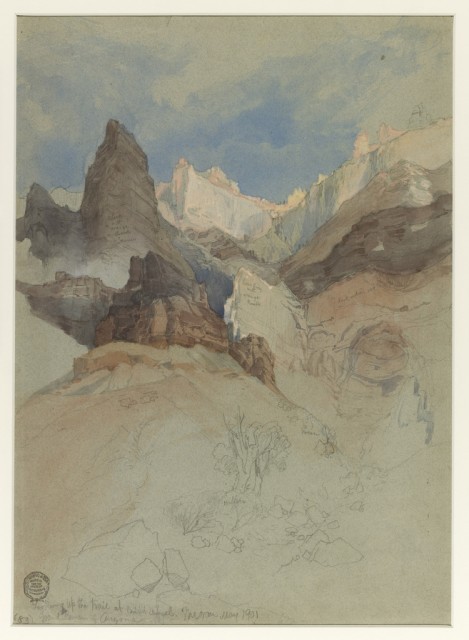
Thomas Moran painted this beautiful watercolor of the Grand Canyon on a 1901 trip that was organized and paid for by the Santa Fe Railroad. The Railroad treated Moran and other artists to a three-week excursion at the Canyon, together with a guide to point out the most picturesque views. The Railroad’s aim was to...
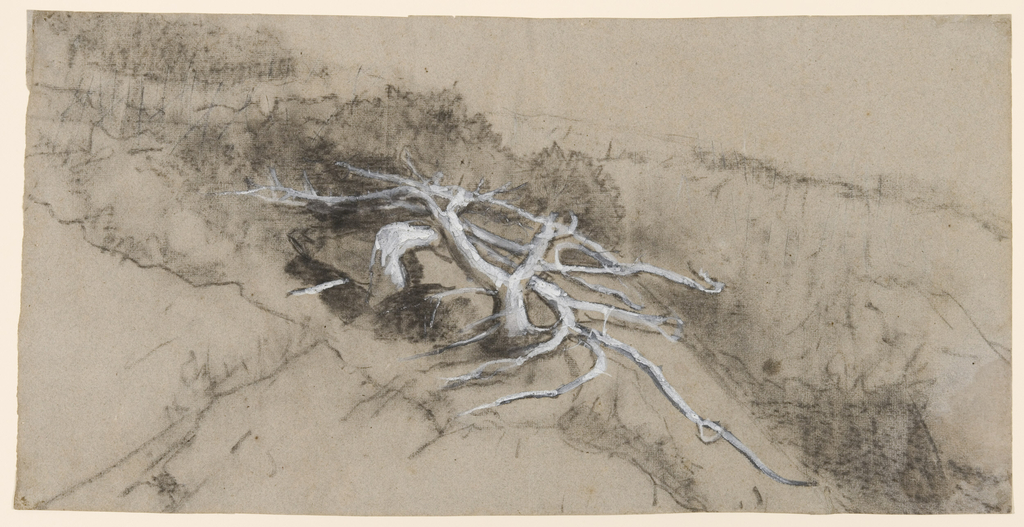
In April 2005, while writing an essay on Winslow Homer and the American Landscape, I drove up with my husband to Prouts Neck, Maine where Homer had his studio on land that was owned by his family. Homer, along with his father and two brothers, had purchased property on Prouts Neck from 1882 through 1909,...
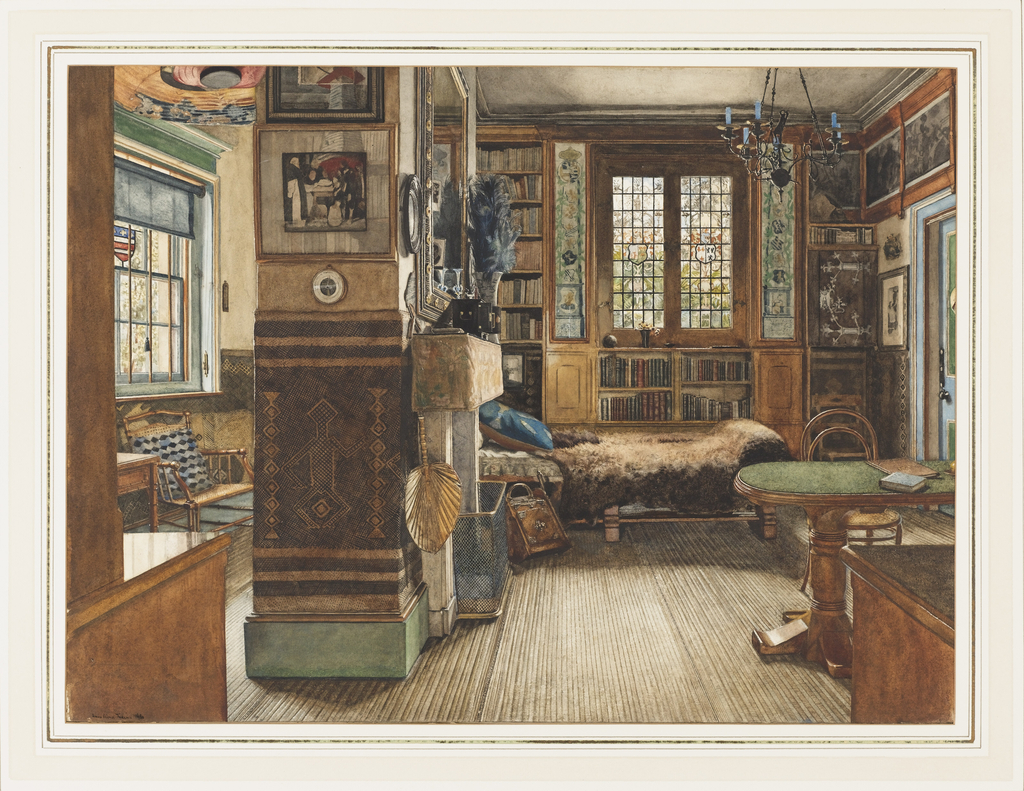
According to the art critics of the day, the rooms in Sir Lawrence Alma-Tadema’s Townsend House, his home near St. Regent’s Park, could be considered a portrait of the artist, a celebrated painter of Greek and Roman themes. In this cozy library interior, painted in 1884 by Alma-Tadema’s daughter, we see: a fur-covered couch and...
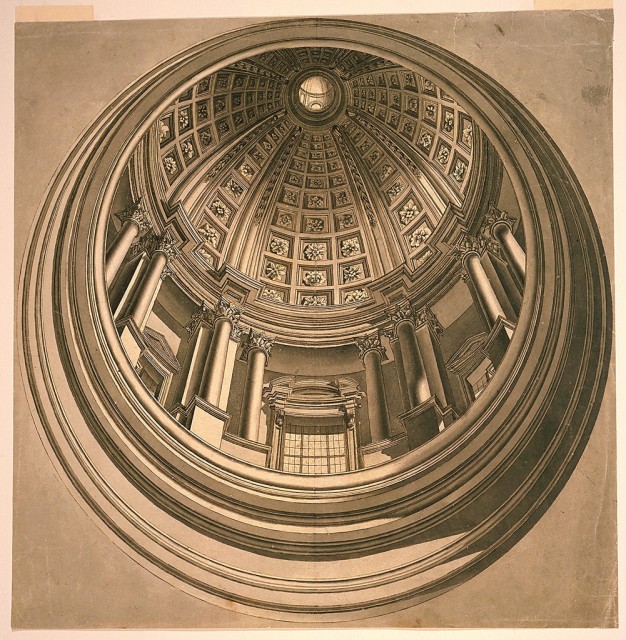
This perspective tour de force dazzles the eye with the complexities of its illusionistic architecture. The story behind the work is equally compelling. When the magnificent Church of Saint Ignatius Loyola was constructed in Rome during the late 16th-century Counter Reformation, the newly founded Jesuit order was trying to solicit the faithful to their cause. They believed that...
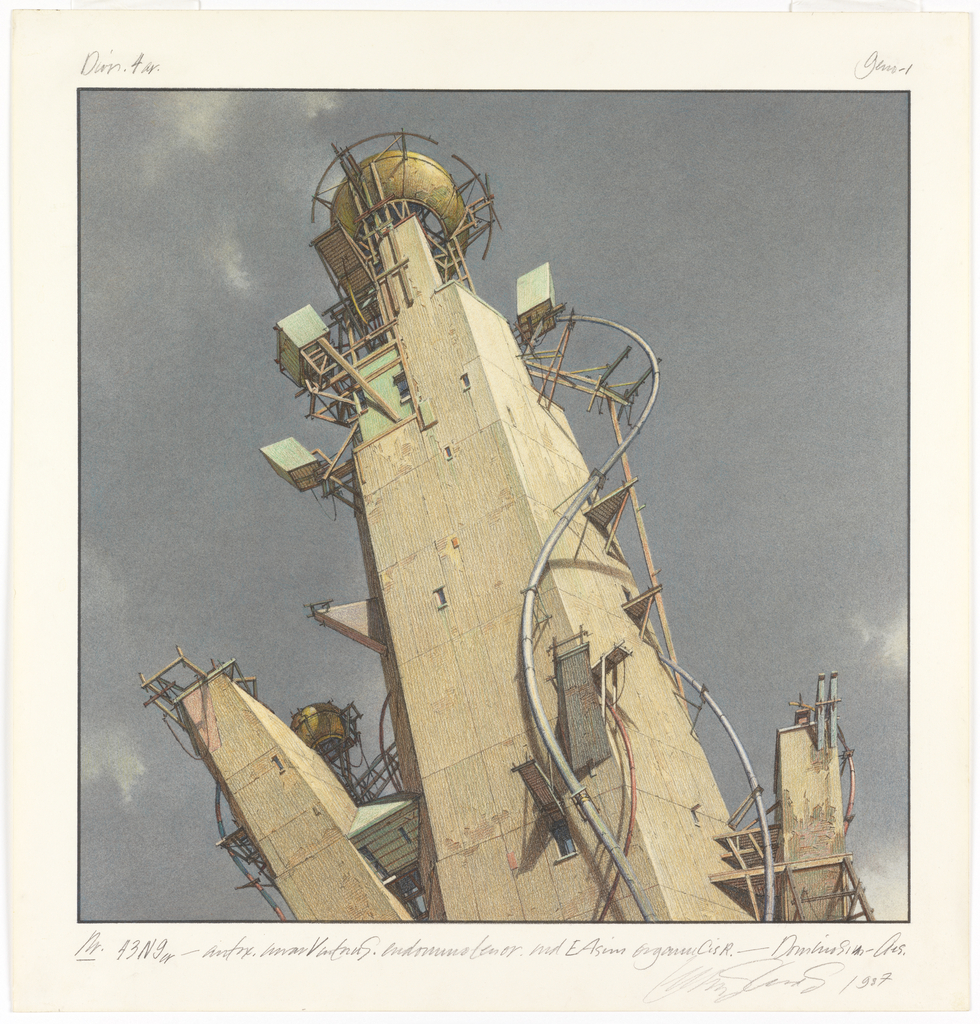
After a week of nature rendering havoc on the northeastern coast of the United States, and televised images of death, drowning, and destruction, it is interesting to consider the work of the experimental architect, Lebbeus Woods, who died on October 30, 2012. Woods was a visionary for whom destruction and reconstruction were two poles of human...
