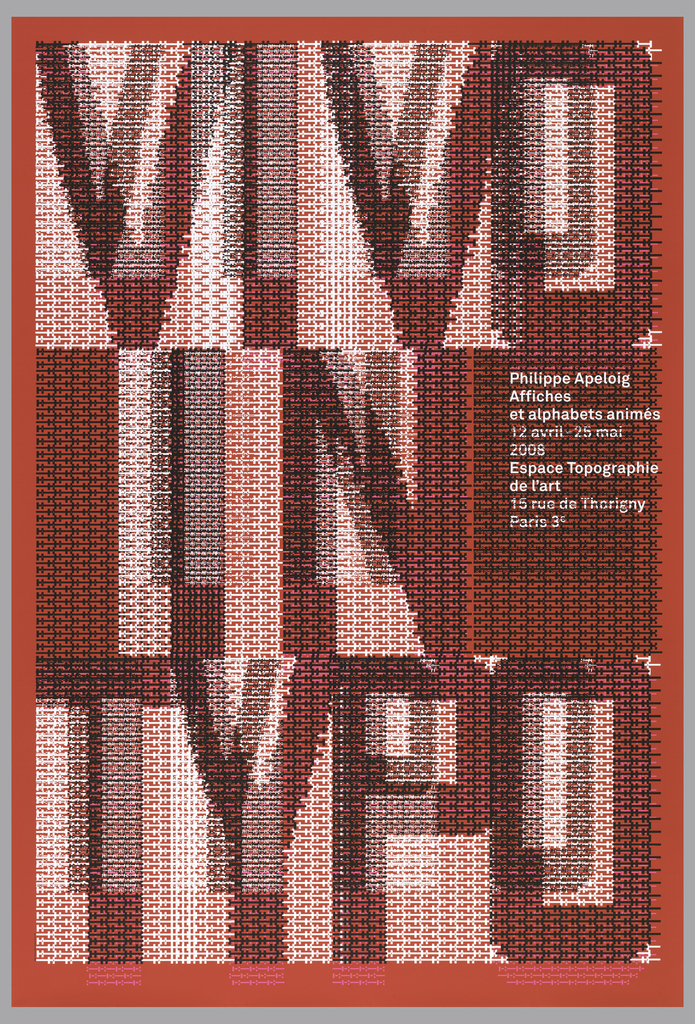
When graphic designer Philippe Apeloig featured his own poster designs at the Espace Topographie de l’art in Paris, he chose the title Vivo in Typo for the exhibition, and decided to make the title the graphic focus of his promotional poster. Apeloig concieved of an image comprised entirely of typography. He began by sketching punctuation marks...
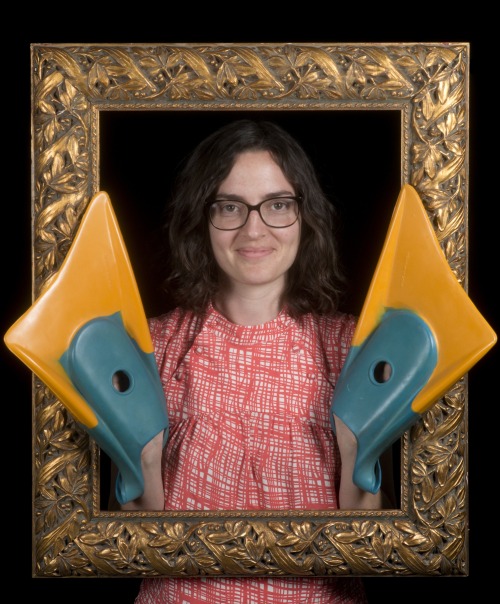
Can you explain the type of work you do at Cooper Hewitt? I edit, store, and deliver images. I have been fortunate to work on some large imaging projects that will be seen in the museum opening—from the interactive digital displays to the beautiful books about our collections objects. What was your background before coming...
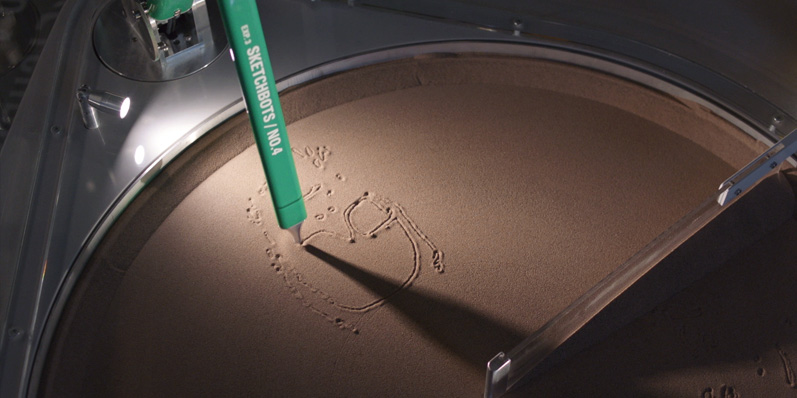
The SketchBot interface is composed of a series of 21st-century tools, including a digital camera, computer software, and a robot. But it also makes use of a natural material older than mankind itself: sand. The sand is incorporated into a multistep process that results in a portrait that can be wiped away to make way...
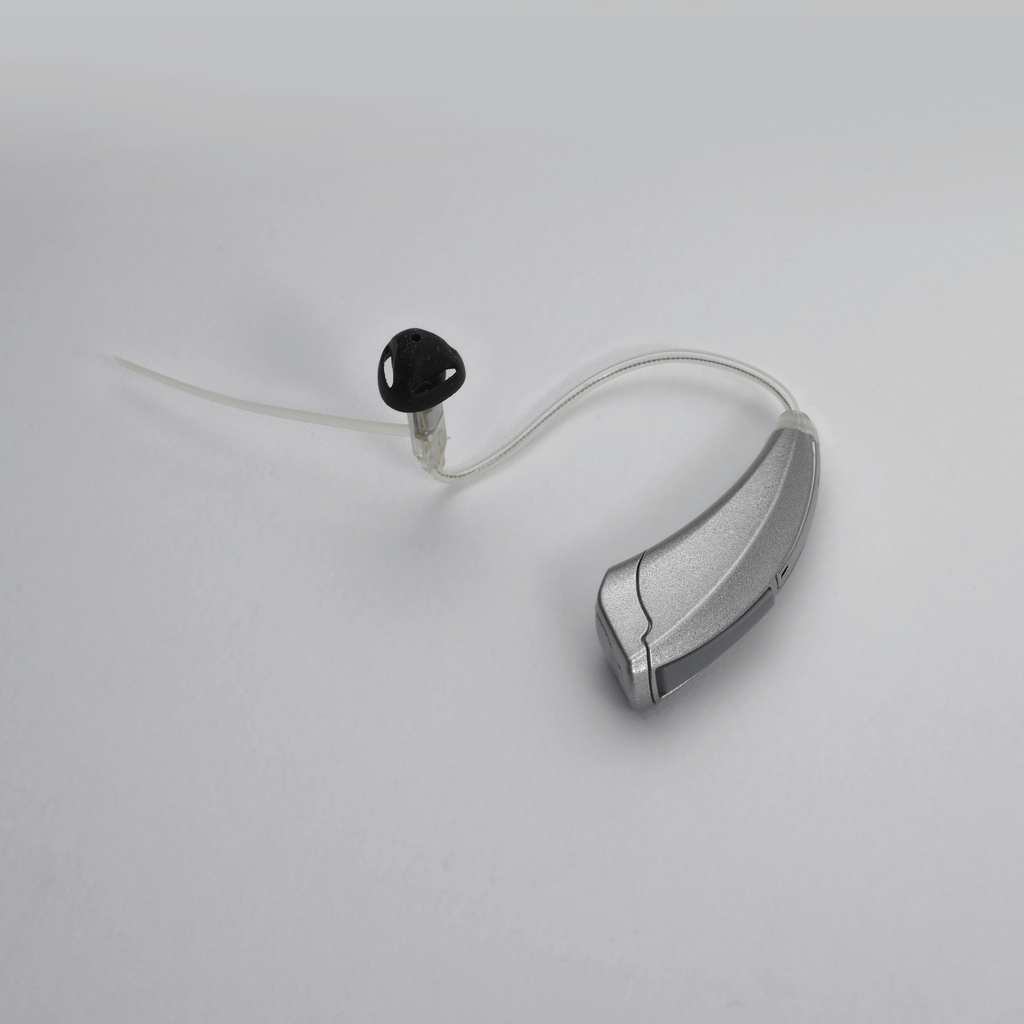
How can you make a hearing aid both elegant and functional at the same time? Stuart Karten Design introduced the Zon as a way to combat the stigma that is usually associated with the traditional beige shrimp-shaped hearing aids. Often associated with age, weakness or even disability, many individuals with hearing impairments wait as long...
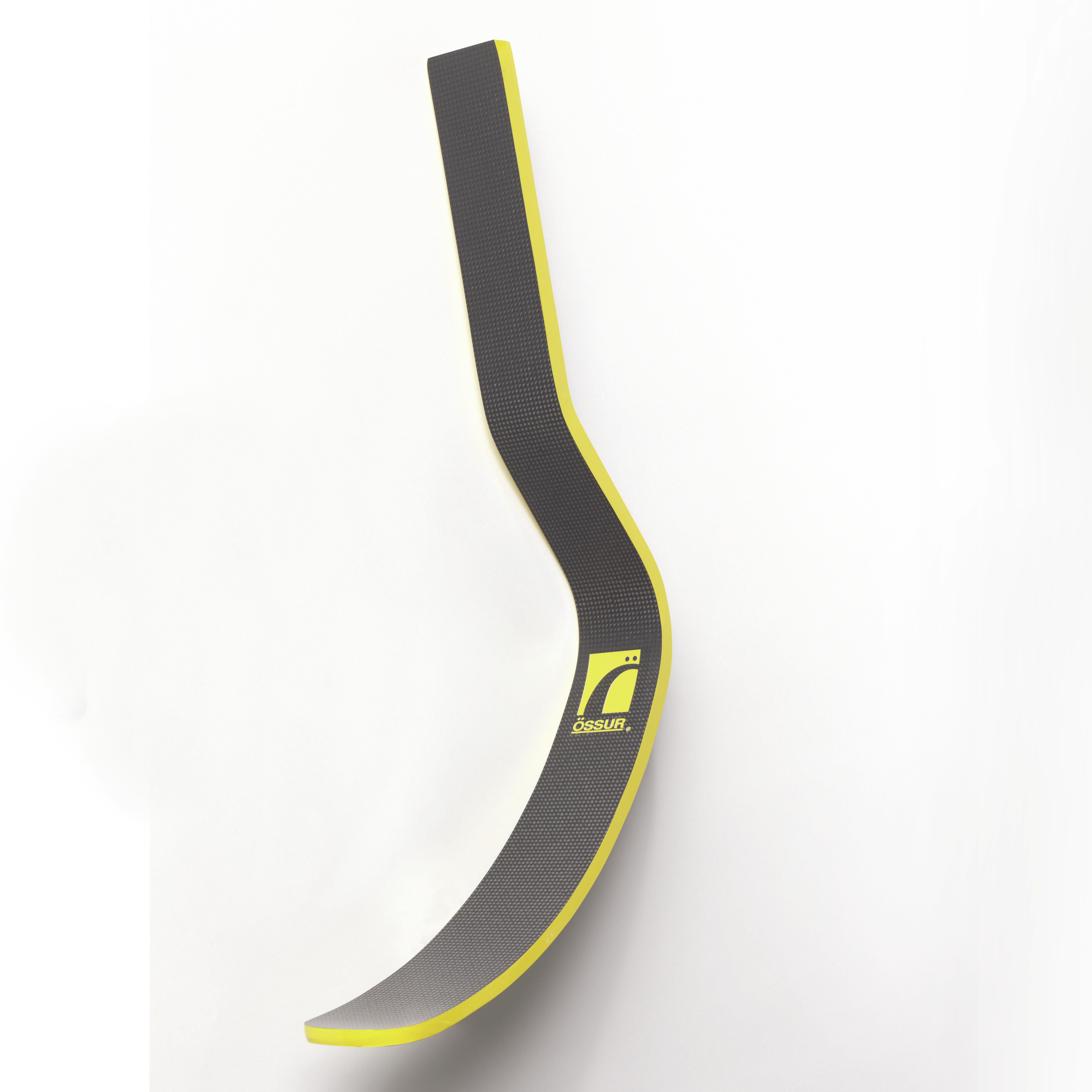
The Flex-Foot Cheetah incorporates untraditional materials to solve a design problem that had vexed the medical field for years: finding a prosthetic solution that allows the user to live a normal, active lifestyle. Van Phillips lost his leg below the knee at the age of 21. Unsatisfied with the prosthetics then available to him, he...
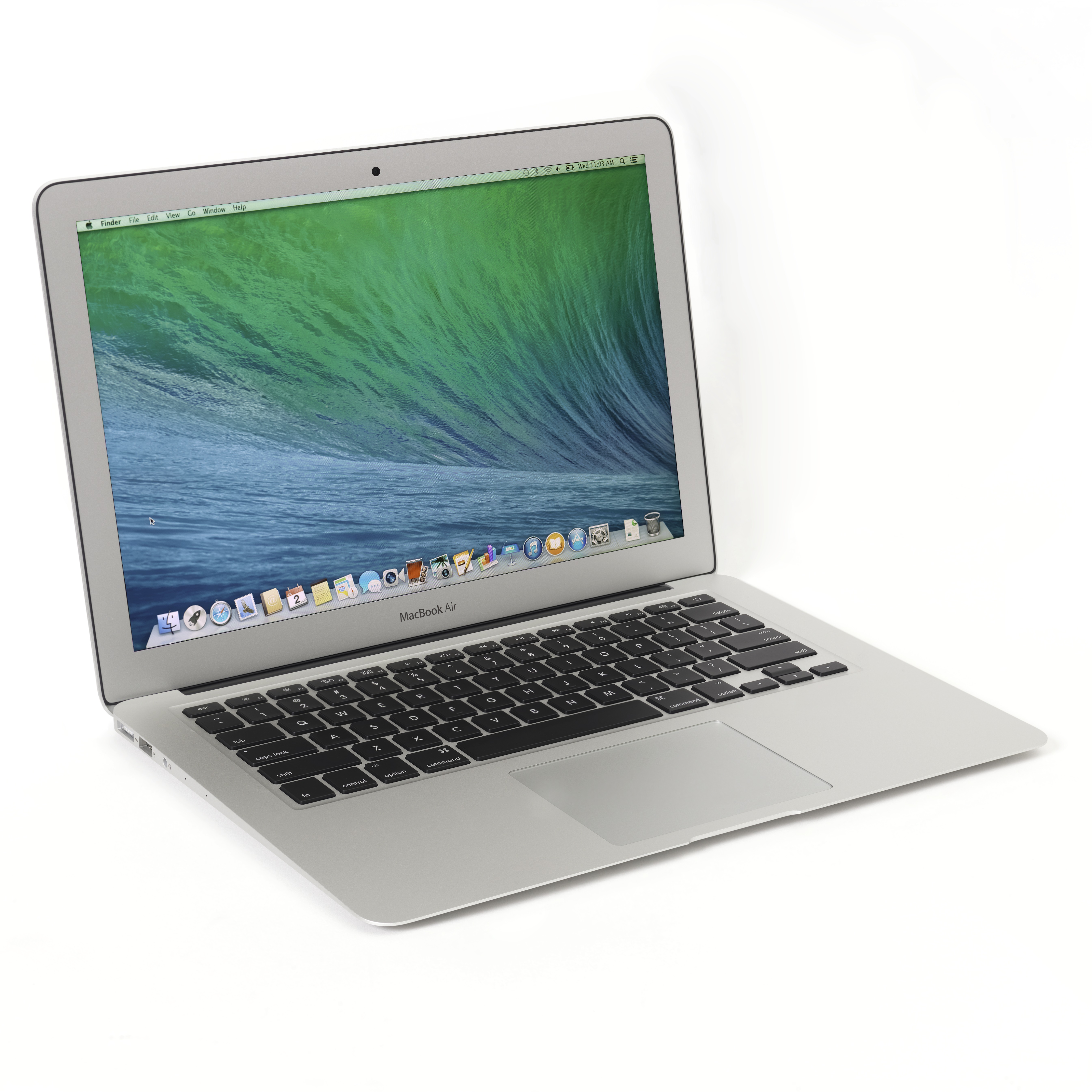
Toolboxes come in all shapes and sizes. They offer a resting place for the mechanic’s hand tools and a protective environment for the chef’s knives. Yet such toolboxes serve a select audience. In the 21st-century, the computer is the universal toolbox, used by billions of people across the globe. Early computers, including Bill Moggridge’s influential GRiD Compass...
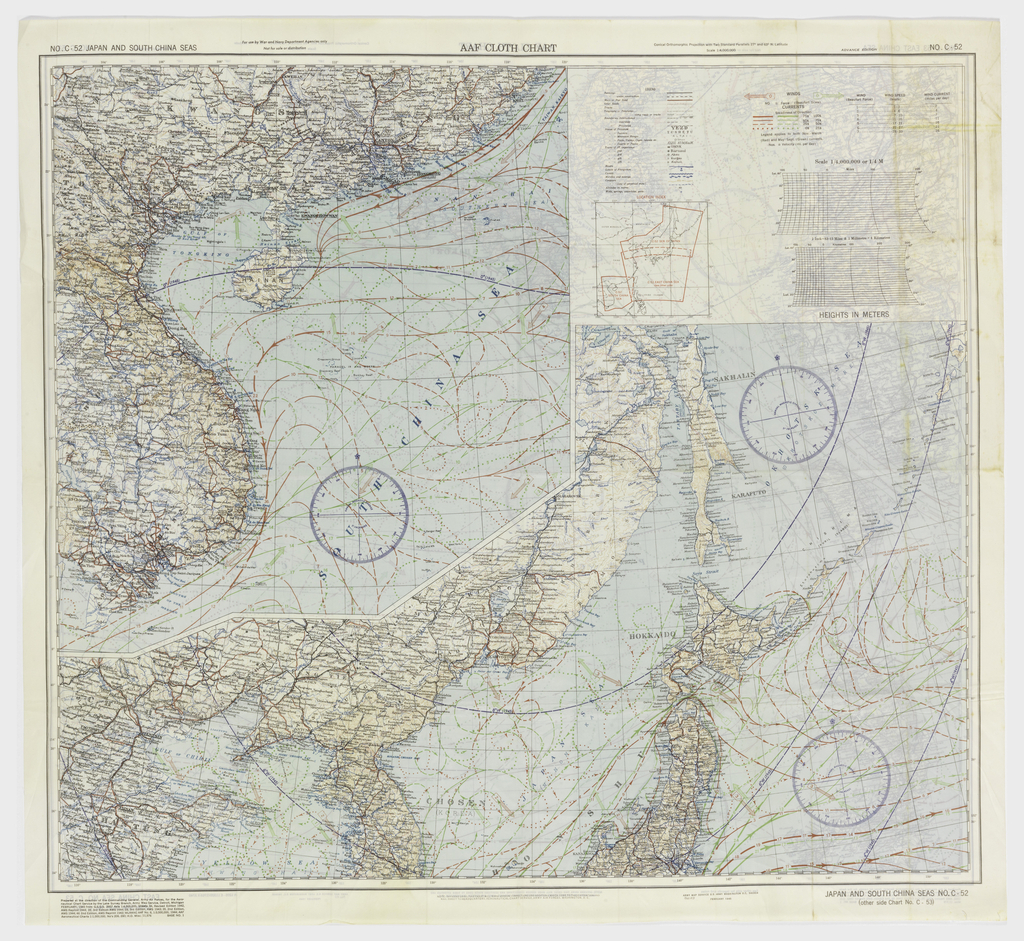
“Escape and Evasion” maps were given to airmen during World War II to avoid capture behind enemy lines. Such maps were one of many in the military man’s arsenal, but in some respects this navigational tool represents one of the most significant products of war-era ingenuity. This Pacific Ocean “drift map,” scaled at 1:4,000,000, illustrates...
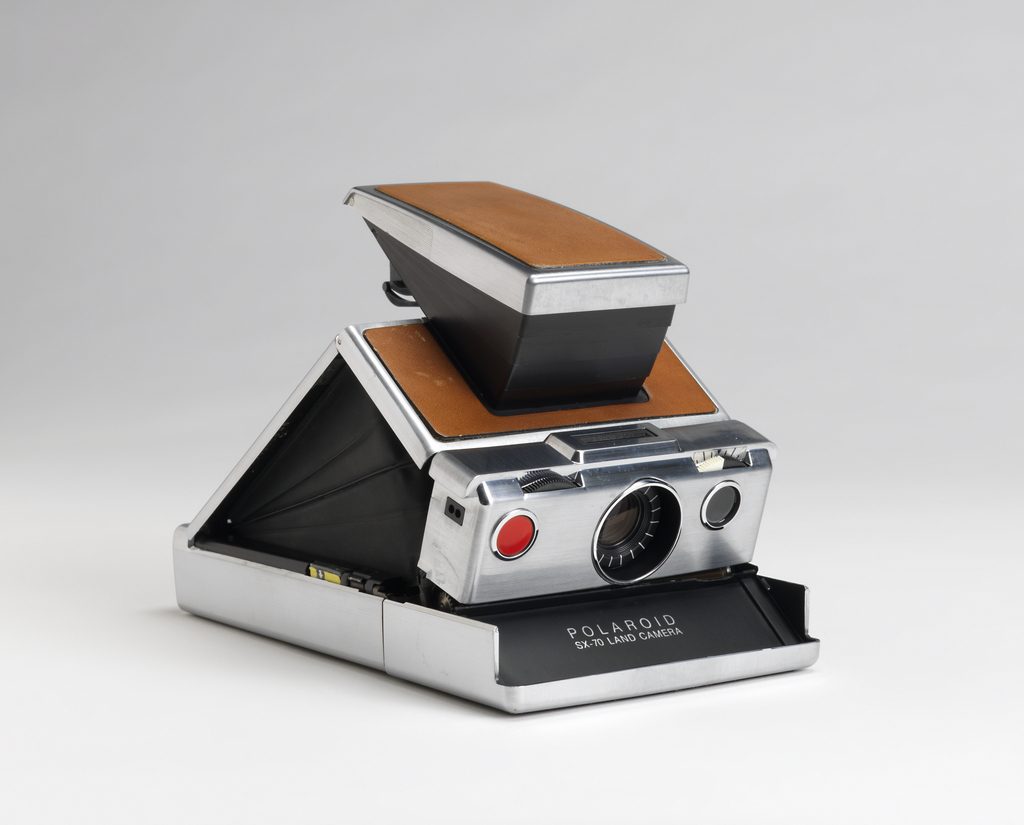
From the archives, an Object of the Day blog post on the Polaroid SX-70,. The 1972 point-and-shoot camera revolutionized instant photography. Now on view in Bob Greenberg Selects.

On the outside, little about the 122-year-old Swiss Army knife has changed. But on the inside, the Victorinox@work has been updated with the 21st-century user in mind, performing not only utilitarian cutting tasks but also serving as a USB digital storage device. The diminutive tool, wrapped in its signature red case, redefines work for a...
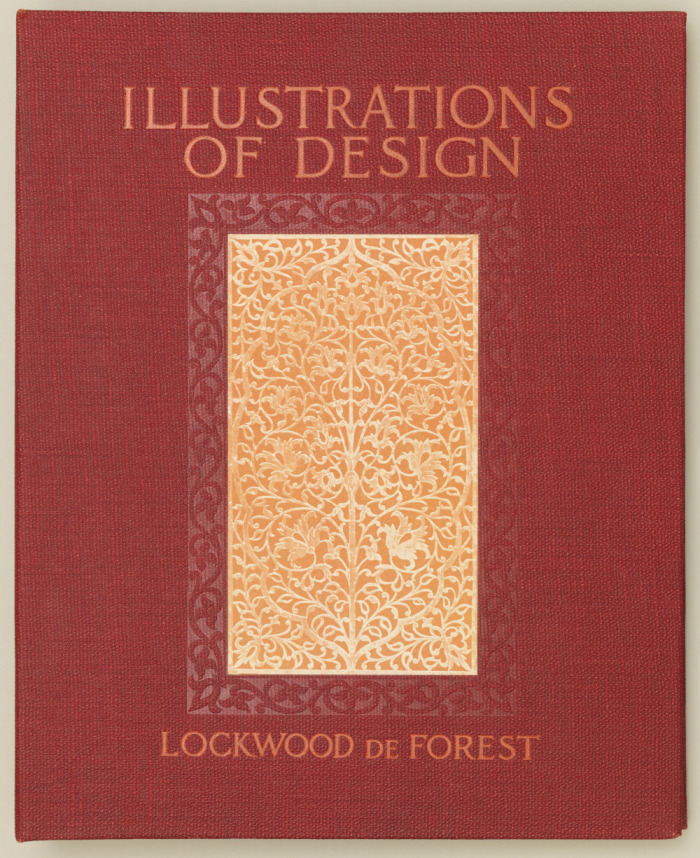
This publication was written by Lockwood de Forest during the years of his retirement from decorating after moving permanently to Santa Barbara, California. As he says in the preface, de Forest wrote the book for design teachers so they could teach the principles of Indian design to students, helping them generate pattern through using certain...
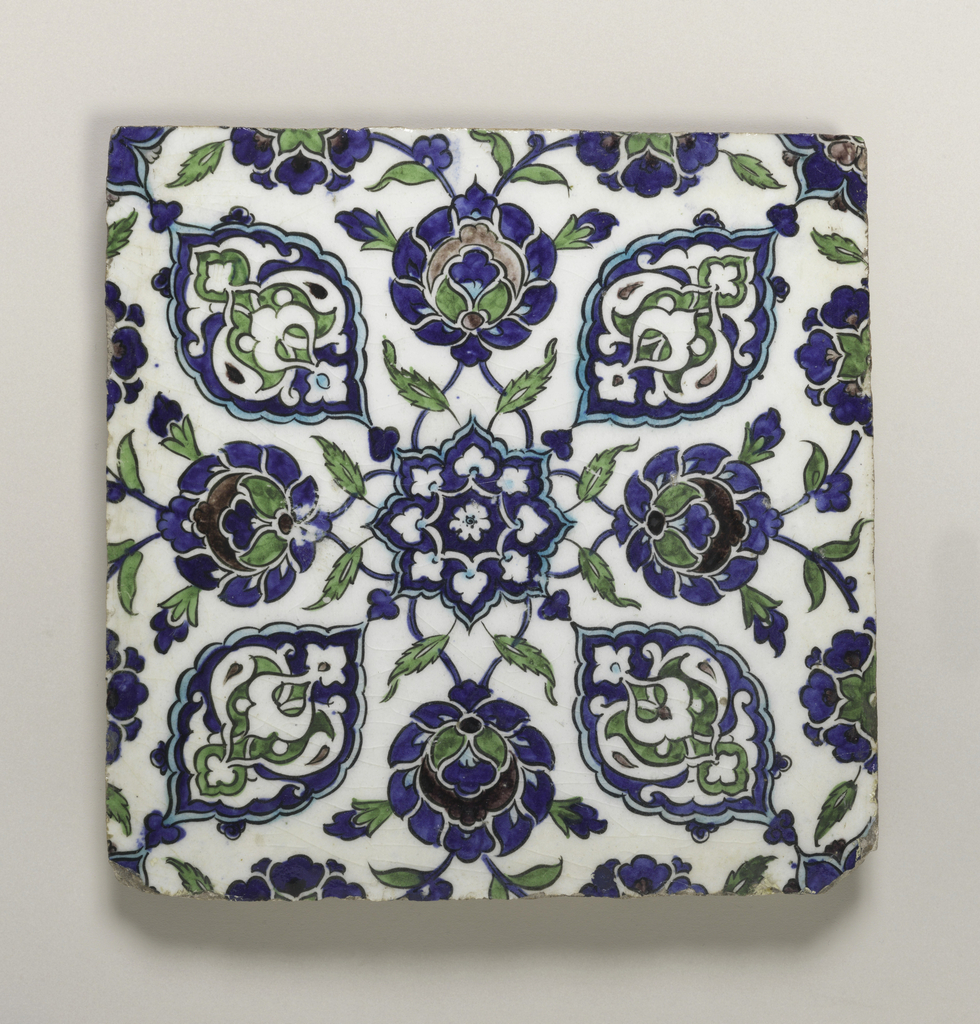
Decorative tiles from many parts of the Middle East and Asia became very desirable collectibles starting in the 1870s when the enthusiasm for Islamic design pervaded much of the aesthetic movement decorative arts. While the Western purchaser of this tile from the Ottoman Empire is unknown, Lockwood de Forest and Frederic Church were among the...
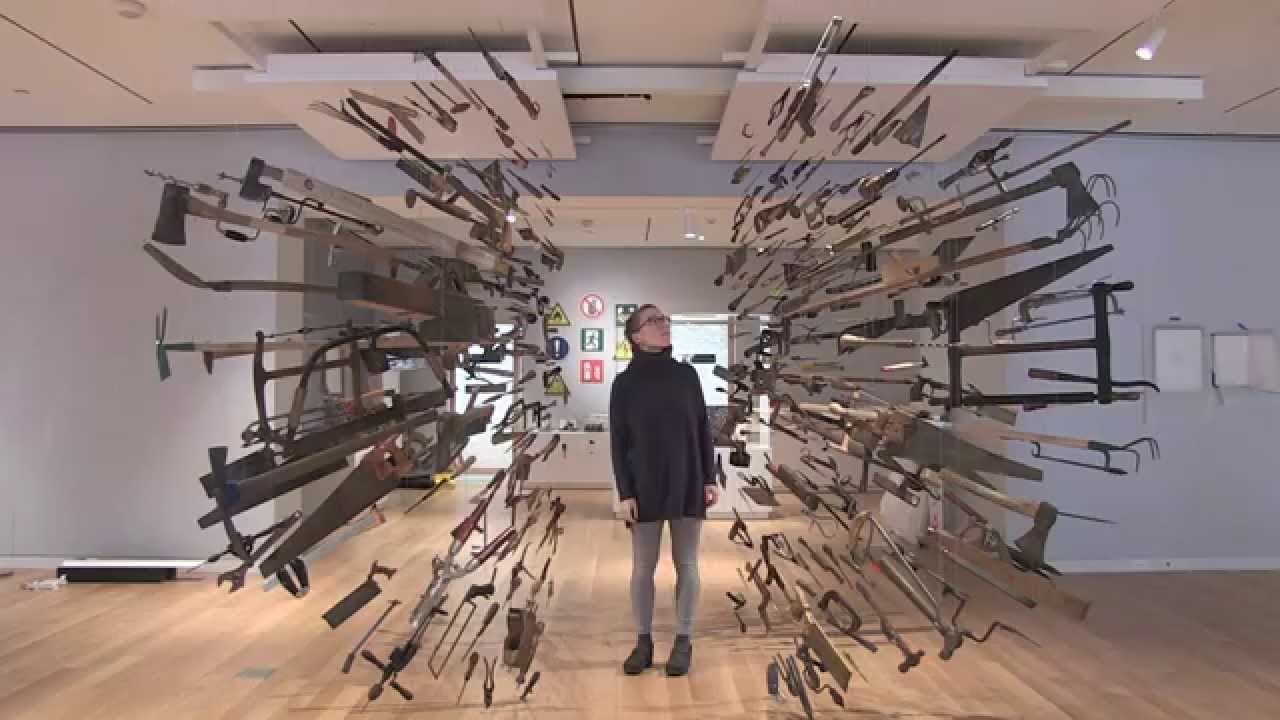
Artist Damián Ortega speaks about his piece, Controller of the Universe, which is on view at Cooper Hewitt as part of our Tools exhibition, opening 12/12/14.
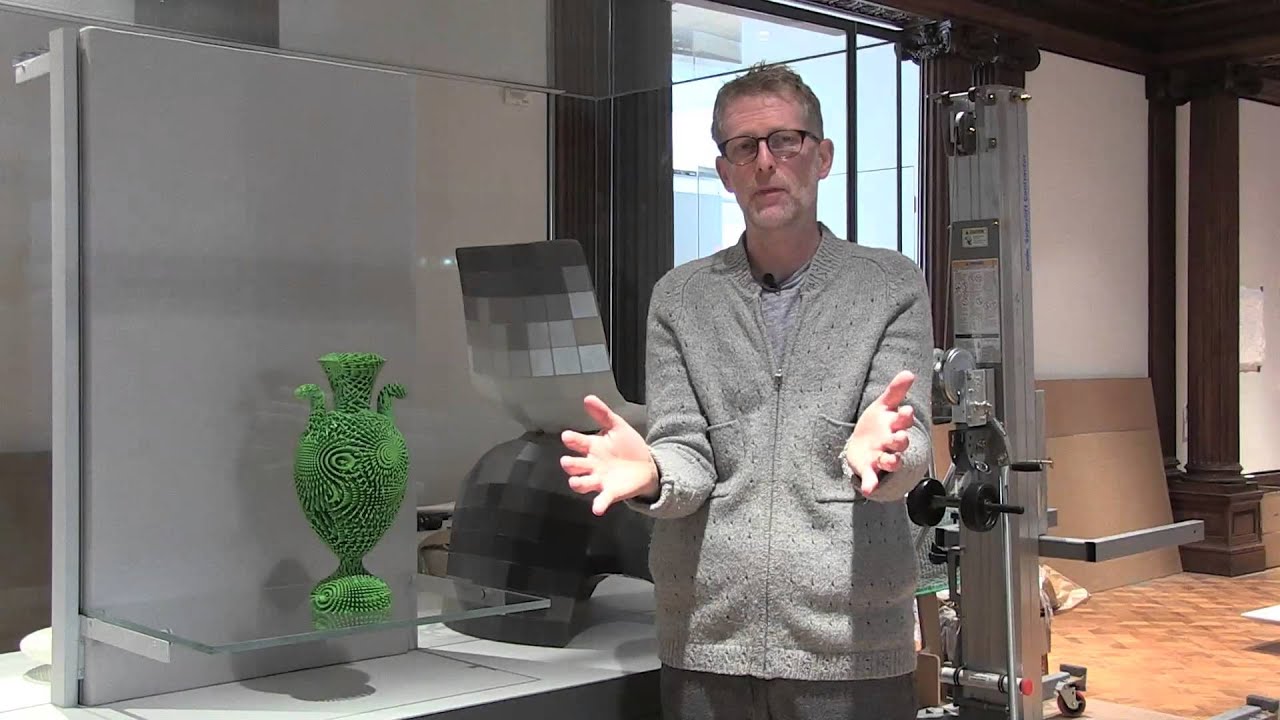
Maker Michael Eden talks about the thinking and process behind his “Tall Green Bloom” urn, created with CAD software and 3D printing techniques. This urn will be on view at Cooper Hewitt as part of “Making Design,” our new exhibition of works from the permanent collection. Opening 12/12/14.
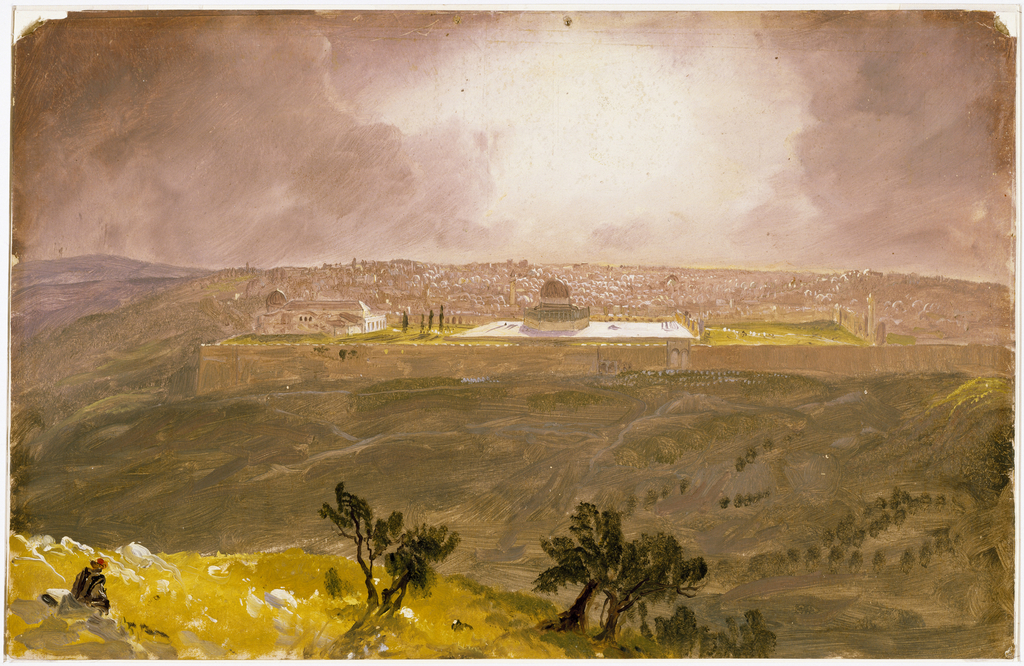
The landscape painter Frederic Church built his reputation on grand exhibition paintings of awesome views that for many mid-century Americans expressed a divine presence in the world. In search of majestic scenery, he traveled to South America (1853 and 1857), Jamaica (1865), and in 1868 to 1869, he, with his wife Isabel, their young son,...
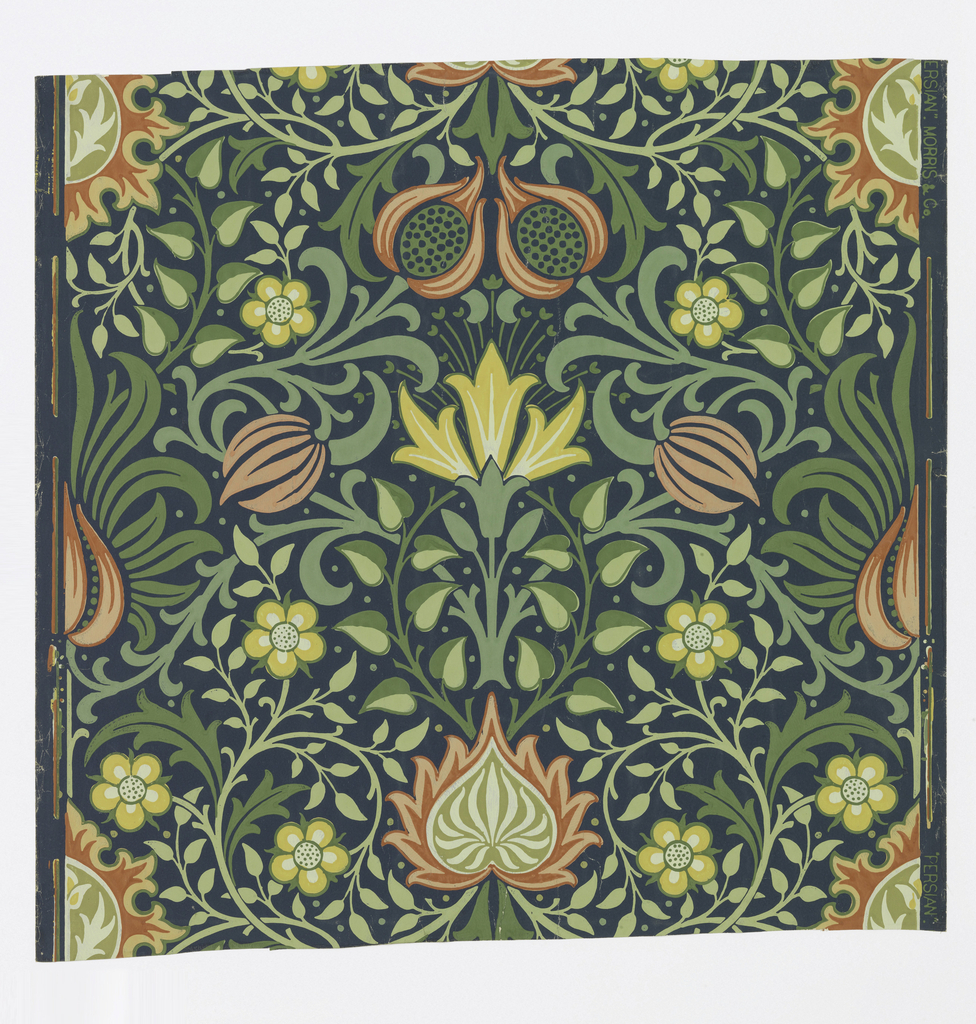
This paper focuses on the exotic pomegranate plant, which is native to Persia (present-day Iran). Persian was introduced in 1895 and is woodblock printed in six colors. It was a common design motif to show the life cycle of plants in floral wallpapers. The densely woven pattern containing the pomegranate fruit, stylized floral and scrolling...
