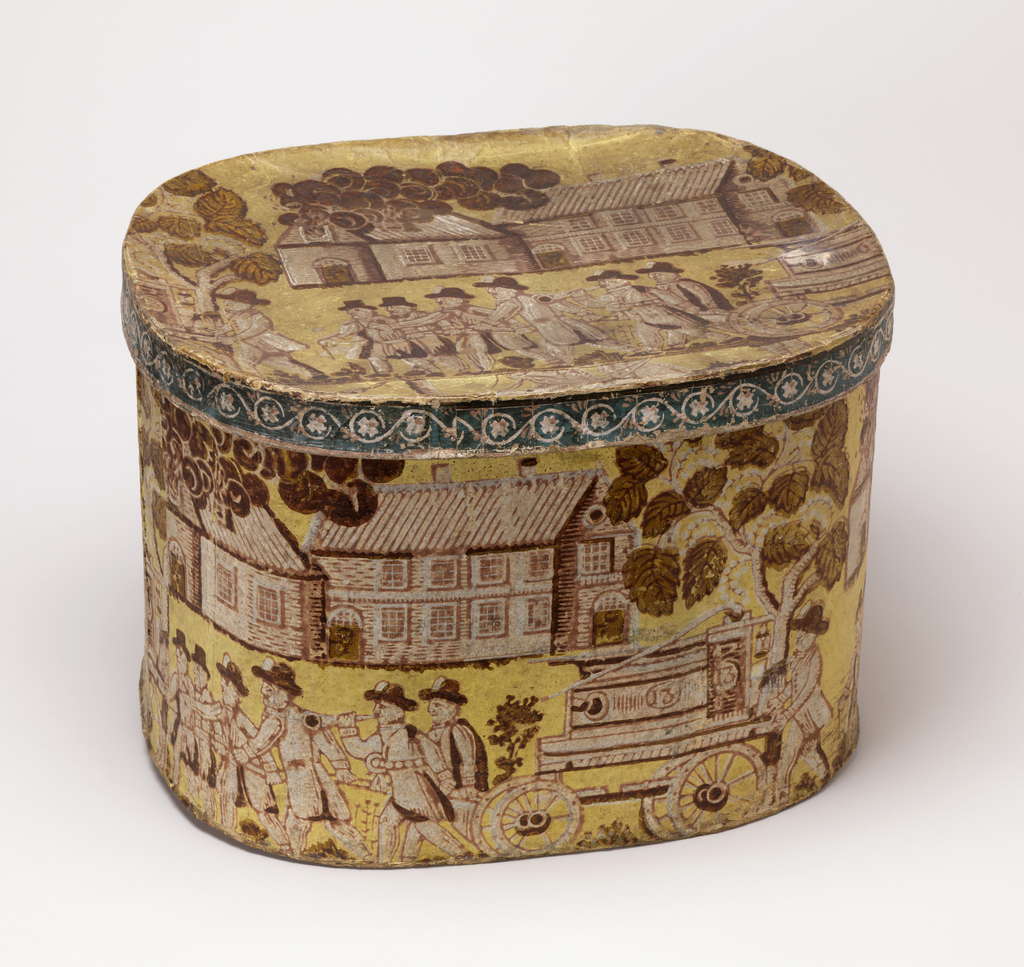
Popular between 1800 and 1850, bandboxes were originally designed to store and protect the ruffled and starched collar bands fashionable for men at the time. They were also used for transporting and storing hats and as general carry-alls. Bandboxes were generally constructed of pasteboard, while the more expensive models were composed of wood. The exteriors...
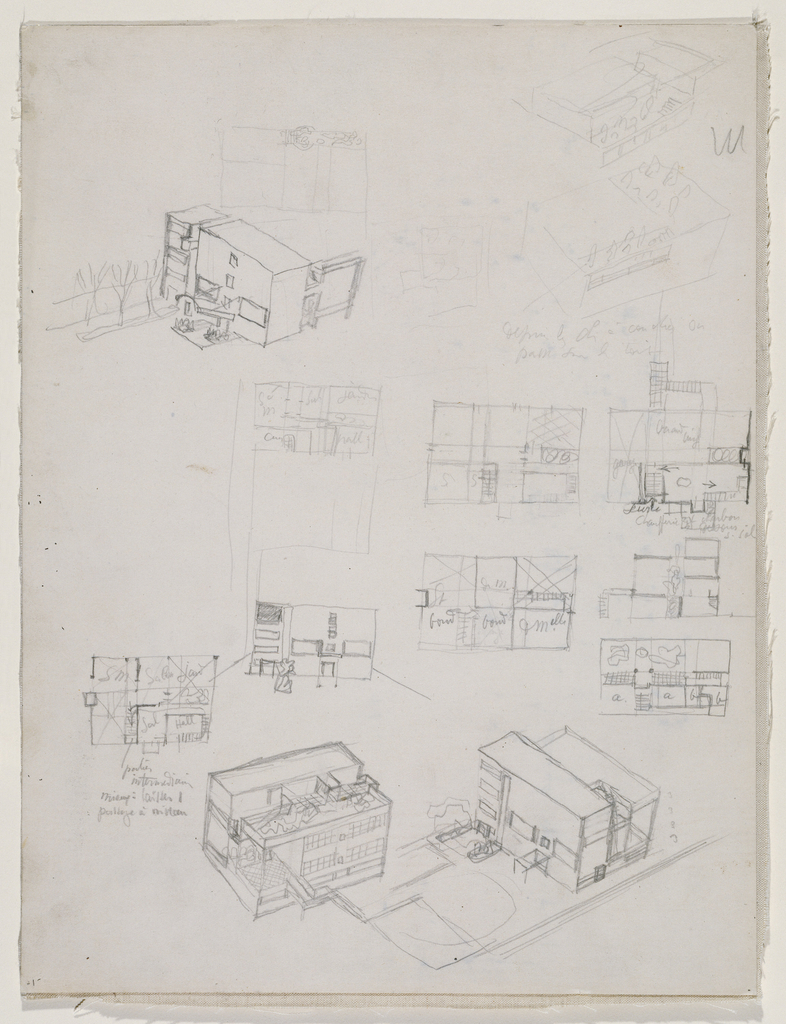
Among the most important 20th-century architectural drawings in Cooper-Hewitt’s collection, this work presents four sketches for a suburban Paris two-family villa, commissioned by the modern art collectors, Michael and Sarah Stein (brother and sister-in-law of Gertrude Stein), and their close friend Gabrielle de Monzie. While De Monzie wasn’t especially interested in architecture, she still paid...
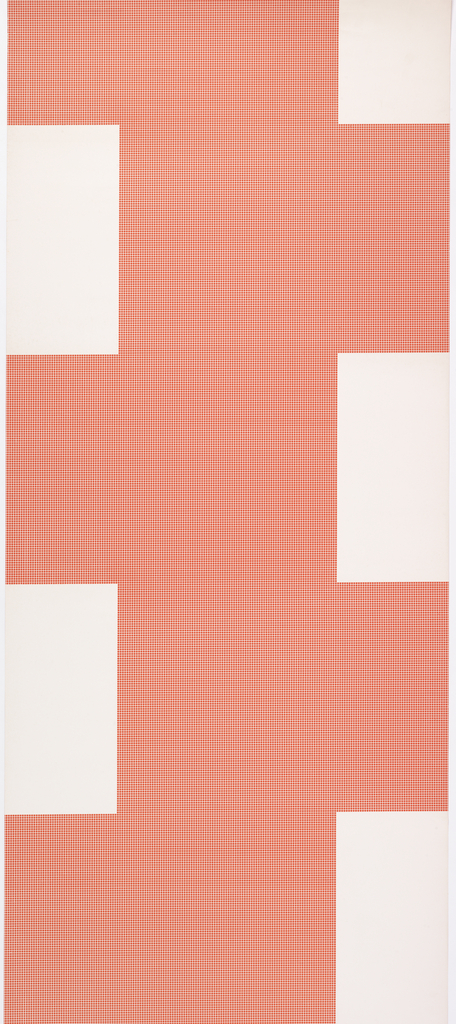
Although he was also a designer, painter and writer, Le Corbusier is known primarily as an architect. And, like many prominent early 20th-century architects, Le Corbusier believed in the importance of a completely designed environment. His first collection of wallpapers, designed in 1931, consisted mainly of solid colors that he referred to as a color keyboard....
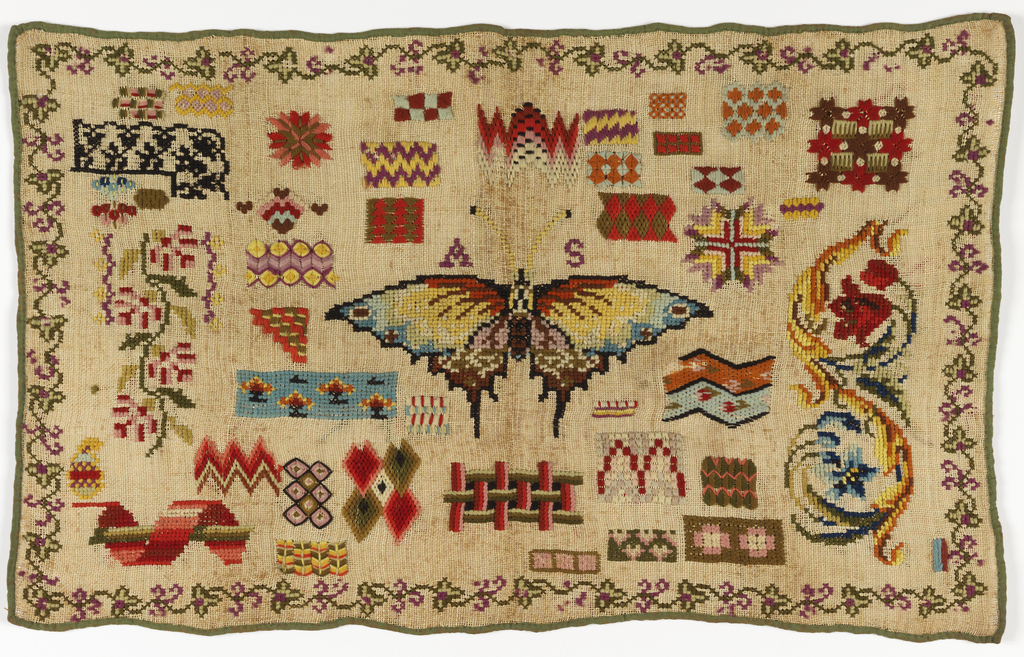
Once a month the Digital & Emerging Media team will be reporting back on how objects in the collection circulate online. And here’s our first missive. We’ve just launched a new version of our collections online. We’re calling it an “alpha release,” which means it is unfinished, incomplete, and generally underdone. But, being a design...
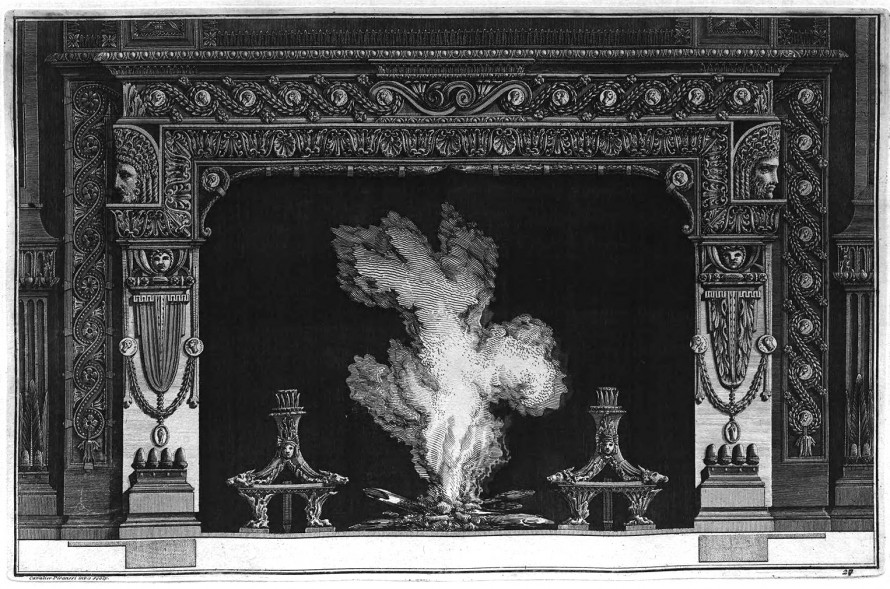
Giovanni Battista Piranesi (1720-1778), an Italian architect, designer, antiquarian and engraver, created Diversi maniere d’adornare I cammini: ed ogni altra parte degli edifizi (Various ways of decorating chimneypieces and other parts of the house) in 1769. This work is considered to be one of the greatest contributions to interior design promoting the neoclassical style. His essay, presented...

Can you explain a little bit about the type of work you do here at Cooper-Hewitt? I am the Assistant Curator in charge of the Wallcoverings Department, a collection of over 10,000 pieces dating from the late 17th century to the present. I am responsible for the preservation of these pieces, ongoing research, and making...

The Lindy Hop was a swing dance phenomenon, but the Finnish Hop? This lively design was produced by the artists’ collective know as The Folly Cove Designers, for its location near Gloucester on the Massachusetts coast. Many Finnish immigrants had settled there, attracted by skilled work in the granite quarries or the boat building industry....
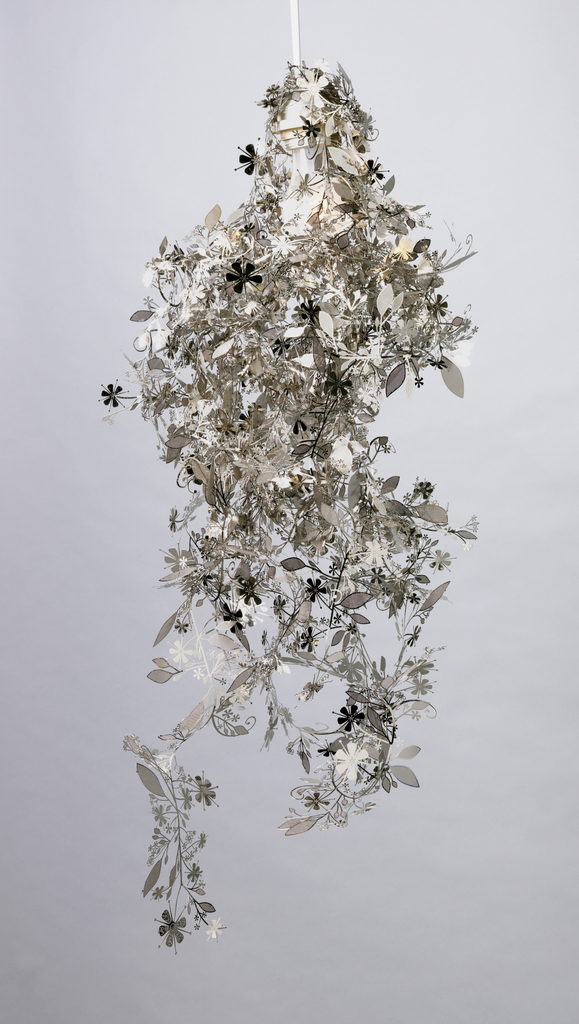
The chandelier reinvented. The lightbulb redecorated. Stainless steel brought to life. Moving patterns stopped in motion. Through his work, Tord Boontje aims to celebrate ornament in design. When creating the Wednesday light, Garland’s predecessor, he looked to the romantic design aesthetic of the 17th and 18th centuries. (Wednesday was a stainless-steel piece self-produced by Boontje...
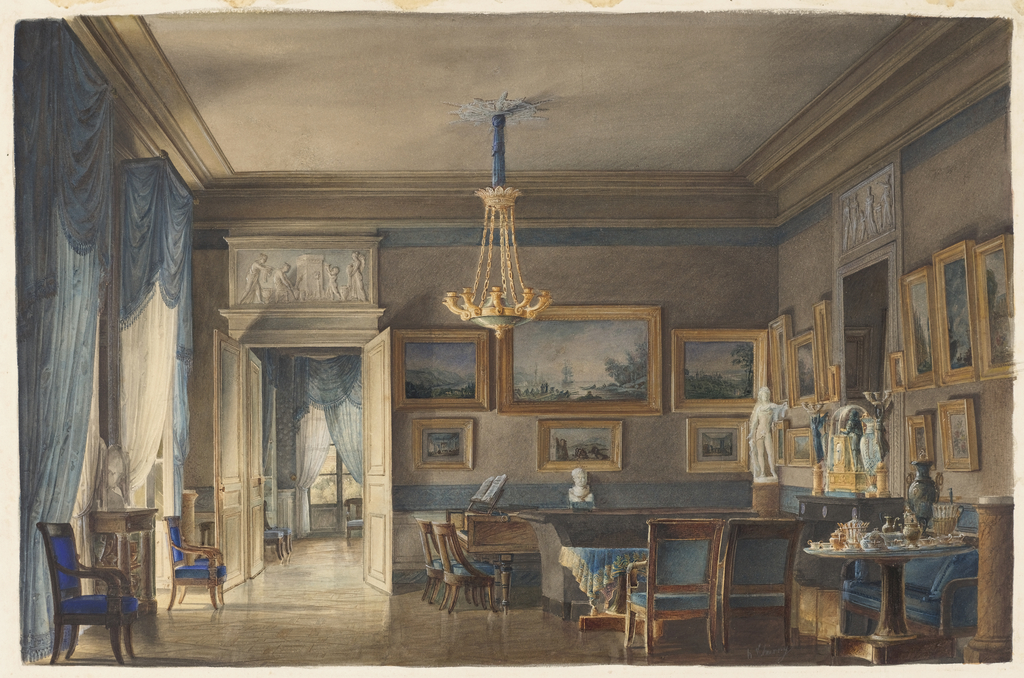
Hilaire Thierry’s exquisite drawing, Salon in the Restoration Taste, from the early 1820s, is one of more than 70 19th-century European interiors from Cooper-Hewitt, National Design Museum that are on view at the Musée de la Vie Romantique through January 15, 2013. The exhibition, Intérieurs Romantiques, highlights donations to the collection, made in 2007 and 2012,...
