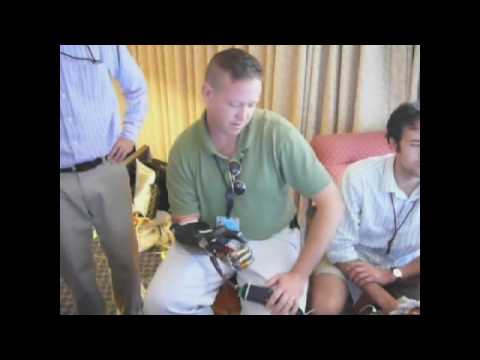
Why? The U.S. Defense Advanced Research Projects Agency (DARPA) sponsored research for this configurable bionic-arm prototype, which mimics the speed and dexterity of a natural limb. Neural-integration strategies are being tested to control the arm and restore sensory feedback, from injectable myoelectric sensors that transmit signals instructing movement to muscle reinnervation, allowing for thought-controlled prostheses.
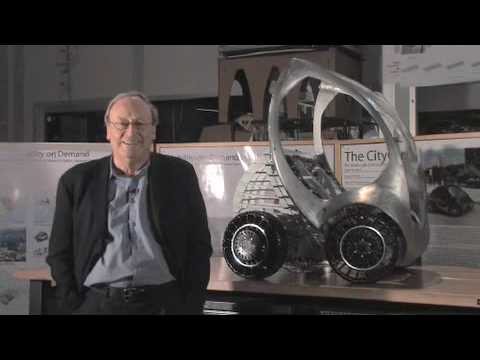
Why? Mobility on-demand and shared use are alternatives to private car ownership, and CityCar is a concept vehicle that combines the two. This two-passenger electric car can be made available from a network of urban parking zones, where users swipe a card and take the first fully charged vehicle. It provides a non-polluting, noise-free, energy-efficient,...

Why? This kite system harnesses the winds energy with a tethered wing that flies at high altitudes where the wind is both strong and more consistent. As the kite sweeps through a vast amount of area, small wing-mounted turbines extract power from the wind, converting it into electrical power. The tether transmits electrical power to...

Why? GoodWeave is an ethical certification program that seeks to end illegal child labor in the rug industry. Stephanie Odegards company was the first in America to work with GoodWeave. Sales of her carpets carrying the label support educational opportunities for children in South Asia. The Navaratna rug depicts the Navaratna, or nine gemstones, whose...

Why? Ocean waves are an abundant and untapped source of renewable energy. The bioWAVE harnesses this energy and converts it into grid-connected electricity. Mounted on the seabed, the unit is biomimetically designed to adapt to marine life. Each unit is expected to generate up to two megawatts of energy. Farms can harvest enough clean power...

Why? Trains are among the most sustainable forms of transportation, and the AGV is at the forefront of high-speed, energy-efficient train design. Ninety-eight percent of the train is built from recyclable materials, its traction systems and low weight are energy-efficient, and its permanent-magnet synchronous motors and regenerative braking system create electricity and minimize energy loss.
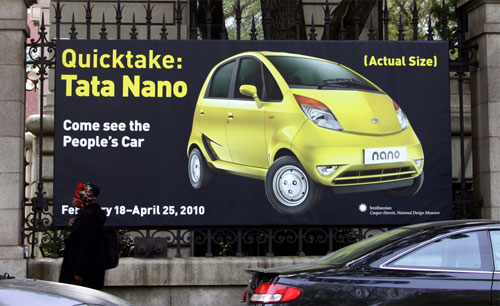
The poster on the fence outside the Cooper-Hewitt, National Design Museum showed a photograph of the Tata Nano with the caption “actual size.” That didn’t mean that it was easy to install for display in the museum, as you can see from this little movie (filmed by our media makers Shamus Adams and Alex Tibbets)....

Industrial designers Masamichi Udagawa and Sigi Moeslinger are partners in the firm Antenna. Udagawa and Moeslinger create functional products for complex systems. For the 2003 Triennial (Inside Design Now), Antenna created a shower of cherry blossoms. Petals float and cluster in relation to the number of visitors traversing the Museum's grand staircase, creating a satisfying...

Last night at Cooper-Hewitt, Washington Post Style Editor Robin Givhan lead a conversation with past National Design Award Winners Francisco Costa (Women’s Creative Director of Calvin Klein Collection), Yeohlee Teng, and Maria Cornejo about their work and the role of fashion in contemporary culture. Their designs are all featured in Design USA: Contemporary Innovation, which...

Phil Patton Design Watch Members of the Museum had a preview of the 2010 New York International Automobile Show this week. Phil Patton led the group – he’s the design critic and author who knows lots about whatever moves you and writes the Wheels blog for NYTimes.com. As he guided us from one example to...

Dhaka, Bangladesh Preparation for the next exhibition in the Design for the Other 90% program series brought me to numerous informal communities in mega-cities throughout Southeast Asia. As the world becomes more urban – over half the world now lives in cities – there is much to learn from locations that have been dealing...

The Design for the Other 90% blog is a finalist for a BOBs Award for Best English Language Weblog! Over 8,400 blogs were nominated and an international jury of bloggers selected the finalists. Voting is now open, so please get your vote in. Online voting continues until April 14th, 2010 and the winners will be...
Chip Kidd, National Design Award winner in 2007 for Communications Design, speaks with Milton Glaser, National Design Award winner in 2004 for Lifetime Achievement, on work, ideas, and loving New York. Watch this video and many others on Cooper-Hewitt’s video page where we archive past lectures and events at the Museum. Both designers work is...
On February 16th the smiling Tata Nano rolled through the front doors of Cooper-Hewitt, up the stairs and settled on a platform in the Great Hall. Unveiled last year in India by Tata Motors, India’s largest automobile manufacturer, the Tata Nano is targeted to families who had not previously been able to afford a car....

Chip Kidd, National Design Award winner in 2007 for Communications Design, speaks with Milton Glaser, National Design Award winner in 2004 for Lifetime Achievement, on work, ideas, and loving New York. Writer and graphic designer Chip Kidd has been designing book jackets for Alfred A. Knopf since 1986. His innovative work, recognized by international awards,...
