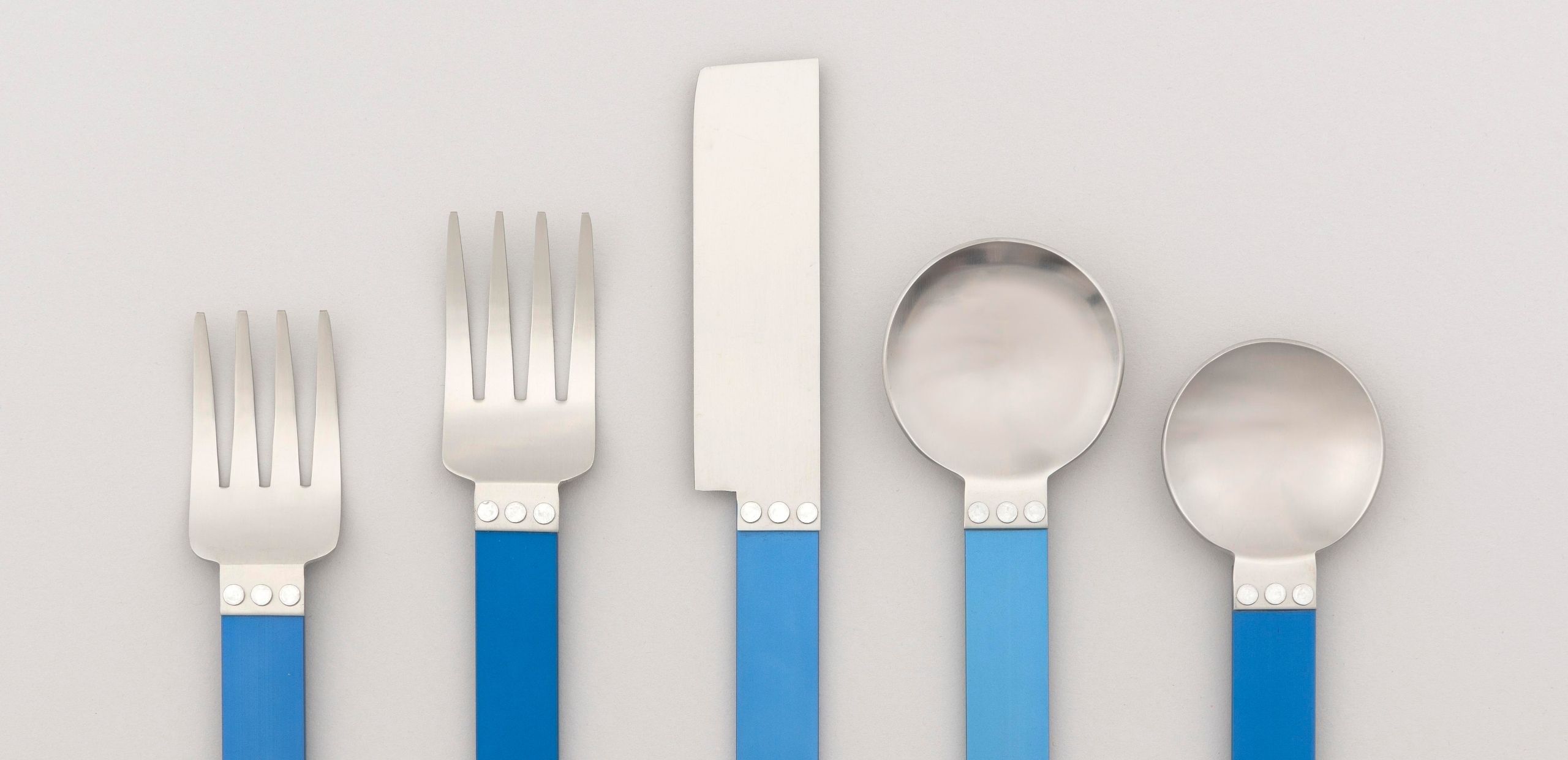
What can a spoon tell us about its user, its designer, and the formal and conceptual ideas that drove its creation? From Gio Ponti to Zaha Hadid, modern architects and designers have designed knives, forks, and spoons that embody the broader ideas that inform their architectural designs. Join design writer Dung Ngo, whose own extensive collections of modern flatware is the subject of his new book, Knife Fork Spoon: Modernist Cutlery 1900-2025, for an illustrated lecture exploring some of the ways in which prominent modern designers have rethought what a place setting might look like, and what ideas it can express. This program is presented in conjunction with Design Across Time: Exploring the Smithsonian’s Design Collection and will be moderated by Emily Orr, Associate Curator and Acting Head of Product Design and Decorative Arts.
SpeakerS
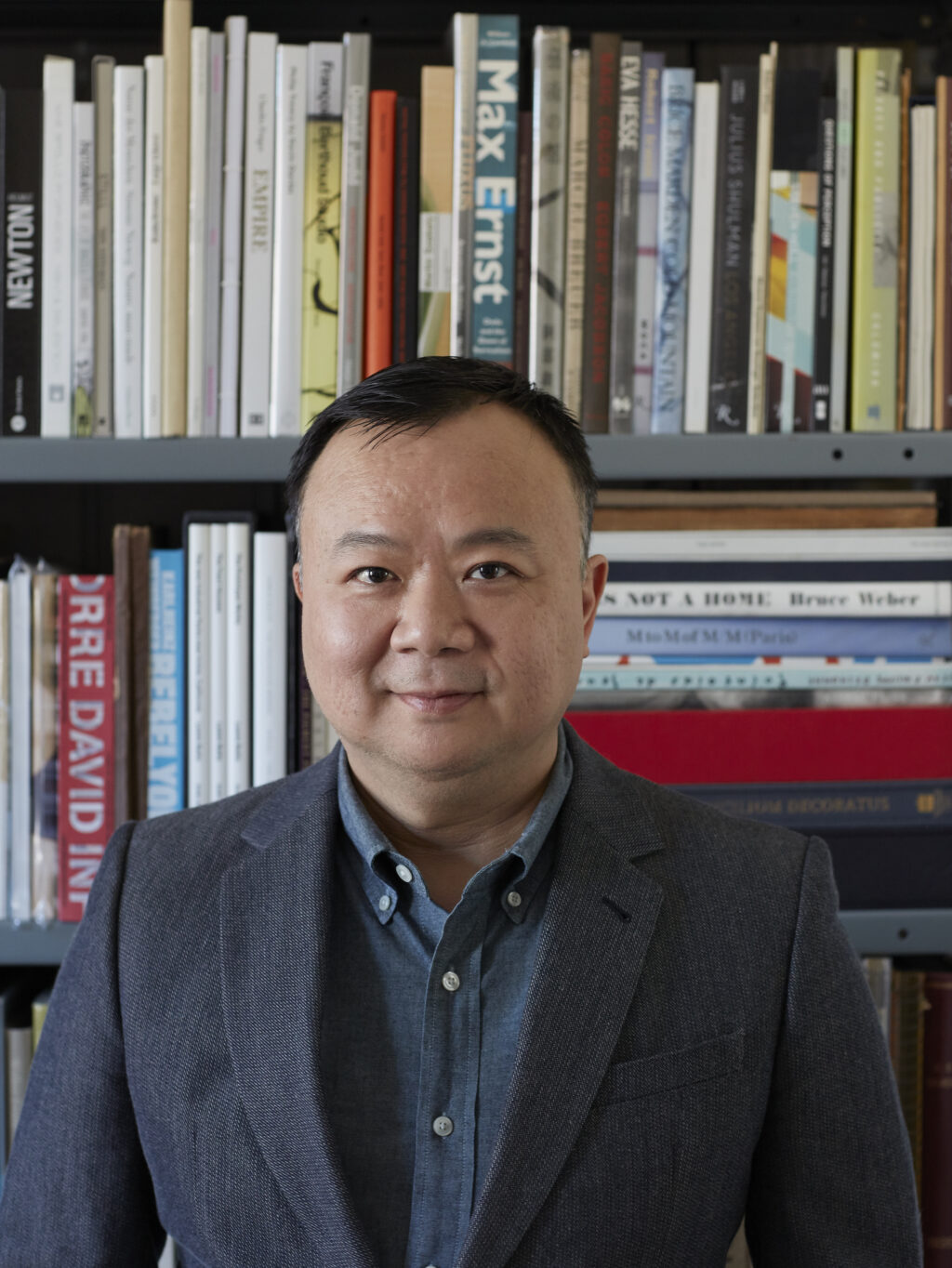 Dung Ngo is a design writer, the editor-in-chief of AUGUST Journal, a print magazine on travel and design, and the publisher of August Editions, a bespoke publishing house with a focus on historical and contemporary visual culture. For over a decade he was the creative director and senior editor at Rizzoli International Publications, where he worked on the definitive monographs with such designers as I.M. Pei and Andrée Putman. He is the author of several books, including Bent Ply, a history of 20th century plywood furniture and Tom Kundig: Complete Houses (2025).
 Emily M. Orr is Associate Curator and Acting Head of Product Design and Decorative Arts at Cooper Hewitt, Smithsonian Design Museum where her exhibitions include Design Across Time: Exploring the Smithsonian’s Design Collection (2026), Give Me a Sign: The Language of Symbols (2023), Underground Modernist: E. McKnight Kauffer (2021-2022), and Botanical Expressions (2019-2021). She holds a Ph.D. in the History of Design from the Royal College of Art/Victoria & Albert Museum in London. Her primary areas of scholarship span industrial design, the modern interior, and retail history. She is the author of Designing the Department Store: Display and Retail at the Turn of the Twentieth Century (Bloomsbury, 2019) and co-editor and contributor to E. McKnight Kauffer: The Artist in Advertising (Rizzoli Electa/Cooper Hewitt, Smithsonian Design Museum, 2020).
Accessibility & What to Expect:
- Format: The program will begin with a brief welcome, then the speaker will engage in a moderated conversation. It will end with an optional Q&A with the audience.
- About the space: This program will take place in Cooper Hewitt’s Lecture Room on the Ground floor of the museum. It is fully wheelchair accessible. There is an accessible restroom on the Ground floor. Read more about accessibility at Cooper Hewitt.
- Accommodations: The program will have live CART captioning. If we can provide additional services to support your participation, email us at CHEducation@si.edu or let us know when you register. Please make your request as far in advance as possible—preferably at least ten days before the program date.
Design Across Time: Exploring the Smithsonian’s Design Collection received major support from Jon and Shigemi Iwata, and Lisa Roberts and David Seltzer. Additional generous support has been made by Amita and Purnendu Chatterjee, the Lily Auchincloss Foundation, the Terra Foundation for American Art, the Arthur F. and Alice E. Adams Foundation, Irene Au and Bradley Horowitz, and Chris and Irma Fralic. This project received funding from the Smithsonian’s “Our Shared Future: 250,” a Smithsonian-wide initiative supported by private philanthropy and created to commemorate the nation’s 250th anniversary and advance the Smithsonian vision for the next 250 years.

